
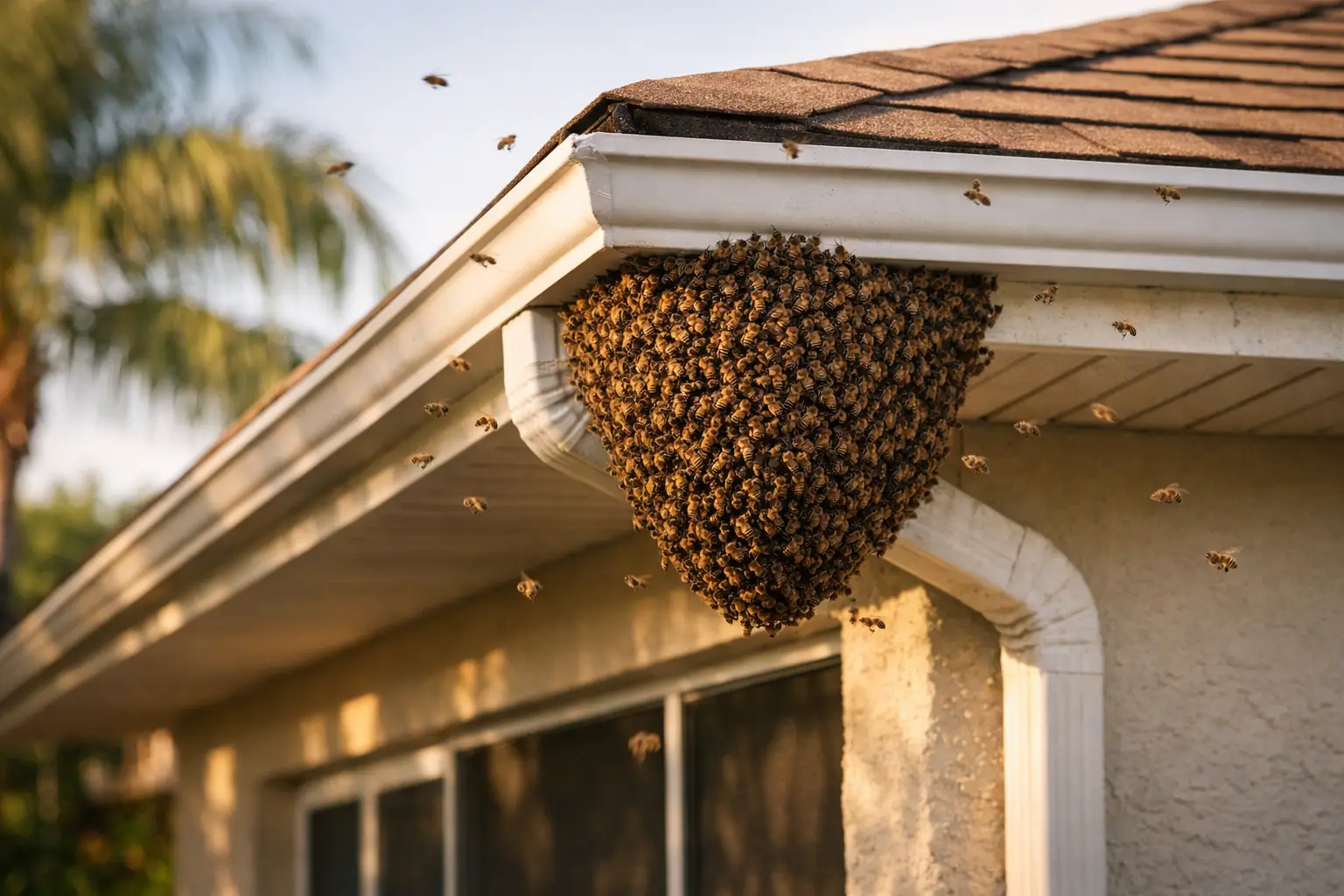

A basketball-sized cluster of bees hanging from a tree branch can look alarming. A colony hidden inside a wall can look quiet by comparison. But when people ask about swarm capture versus cutout, they are really asking a more practical question: are these bees passing through, or are they already living inside the structure?
That difference matters because the removal method, urgency, cost, and property risk all change based on what the bees are doing. A swarm capture is usually simpler, faster, and less invasive. A cutout is a structural bee removal performed when bees have moved into a wall, soffit, roofline, shed, or other void and started building comb. If you choose the wrong approach, the bees may remain in place, honey may stay behind, and the problem can return.
What swarm capture versus cutout actually means
A swarm is a temporary cluster of bees, usually gathered around a queen while scout bees search for a new home. During this stage, the bees are often exposed and visible on a branch, fence, mailbox, shrub, or even a vehicle. They have not built comb in your structure. In many cases, this is the best-case scenario for humane relocation.
A cutout is different. It means the bees are established inside a cavity and have begun living there as a colony. That colony may contain brood, pollen, honey stores, and layers of attached comb. Removing it correctly usually requires opening the structure, physically taking out the bees and comb, and then cleaning the area so the site does not keep attracting new colonies.
This is why “spray and forget” often creates a second problem. Dead bees inside a wall do not remove wax, honey, or brood. In Florida heat, those materials can melt, ferment, stain drywall, attract ants and roaches, and even draw another swarm into the same void later.
Why homeowners confuse the two
From the ground, both situations can look like “there are bees at my house.” That is understandable. The bees may be entering through a crack near the roof, gathering near a soffit vent, or clustering outside before disappearing into a gap. Without experience, it can be hard to tell whether that is a resting swarm or a colony moving into the structure.
The timeline is the clue. If bees appeared suddenly in a visible cluster and remain mostly on the outside, that often points to a swarm. If you have seen steady flight to and from one opening over days or weeks, especially with some bees carrying pollen on their legs, that usually indicates an established colony. A faint buzzing in a wall or ceiling is another warning sign that you are beyond swarm capture and into cutout territory.
Swarm capture versus cutout: the practical difference
In a swarm capture, the goal is to safely collect the clustered bees and relocate them before they enter a structure or move somewhere less accessible. The work is typically done from the exterior, and if conditions are right, there is little or no need to open building materials. Timing matters because a swarm may leave on its own or settle into a cavity within hours or days.
In a cutout, timing still matters, but for a different reason. Once bees are established in a wall, they continue building comb and storing resources. The longer they stay, the larger the colony can become and the more honey and wax are left inside the structure. Cutouts are more labor-intensive because the job is not just about removing live bees. It is also about removing the nest materials and addressing the access point.
That is the key distinction. Swarm capture is bee collection. Cutout is colony removal plus structural cleanup.
When a swarm capture makes sense
Swarm capture is appropriate when the bees are clustered in an exposed place and have not yet occupied a structural void. This can happen on tree limbs, patio furniture, irrigation equipment, playground sets, fences, and exterior walls. In many cases, the cluster is temporary.
Swarming bees are often less defensive than an established colony because they are between homes and focused on protecting the queen. That does not make them harmless, and they should still be handled by trained professionals, especially in public spaces or near children and pets. But from a removal standpoint, this is usually the cleanest rescue scenario.
For homeowners and property managers, the advantage is obvious. A successful swarm capture can remove the bees before they start producing wax and honey inside a building envelope. It is often the point where the least property disruption is needed.
When a cutout is the right call
A cutout becomes necessary when bees are living inside the structure. Common locations in Southwest Florida include soffits, block walls, rooflines, sheds, chimneys, and cavities around utility penetrations. Bees prefer enclosed, protected spaces, and once they commit, they can become very difficult to remove without opening the area.
This is where experience matters most. A proper cutout requires locating the full colony, not just the visible entrance. If a provider removes only a portion of the bees or seals the entrance too soon, the remaining colony may die inside the void or find another path deeper into the building. Worse, trapped honey and brood can cause staining and odor, especially in hot, humid conditions.
A real cutout addresses the whole system: live bees, comb, honey, contaminated materials when necessary, and the conditions that allowed the colony to move in.
Property risk is usually higher with cutouts
For many people, stings are the first concern. For structures, hidden damage is often the bigger one. A swarm hanging outside is visually dramatic but usually not damaging by itself. An established colony inside a wall can become a building problem.
Honey can seep through drywall, ceilings, and trim. Wax can soften in heat. Moisture and organic residue can attract pests. If the colony is in a commercial setting or HOA common area, delayed action can also increase liability exposure. The risk is not only the bees. It is what remains after an incomplete job.
That is why humane removal is not just about saving bees. It is also about protecting the structure by doing the removal correctly the first time.
Cost, time, and disruption
People often want a simple price comparison between swarm capture versus cutout. The honest answer is that they are different categories of work.
Swarm capture is generally less expensive because access is easier, the colony is not built into the structure, and there is little or no demolition involved. The visit can be relatively quick if the cluster is reachable and stable.
Cutouts usually cost more because they involve inspection, opening materials, careful removal of comb, cleanup, and sometimes coordination with repair work after the bees are out. The colony location, height, building material, weather exposure, and accessibility all affect the scope. A colony in a low exterior shed wall is one thing. A colony high in a roofline over a customer entrance is another.
That does not mean cutouts are overpriced. It means they are structural removals, not simple collections.
What to do while you wait for help
If you suspect a swarm, keep people and pets away and avoid spraying the bees with water, foam, or insecticide. Do not shake the branch or object where they are clustered. A swarm can relocate quickly, so early response helps.
If you suspect a colony inside the structure, do not seal the entrance. That often makes the outcome worse. The bees may find a new path into living spaces, or the colony may die inside and leave behind honey and brood. Instead, note where bees are entering and how long the activity has been going on.
A clear photo or short video from a safe distance can help a removal specialist tell whether the situation is more likely a swarm capture or a cutout before arriving on site.
Why the right diagnosis matters
The biggest mistake in bee removal is treating every bee issue as if it were the same. It is not. Swarm capture versus cutout is not industry jargon for the same service at two prices. It is the difference between catching a colony before it settles and removing one that has already become part of the building.
That difference shapes everything that follows – urgency, labor, structural impact, and long-term results. For property owners, the smartest move is not guessing based on how scary the bees look. It is identifying whether they are resting outside or nesting inside.
In Southwest Florida, where bees can move fast and structures offer plenty of inviting voids, that distinction can save both the colony and the building. If you act early, a swarm may be a simple rescue. If the bees are already established, a proper cutout is what prevents a temporary bee problem from becoming a lasting property problem.
When bees show up, the best next step is not panic. It is getting the situation identified correctly before the wrong fix creates a bigger mess.

3 Responses
[…] key distinction is between a temporary swarm and an established colony. A swarm may pause on a tree branch, signpost, or exterior wall while […]
[…] response depends on which situation you have. A reachable swarm can often be collected with limited disruption. A colony inside a structure generally requires a […]
[…] with removal experience. They know how to handle bees calmly, identify whether a group is a swarm or an active colony, protect nearby people, and move the bees into a transport […]