

A server sets down a tray of sodas, one table waves for the check, and then someone spots two bees circling a spilled cocktail. In a restaurant, that moment changes fast. Guests get nervous, staff start swatting, and a small issue can turn into a safety problem or a public scene. Good restaurant patio bee safety is not about declaring war on pollinators. It is about reducing what attracts them, protecting people, and knowing when bee activity is normal foraging versus a colony problem that needs professional relocation.
Why restaurant patio bee safety gets complicated fast
Outdoor dining creates exactly the conditions bees notice – sugar, fruit garnish, water, and repeated food service in the same footprint every day. That does not mean your patio is dangerous by default. It means your patio is predictable. Bees are efficient foragers, and if they find sweet residue or a reliable water source, they may keep checking back.
For restaurants, the real risk is rarely a random bee passing through. The bigger issue is repeated attraction. A few bees around soda nozzles, bus tubs, sticky tabletops, or overflowing trash can trigger guest fear, rushed staff decisions, and in some cases stings. If someone in the party has a known allergy, the situation carries even more weight.
There is also a trade-off many operators miss. Aggressive chemical spraying may knock down visible insects for a moment, but it can leave dead bees on the patio, create food-area concerns, and fail to address the reason bees are showing up. Worse, if a colony is living in a wall, planter, awning, or roofline nearby, poisoning can leave honey and brood inside the structure. That can attract ants, roaches, rodents, and cause long-term odor and damage issues.
The real causes of bees on restaurant patios
Most patio bee activity comes from foraging, not attack behavior. Bees are usually drawn in by one of three things: sugar, water, or shelter nearby. Sweet drinks are the obvious culprit, but less visible sources matter too. Think syrup drips at service stations, residue on recycling lids, juice around bar mats, or fruit waste sitting in open bins during a busy shift.
Water is just as important in hot weather. Condensation pans, dripping hoses, fountain edges, mop buckets, and even tiny puddles near planters can become regular watering spots. In Southwest Florida heat, a shaded patio with steady moisture becomes attractive fast.
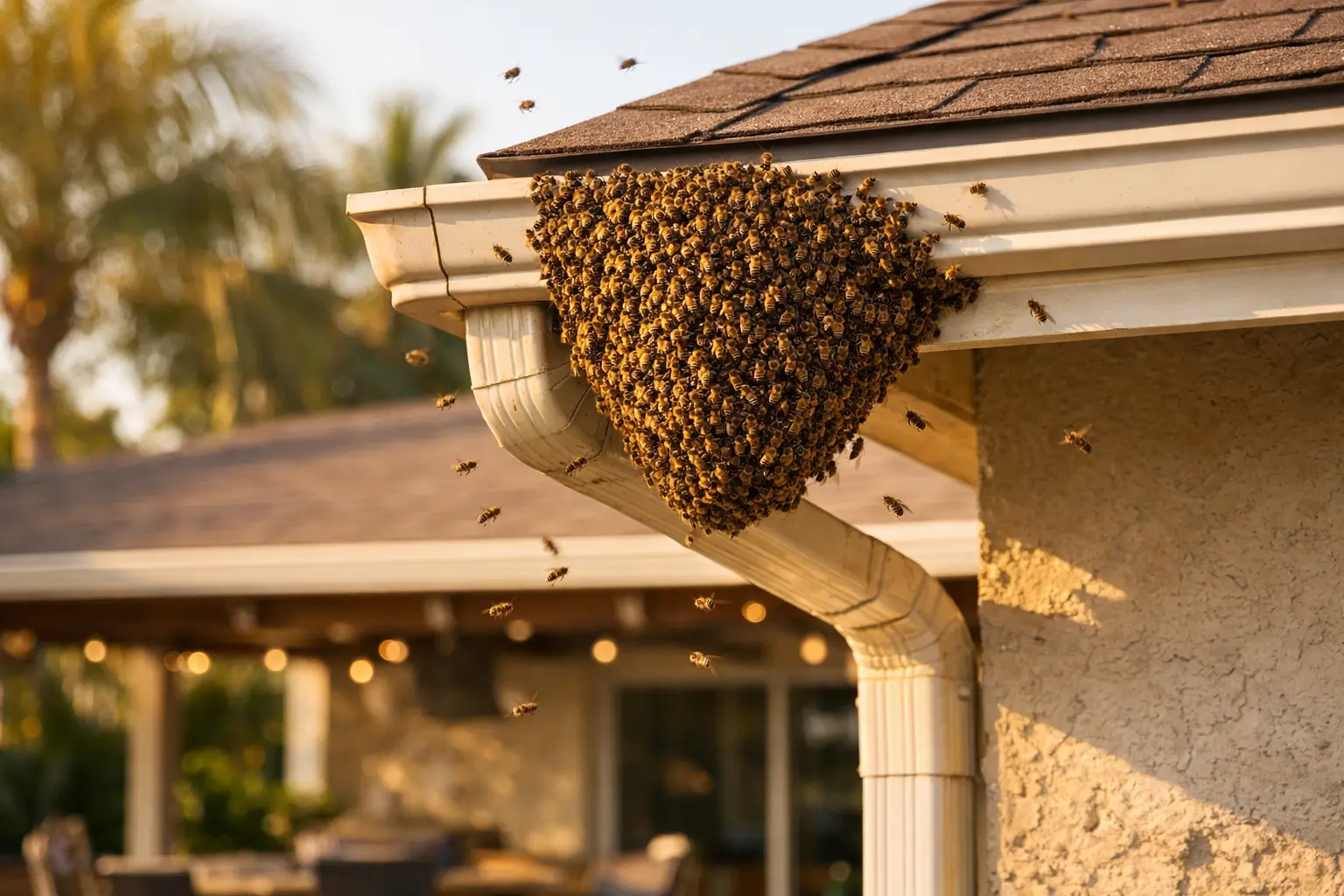
Then there is structure. If bees are consistently appearing from one corner, roof edge, block wall, soffit, or planter box, you may not be looking at random foragers. You may be near a swarm resting temporarily or an established colony nesting in the structure. That is a very different problem, and one that should not be handled by kitchen staff or a general maintenance crew with spray.
Restaurant patio bee safety starts with attraction control
The fastest way to reduce bee traffic is to remove the reward. That sounds simple, but it requires consistency more than intensity. Wiping a table once every hour is not enough during heavy outdoor service. The goal is to keep sweet residue from accumulating in the first place.
Train staff to treat spills as immediate safety issues, not just cleaning tasks. Soda, cocktail mixers, beer, melted dessert, and fruit syrup should be cleaned as soon as they hit the table or floor. Bussing speed matters too. Empty glasses with sticky rims and dessert plates left sitting are bee magnets.
Trash handling is another major factor. Patio bins should have tight-fitting lids and liners changed before overflow starts. If the area around the bin smells sweet, bees will find it. Recycling deserves special attention because cans and bottles often hold enough sugar to keep attracting foragers all day.
Table setup can help. Covered sugar caddies, sealed condiment containers, and drink lids for kids’ beverages all reduce exposure. If your menu relies heavily on sweet cocktails or house-made sodas, your outdoor cleaning standards need to match that reality.
Smart patio design choices that lower bee traffic
Some restaurant patio bee safety improvements come down to layout. If guests are seated directly beside flowering ornamental plants, fragrant groundcover, or decorative water features, you are increasing the chance of bee encounters at the table. Pollinator-friendly landscaping has value, but it should be placed away from dining zones, entry points, and waiting areas.
The same goes for drink stations, bussing stations, and trash staging. If these are located at the patio edge near guest seating, bees may hover in the exact places where customers stand, talk, and carry food. Moving those functions even a short distance can change traffic patterns.
Fans can help in some settings. A steady breeze makes it harder for bees to hover comfortably around tables and service stations. Fans are not a cure, and they will not solve a nesting problem, but they can reduce lingering activity in high-contact areas.
Color and scent also play a role, although less than food residue. Bright floral décor, heavily scented cleaning products, and strong perfume clouds from entry areas can add interest. This is not the first lever to pull, but when combined with sugar and water, it can contribute.
What staff should do when bees show up
The biggest mistake staff make is swatting. Fast arm movements and panic energy escalate the moment, especially around guests who are already nervous. Bees that are simply foraging will often move on if the attractant disappears and people stay calm.
Staff should know a simple response. Remove or cover the food source, clear spills, and guide guests to stay seated or step away slowly if needed. If a single table is drawing repeated attention, moving the party can be smarter than trying to fight the bee activity in place.
Managers should also have a threshold for escalation. A few bees near a spilled drink is a sanitation and operations issue. Bees entering and exiting the same hole in a wall, clustering on a structure, or showing unusually defensive behavior is a professional removal issue. That distinction matters.
When it is not just foraging anymore
A swarm usually looks dramatic but is often less aggressive than an established colony. Bees may cluster on a branch, chair, sign, or fence while scouts search for a permanent home. Still, a swarm on restaurant property creates obvious public safety concerns and should be handled quickly by a trained live removal specialist.
An established colony is more serious operationally. You may notice a steady flight line to a wall void, awning support, roof edge, or planter. In that case, the problem will not disappear on its own. The colony may grow, honey may accumulate inside the structure, and defensive behavior can increase if the area is disturbed by vibration, pressure washing, landscaping, or maintenance work.
This is where humane relocation is not just an ecological choice. It is often the practical one. Proper removal addresses the bees, the comb, and the conditions that allowed them to settle. Poison rarely solves all three.
Humane removal protects people and property
For restaurants, there is understandable pressure to act fast. Guests are watching, reviews happen in real time, and management wants the issue gone. But speed should not mean shortcuts.
A professional live bee removal team can identify whether you are dealing with foragers, a swarm, or a structural colony. That diagnosis determines the right response. If a colony is inside a building element, safe removal includes opening access where needed, removing comb and honey, relocating viable bees, and advising on repairs or exclusion so the site does not become attractive again.
That approach protects staff and customers, and it protects the building from the hidden aftermath of incomplete treatment. For businesses in Southwest Florida, where bee activity can stay high for long stretches of the year, this is not theoretical. It is routine risk management.
A practical patio plan for managers
Every restaurant with outdoor seating should have a bee protocol just like it has a slip-and-fall or allergy protocol. Keep it simple enough that shift leads can use it under pressure. Define who responds to guest concerns, how spills are handled, when an area should be temporarily closed, and when to call a live bee removal professional.
It also helps to inspect the patio with fresh eyes once a week. Look above eye level at soffits, signs, umbrellas, lighting, and rooflines. Look below at drains, planters, irrigation leaks, and trash enclosures. The goal is to catch patterns early, before a guest does.
Beeswild works with the reality many property owners face: people need safe spaces, and bees still need to be preserved. Those two goals are not in conflict when the response is informed and humane.
A calm patio is rarely the result of luck. It comes from clean operations, thoughtful layout, and knowing the difference between a passing bee and a problem that needs real intervention.

One response
[…] buildings have additional concerns. Bee activity near entrances, pool areas, playgrounds, outdoor dining, mail stations, or work zones can create liability and public-safety issues. A documented, […]