
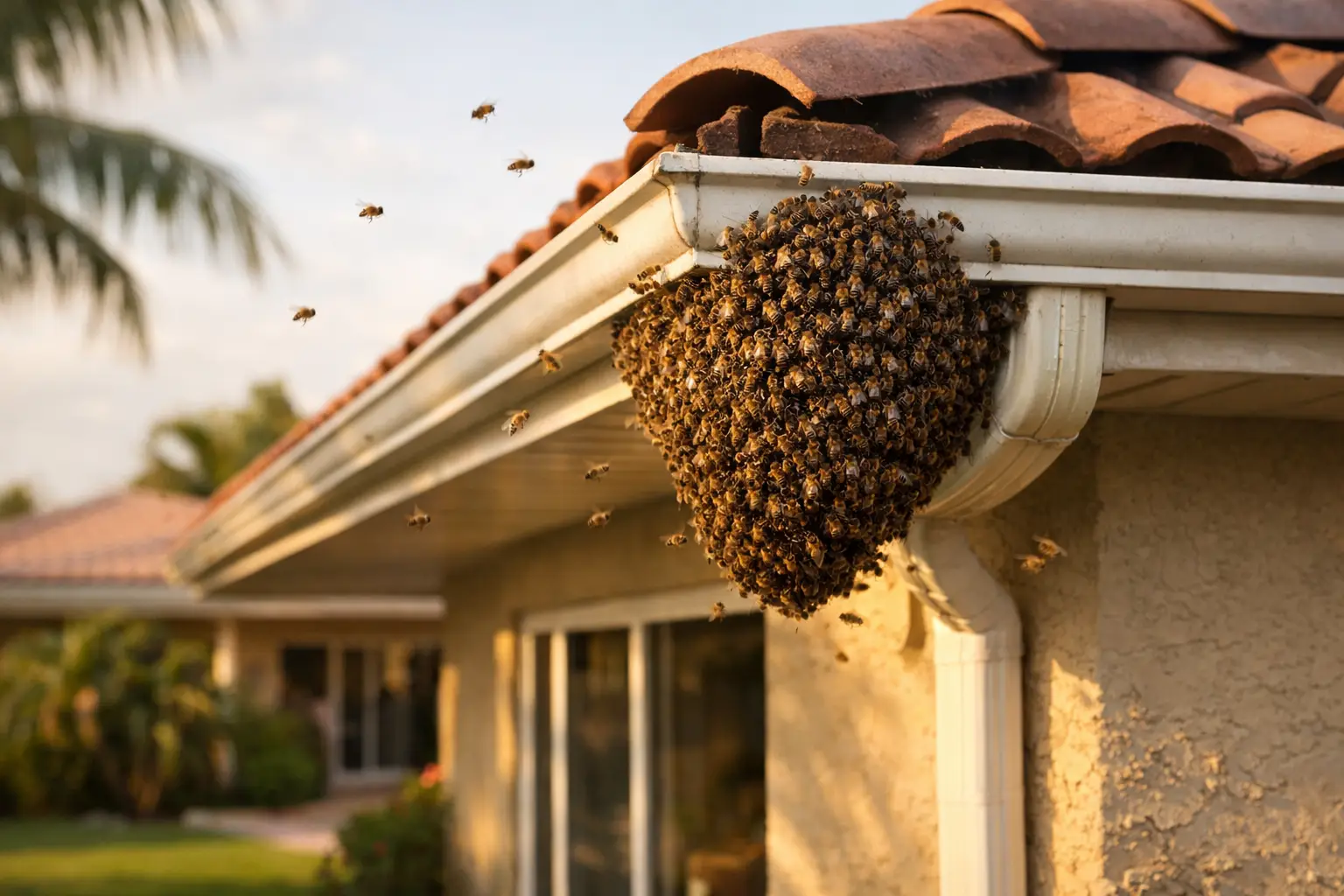

You can kill the visible bees and still keep the real problem alive inside your wall.
That is why a significant difference between a DIY spray and Beeswild.com is the follow-through. The first approach usually focuses on stopping activity you can see right now. The second has to deal with what you cannot see yet – the comb left behind, the brood inside the cavity, the honey beginning to melt in Florida heat, and the chance that another colony moves right back into the same space.
For a homeowner, that distinction matters because the job is not over when the buzzing stops. For a property manager or HOA, it matters because liability, odor, staining, and repeat infestations can drag on long after a can of spray has been used. In bee work, the aftermath is often the most expensive part if it is ignored.
A significant difference between a DIY spray and Beeswild.com is the follow-through
A do-it-yourself spray is built for speed. You see bees entering a soffit, roofline, shed, meter box, or block wall, and the can promises immediate control. That sounds practical when people are scared, children play nearby, or customers are walking past the area.
But sprays are not a full structural bee removal plan. They do not map the size of the colony. They do not remove comb. They do not relocate surviving bees. They do not address honey, wax, dead brood, or the scent markers that attract new scout bees. Most of all, they do not restore the cavity to a condition that discourages another infestation.
Professional live removal has a different burden. It has to solve the present safety issue and also prevent the next one. That means identifying where the colony is actually living, opening the structure when necessary, removing bees and comb, cleaning the space, and helping ensure the same site does not become active again. That follow-through is the difference between a temporary interruption and a completed job.
Why visible bee activity is only part of the problem
When people first notice bees, they usually focus on the traffic at the entrance. That makes sense. It is the most obvious sign and the one that creates panic. But the entrance hole may be tiny while the colony behind it is large.
Inside a wall or roof cavity, bees build comb that stores honey and pollen and houses developing brood. If a spray kills many or all of the bees but leaves the nest material in place, the structure can still suffer. Honey can soften and run. Wax can slump. Dead bees and brood can create odor. Ants, roaches, beetles, rodents, and other pests may be drawn to what was left behind.
This is one reason poison often feels cheaper only at the beginning. If the colony is established inside a structure, the hidden material is often what causes the next round of damage. Homeowners then pay for cleanup, drywall work, repainting, or another removal when new bees discover the site.
Follow-through means handling the whole colony, not just the symptom
In practical terms, follow-through starts with inspection. A trained bee removal team has to determine whether the insects are honey bees, where the nest is located, how extensive it is, whether the bees are entering living space, and what level of structural access is required.
Then comes the actual removal. In many cases, humane live removal is not just about taking away clustered bees. It means physically removing comb and recovering the colony when possible. That matters because bees are valuable livestock, not disposable debris. If they can be rescued and rehomed, that protects both the property and the pollinators.
The next step is the one many DIY attempts skip completely – post-removal cleanup. Residual wax, honey, brood material, and bee scent need to be addressed. If they are not, the cavity may continue to advertise itself as suitable bee real estate.
Finally, there is prevention. A good removal does not stop at extraction. It includes clear guidance on sealing entry points, repairing access areas, and reducing the odds of reinfestation. That guidance is part of the service, not an afterthought.
Why warranty changes the conversation
One of the clearest signals of follow-through is whether the company stands behind the same location after the job. A three-month same-place removal warranty changes the standard. It tells the customer that the work is being judged not only by what happens on day one, but by what happens after the bees are gone.
That kind of warranty matters because bee behavior and structural conditions are not always simple. Sometimes there are multiple access gaps. Sometimes an old nest has been there longer than anyone realized. Sometimes repairs are delayed by weather, tenants, or building schedules. A company that plans for the aftercare side of the job is operating very differently from a one-time spray response.
DIY spray has trade-offs, and sometimes risk climbs fast
There are situations where people reach for a spray because they believe it is the fastest way to protect family or visitors. That instinct is understandable. If bees are highly agitated near a doorway, playground, or commercial walkway, people want immediate relief.
The problem is that spraying a colony yourself can escalate the situation, especially if the nest is disturbed but not neutralized. It can also push surviving bees deeper into a structure or out through new openings. If the colony is large or defensive, the person applying the chemical may be the least protected person on site.
There is also the identification issue. Not every stinging insect problem is a honey bee colony, and not every bee problem is a simple exposed swarm. Misreading the situation can lead to the wrong treatment, the wrong timing, and a much harder removal afterward.
For commercial sites and community properties, there is another layer. A rushed chemical response may create questions about safety, public exposure, and whether the actual nest was removed. If the issue returns, the original quick fix can end up looking careless.
The ecological side matters, but so does the building science
People often hear “save the bees” and assume this is only an environmental argument. It is not. It is also a building maintenance argument.
When honey bees establish inside a structure, they become both a living colony and a structural condition. If removal ignores the biology of the bees, it often misses the mechanics of the building. The cavity has to be assessed. The materials inside it have to be handled correctly. The site has to be cleaned and made less attractive for reuse.
That is where a company that combines live bee removal with actual beekeeping brings a different perspective. Relocating a colony to a managed bee farm is not the same as simply making insects disappear. It requires understanding brood cycles, comb handling, queen survival, stress during transport, and how to give the colony a viable next location.
For the property owner, that expertise shows up as a more complete process. For the bees, it creates a real outcome beyond removal.
A significant difference between a DIY spray and Beeswild.com is the follow-through after removal
After-removal decisions are where many jobs succeed or fail. Was all accessible comb removed? Was the cavity cleaned? Were entry points identified clearly? Did the property owner receive realistic repair guidance? Is there any coverage if bees return to the same place shortly after service?
Those are not small details. They are the job.
If you are dealing with a visible swarm hanging on a branch, the approach may be simpler than a colony established behind stucco or fascia. If you are dealing with bees in a wall near bedrooms, a restaurant patio, or a school walkway, the margin for error is much smaller. It depends on the location, the aggression level, the structure, and whether the bees are merely resting or actively nesting.
That is why “DIY versus professional” is not really a debate about who can make bees stop flying for a few hours. It is a question of who is responsible for what comes next.
In Southwest Florida, heat, rain, and long bee seasons make unfinished bee work more costly than many people expect. What looks like a cheap shortcut on Saturday can become a repair issue by next week. A humane, technically sound removal may cost more up front, but it addresses the colony, the structure, and the future of the site in one plan.
When bees choose your property, the goal should not be a fast story to tell yourself. The goal should be a clean ending – safer people, fewer repairs, and a colony that is either properly removed or properly rehomed.

No responses yet