
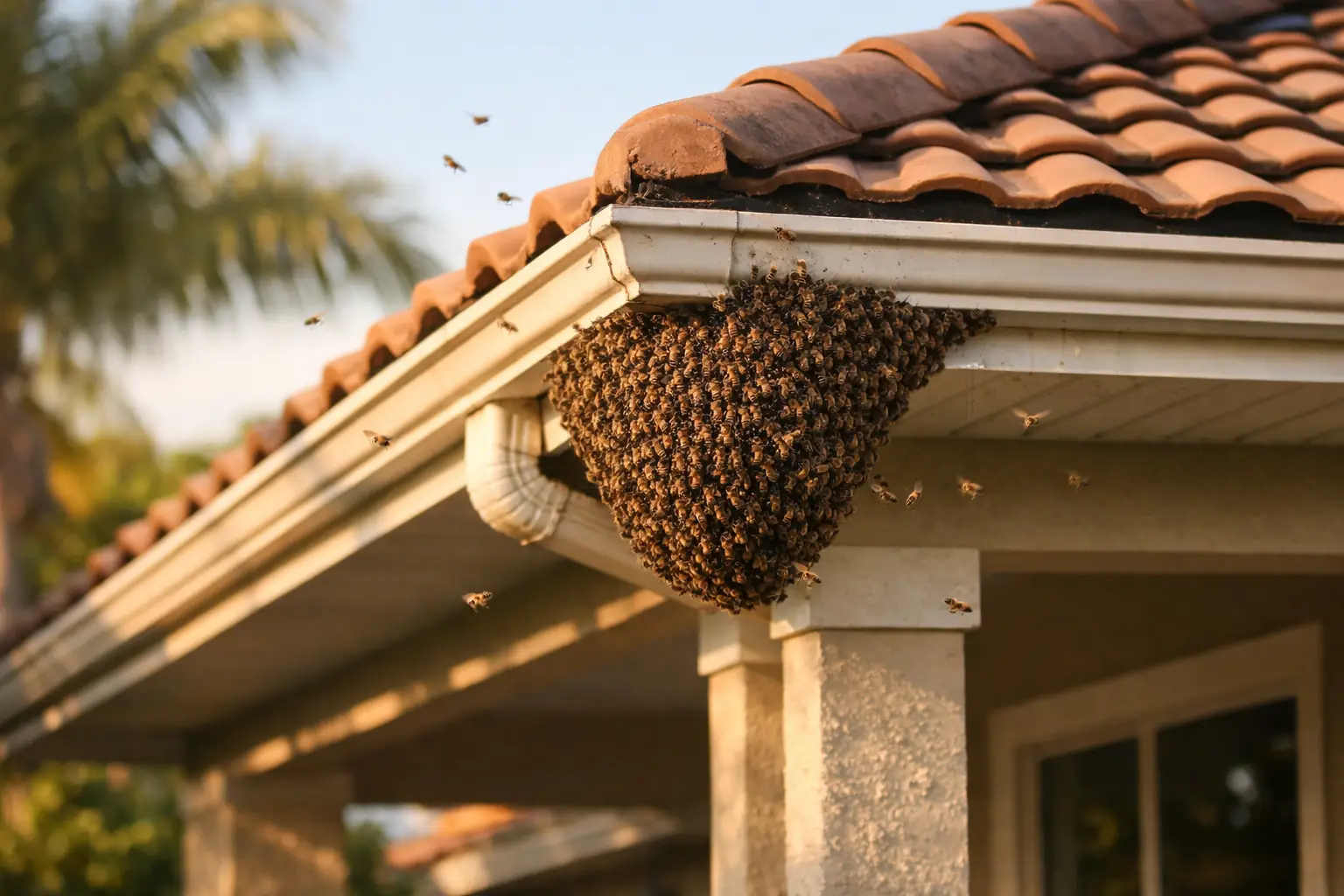

A cloud of bees in a tree can be alarming. Bees pouring in and out of a soffit, block wall, or roofline is a different problem entirely. That is where the beeswild.com bee removal solution: safe, humane, and effective matters most – when people need a fast response that protects both the structure and the colony.
For homeowners, the fear is usually immediate. Will someone get stung? Are the bees getting into the house? Is honey already building up behind the wall? For property managers and HOAs, the concern shifts to liability, tenant safety, and making sure the problem is handled correctly the first time. In both cases, the right approach is not just removing visible bees. It is solving the full nesting issue without creating a bigger one later.
Why live bee removal is different from pest control
A bee colony is not like a typical pest issue. If bees are established inside a wall, fascia, chimney, shed, water box, or roof cavity, there is usually comb, brood, pollen, and stored honey inside the structure. Spraying the entry point may kill some bees, but it often fails to remove the nest materials that caused the risk in the first place.
That matters because dead bees and abandoned comb do not simply disappear. Honey can melt and leak into walls. Wax and brood can attract ants, roaches, rodents, and other scavengers. If the cavity is left attractive to future swarms, a new colony may move into the same location. What looked like a quick fix becomes structural cleanup, odor, staining, and repeat infestations.
Live removal works from a different premise. The colony is treated as valuable livestock that should be rescued when possible, and the structure is treated as an environment that must be properly cleared and restored. That is why humane bee removal often ends up being the more practical long-term option, not just the more ethical one.
What makes the beeswild.com bee removal solution safe, humane, and effective
The phrase safe, humane, and effective is easy to claim. The harder part is delivering all three at once.
Safety starts with identifying the actual situation. A fresh swarm hanging from a branch is handled differently than an established colony inside a wall void. Bee behavior, access points, colony size, location near people or pets, and the condition of the structure all affect the plan. A trained live removal team looks at more than insect activity. They assess construction details, risk of comb collapse, and what will be required to prevent re-entry.
Humane removal means preserving the colony whenever conditions allow. Instead of poisoning bees in place, the goal is to remove the bees, recover comb when practical, and relocate the colony into a managed apiary or other appropriate setting. That approach supports pollinators and avoids unnecessary loss of healthy bees.
Effectiveness comes from doing the full job. That includes locating the nest, physically removing colony materials, cleaning the area as needed, and addressing the opening or cavity so it does not remain an invitation for the next swarm. A same-place problem that returns after a few weeks was never truly solved.
Structural removals are where experience matters most
Many bee calls are not simple swarm captures. In Southwest Florida, bees often establish colonies in places people cannot fully see – under roof tiles, inside soffits, behind stucco, in cinder block cavities, around meter boxes, and in other warm, sheltered voids. These are structural removals, and they require more than basic beekeeping knowledge.
The challenge is twofold. First, the colony must be removed without causing unnecessary risk to occupants, neighbors, or bystanders. Second, the structure has to be opened and handled carefully enough that the repair process stays manageable. An inexperienced operator may remove bees from the outside while leaving comb hidden deeper in the cavity. That is how homeowners end up with honey staining ceilings or bees reappearing in the same wall months later.
A qualified live removal process accounts for both biology and building science. You need someone who understands bee behavior, but also how homes and commercial structures are assembled. That combination is what turns an emergency call into a durable solution.
Why poison often creates a second problem
When people are scared, the fastest-sounding option can seem appealing. Spray the bees and move on. But with established colonies, that shortcut often shifts the problem from active insects to hidden damage.
If a colony dies inside a cavity, the wax comb, brood residue, and honey stores remain. In hot weather, honey can soften and seep. The odor can draw pests. Surviving foragers may behave erratically, and drifting bees can still gather around the original entrance. Then, when scout bees find that same sheltered void later on, the old scent and comb residue can make it attractive all over again.
This is one reason humane removal is not simply about compassion toward bees. It is also about reducing the odds of recurring structural issues. There are cases where colony temperament, access, or public safety concerns make a situation more complex, and every removal has to be evaluated honestly. But in many real-world scenarios, proper live removal is the cleaner answer over time.
The role of relocation in a true bee removal solution
A rescued colony needs somewhere to go. That is where a hybrid model matters.
Companies tied to actual beekeeping and farm operations have a practical destination for healthy bees. Instead of treating relocation as an afterthought, they can integrate rescued colonies into managed bee yards where the bees continue pollinating and producing under controlled conditions. That makes the removal process more coherent from start to finish.
It also changes the philosophy of the work. When the team removing the colony is also responsible for its rehoming, the incentives are different. The goal is not just to clear a property. The goal is to preserve a functioning colony while fully resolving the hazard at the site.
For people who want to protect pollinators without risking their family, tenants, or customers, that balance matters. You do not have to choose between public safety and ecological responsibility when the removal method is built around both.
What property owners should expect during humane bee removal
A professional response usually begins with identification and site assessment. Not every cluster is an established colony, and not every colony requires the same level of structural access. The team should explain what they are seeing, where the nest likely extends, and what will be necessary to finish the work properly.
If the bees are inside a structure, physical removal is often required. That may involve opening a section of soffit, wall, roofline, or other cavity to access comb and bees directly. This is the part many people do not realize in advance, but it is often the difference between temporary relief and a lasting correction.
After removal, the void should be cleaned or cleared as needed, then sealed or repaired to reduce future occupation. If a company offers a same-place-removal warranty, that is a useful sign they understand recurrence risk and are willing to stand behind the work. Beeswild.com LLC provides a 3-month same-place-removal warranty, which speaks directly to one of the biggest client concerns: will the bees come back in the exact same spot?
Safe, humane, and effective for homes, HOAs, and businesses
Residential and commercial clients share the same basic need: solve the bee problem without causing a worse one. The difference is usually the operational pressure around the job.
At a home, speed and reassurance matter. Parents want to know children and pets can use the yard again. Owners want to understand whether bees are just visiting or actively nesting inside the building. They also want honesty about what is behind the wall, because hidden honey damage gets expensive.
For HOAs, restaurants, retail sites, and office parks, the stakes often include public access and liability. An exposed colony near walkways, pool equipment, dumpster enclosures, or outdoor seating can quickly become a management issue. In those settings, a humane approach still has to be decisive. There is no value in preserving bees if the job leaves tenants, customers, or residents exposed to ongoing risk.
That is why the best bee removal work is not sentimental. It is disciplined. Respect the insects, protect the people, remove the nest correctly, and make the site less likely to host another colony.
When immediate action makes sense
Not every bee sighting is an emergency, but some are. High traffic areas, aggressive behavior, visible entry into a structure, and locations near children, pets, or vulnerable adults all deserve prompt assessment. Waiting can allow a small occupation to become a larger structural colony.
For Southwest Florida properties, warm conditions make sheltered cavities especially attractive. A quick response can mean the difference between a simple capture and a complex cut-out. The sooner the problem is diagnosed, the more options are usually available.
Good bee removal is not about overreacting. It is about recognizing that bees belong in the right habitat, not inside occupied structures. When that distinction guides the work, the result is better for people, buildings, and the colony itself.
If bees have chosen the wrong place, the smartest next step is not panic and not poison. It is a method that respects the biology, fixes the structure, and leaves fewer problems behind.

No responses yet