

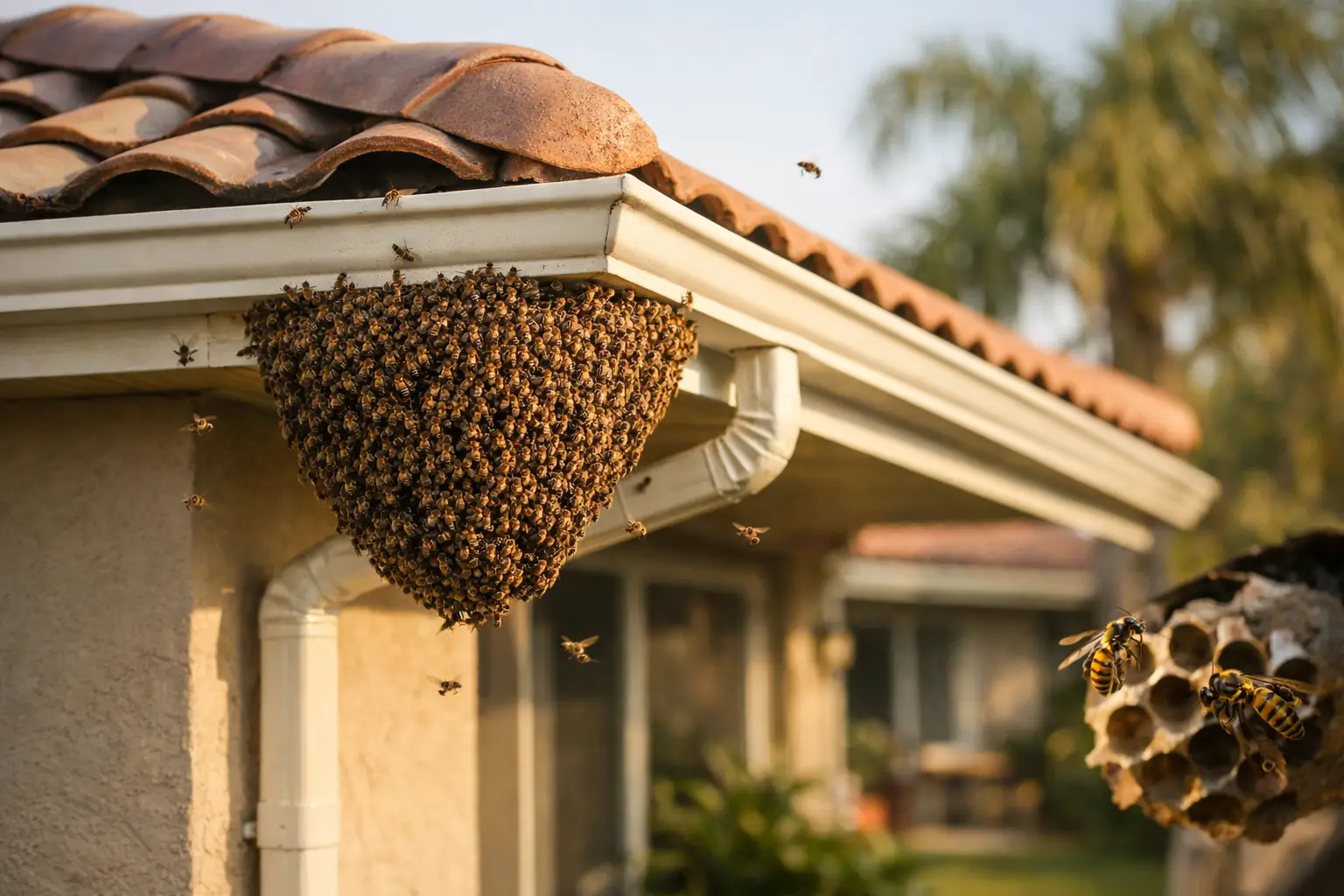

You hear buzzing under the soffit, see insects moving in and out of a gap, and the first thought is usually simple – bees or wasps? That distinction matters. In feral bees versus wasps, the wrong call can lead to unnecessary killing, a bigger structural problem, or a dangerous do-it-yourself attempt that makes the insects defensive.
For homeowners and property managers, the goal is not to become an entomologist overnight. It is to identify the likely insect, understand the risk level, and choose the safest next step. Bees and wasps share airspace, both can sting, and both may settle near buildings. But their behavior, nesting habits, and what should be done about them are very different.
Feral bees versus wasps: the fast visual difference
The quickest clue is body shape. Honey bees, including feral colonies living in walls, soffits, trees, or meter boxes, tend to look thicker and fuzzier. Their bodies are built for collecting pollen, and that hair is not just cosmetic. Wasps usually look smoother, shinier, and more sharply defined, with a narrow waist and longer-looking legs.
Color can help, but it is not a perfect test. Many people expect bees to be golden brown and wasps to be bright yellow and black. Sometimes that is true. Sometimes Florida light, distance, and movement make everything look striped. Shape and behavior usually tell you more than color alone.
Flight pattern is another clue. Bees often move with purpose, going back and forth along a regular path as foragers return to a fixed nest. Wasps can look more erratic and aggressive around food, trash, or outdoor seating. If insects are hovering around soda cans and meat at a patio table, wasps are the more likely culprit.
Why the difference matters
A feral honey bee colony is not just a nuisance insect problem. It is a living colony with a queen, brood, honey stores, wax comb, and thousands of workers. If that colony is inside a wall, poison does not solve the full problem. Dead bees, melting comb, fermenting honey, and lingering odors can create a second wave of damage inside the structure.
Wasps are different. Their nests are made from papery material or mud, depending on the species, and they do not leave behind gallons of honey inside your home. That does not make them harmless. Some wasps are highly defensive, especially near a nest, but the cleanup issues are usually less complex than a structural bee colony.
There is also the ecological side. Honey bees are valuable pollinators and, in a farming context, livestock. If the insects are bees, humane live removal and relocation preserve the colony while also protecting the building. That is a very different response from treating a wasp problem.
Nest clues that usually settle the question
If you can see the nest from a safe distance, the nest itself often gives away the answer.
Honey bees build wax comb. In a wild setting, that may hang in sheets from a branch or cavity. In buildings, you often do not see the comb at all. What you notice instead is steady traffic at one entry point – a hole in stucco, a roofline gap, a utility box, or a crack near a window frame. The bees may have been there long enough to build substantial comb inside the void.
Paper wasps and hornet-type wasps build visible papery nests. These can look like gray layered umbrellas or enclosed paper balls tucked under eaves, branches, or overhangs. Mud daubers make tube-like mud nests, often on walls, ceilings, or sheltered corners. If the nest looks like paper or dried mud, you are not dealing with honey bees.
The problem is that many people never actually see the nest. They only see insects entering a structure. That is where behavior and volume matter. A continuous stream of insects using the same small opening from morning through late afternoon strongly suggests bees, especially if pollen is visible on their hind legs.
Swarms confuse people
A swarm is one of the biggest reasons feral bees versus wasps gets misidentified. A honey bee swarm can gather in a temporary cluster on a branch, fence, mailbox, or shrub and look alarming. But a swarm is often less defensive than an established colony because it is between homes and focused on protecting the queen.
Wasps do not form those classic hanging clusters in the same way honey bees do. If you see what looks like a ball of insects grouped together on an exposed surface, bees are more likely. That said, a swarm can move into a wall fast, especially in warm weather, so timing matters.
Risk level: not every buzzing insect is the same
Both bees and wasps can sting. The difference is in what triggers them and what happens next.
Honey bees usually sting defensively when they believe their colony is threatened. A single foraging bee in the yard is often not looking for a fight. But a colony inside a wall can become dangerous if someone sprays it, seals the entrance while bees are still active, or tries to knock out comb without protective gear.
Wasps are often more reactive around human activity. Many species are territorial and can become aggressive around doors, eaves, playgrounds, trash areas, and food service spaces. For restaurants, HOAs, and commercial properties, that can quickly become a liability issue.
Then there is temperament variation. In the Southeast, including Florida, defensive honey bee genetics are part of the risk assessment. That is one reason identification should never rely on guesswork when a colony is established in a structure or near heavy foot traffic.
What not to do when you are not sure
Do not spray first and ask questions later. That approach causes problems with both bees and wasps, but structural bee colonies are where bad decisions get expensive. Poison may kill some or most of the bees, yet leave comb, brood, and honey inside the cavity. Once that material heats up, it can seep through walls and attract ants, roaches, rodents, and new bee swarms.
Do not seal the entry hole while insects are active. If bees are inside, they may find another route into the living space. If wasps are inside a void, trapping them can also force them into other interior areas.
Do not stand close to the entrance to watch for too long. Vibration, shadow, lawn equipment, and attempts to probe the opening can trigger a defensive response.
When live bee removal is the right call
If the insects are honey bees and they are established in a wall, roofline, shed, tree cavity, or other structure, live removal is usually the responsible solution. Proper removal means more than collecting visible bees. It includes opening the structure as needed, removing comb, recovering the colony, cleaning the area, and reducing the chance of reinfestation.
That last part matters. A colony removed without addressing residual odor and access points can invite future swarms back to the same place. This is one reason experienced bee removal is different from general pest control. The work combines insect behavior, structural access, and post-removal prevention.
In Southwest Florida, where warm conditions allow long seasons of bee activity, response time matters. A small cluster can become a built-out colony faster than many property owners expect.
Feral bees versus wasps in common Florida trouble spots
Soffits, block walls, roof tiles, meter boxes, pool enclosures, and hollow columns all attract nesting activity, but not always from the same insects. Honey bees favor protected cavities with enough volume to build comb. Wasps prefer sheltered attachment points for paper nests or protected corners for mud construction.
On commercial properties, dumpster areas and outdoor dining zones tend to attract wasps because of food sources. On homes, repeated traffic at one hidden opening is more suggestive of bees. Large numbers matter too. A handful of wasps can be active around a site. An established bee colony often means a constant stream of workers coming and going.
How a professional confirms the difference
A trained removal specialist does not rely on one clue. Identification is based on body shape, flight pattern, entry behavior, nest location, and site conditions. In some cases, thermal tools, inspection cameras, or direct structural assessment are needed to determine whether a colony is inside a cavity and how extensive it has become.
That is especially important when children, pets, tenants, or customers use the space daily. If the insects are bees, the plan should account for colony recovery, comb removal, and preventing re-entry. If they are wasps, treatment and nest removal follow a different path.
Beeswild handles this kind of distinction every day because bee rescue is not just about removing insects. It is about preserving viable colonies where possible and protecting the structure they moved into by mistake.
If you are weighing feral bees versus wasps from across the yard, keep your distance, watch the entry pattern, and resist the urge to spray. A calm, accurate identification now is usually what prevents a much bigger problem a week from now.

No responses yet