
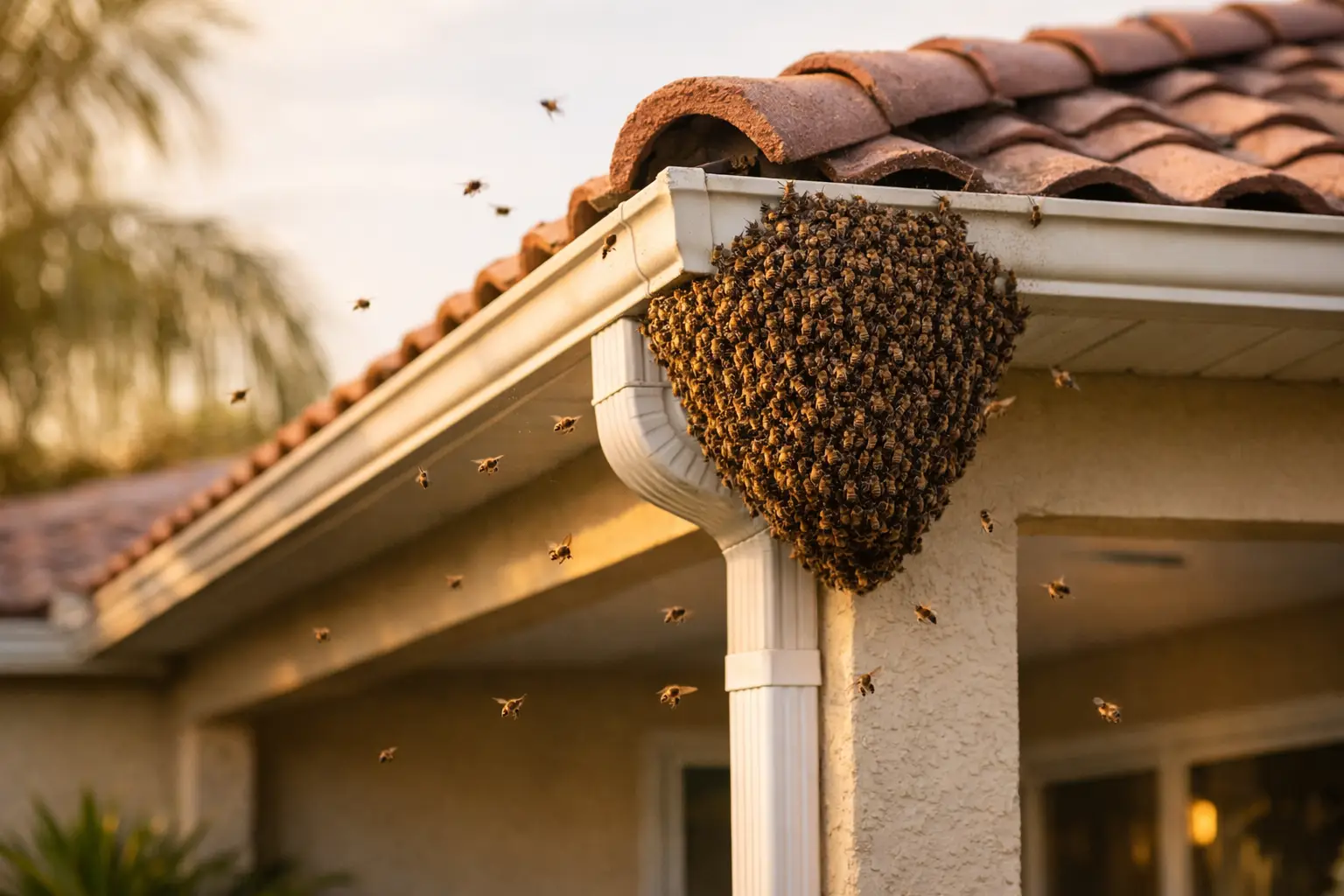

The trouble usually starts with a few bees near a soffit, a mailbox, or a wall cavity. Then the search begins: what is DIY bee removal, and can you handle it yourself before the problem gets worse?
In plain terms, DIY bee removal means a homeowner or property manager tries to remove, repel, trap, or eliminate bees without hiring a trained live removal specialist. Sometimes that means spraying an aerosol from the hardware store. Sometimes it means sealing an entry hole at night, hanging a trap, vacuuming a swarm, or trying a home remedy someone posted online.
The idea sounds simple. The reality usually is not. Bees are not just insects sitting on the surface. In many cases, they are a full colony with comb, brood, pollen, and stored honey hidden inside a structure. Once bees move into a wall, roofline, chimney, shed, or water box, the job stops being a quick fix and becomes a structural and biological problem.
What is DIY bee removal in real-world terms?
Most people asking what is DIY bee removal are really asking one of three things: Can I get these bees to leave, can I do it cheaply, and can I avoid getting stung? Those are fair questions. But the answer depends on what kind of bee situation you actually have.
A fresh swarm hanging from a branch is very different from an established colony inside a block wall. A swarm is often temporary and exposed. An established colony has already built comb and committed to the space. That distinction matters because a method that looks successful on day one can fail badly by day seven.
For example, spraying visible bees may kill some workers at the entrance while leaving the queen and most of the colony protected deep inside. Sealing the hole may quiet outside traffic for a while, but trapped bees often search for another exit and end up inside living spaces. Even worse, the comb and honey remain behind, which can melt, ferment, stain drywall, and attract ants, roaches, rodents, and other pests.
Why homeowners try DIY first
People usually do not choose DIY because they are careless. They choose it because they are under pressure.
Maybe children use the backyard every day. Maybe customers are walking past the entrance to a business. Maybe there is fear of cost, fear of stings, or the hope that the issue is small enough to manage without calling anyone. In Southwest Florida, where warm weather lets colonies stay active for long stretches, that urgency can ramp up fast.
There is also a common misconception that bees behave like wasps. They do not. Wasps build paper nests that can sometimes be removed in one piece. Honey bees build wax comb and store significant amounts of honey. If the colony is inside a structure, removing the insects alone is only part of the job.
That is why DIY attempts often feel cheaper at first and become more expensive later. The first step might cost very little. The cleanup, repairs, and repeat activity are where the real price shows up.
The biggest problem with DIY bee removal
The main issue is incomplete removal.
When bees establish a colony in a structure, there are several components that need to be addressed: the live bees, the queen, the brood, the comb, the honey, and the entry points. DIY methods usually focus on the visible insects and ignore everything else. From a distance, that looks like progress. From a removal standpoint, it means the core of the problem is still active or the site is still attractive.
Poison is a good example. Even when it knocks down bee traffic, it does not solve the hidden hive material. Dead bees and abandoned comb inside a wall cavity can create odor, leaks, and secondary infestations. If any part of the colony survives, rebuilding can happen quickly. If the colony dies completely but the comb remains, new swarms may move into the same spot later.
That is one reason humane live removal exists as a specialty. The goal is not just to get bees away from people. It is to remove the colony correctly and reduce the chance of the same-place problem repeating.
When DIY is especially risky
Some situations are more dangerous than others, and this is where honesty matters. It depends on the location, colony size, and bee behavior.
If bees are entering a wall, soffit, roofline, chimney, or ground void, DIY gets risky fast. The same is true if activity has been going on for more than a few days, if there are many bees coming and going in a steady line, or if anyone nearby has a sting allergy. Commercial properties, schools, HOAs, and public-facing spaces also carry a liability issue that makes amateur handling a poor bet.
Aggression is another factor. Not every colony is defensive, but some are. In Florida, that is not something to guess about from ten feet away with a can of spray. A disturbed colony can respond in force, and that puts neighbors, pets, and bystanders at risk.
Even a visible swarm can be mishandled. People see a cluster on a tree branch and assume they can shake it into a box. That can work in skilled hands. It can also scatter the bees, injure the queen, or turn a calm event into a defensive one.
What professional live bee removal does differently
A trained removal specialist starts by identifying what is actually present. Are these honey bees, bumble bees, carpenter bees, or wasps? Is this a swarm, an exposed hive, or a structural colony? Is the goal relocation, cut-out, or immediate public safety containment?
Then comes the method. Professional live bee removal is built around access, safe handling, complete hive removal when needed, and reducing recurrence. In a structural removal, that can mean opening the affected area, removing bees and comb, cleaning residual honey and wax, and helping address why the cavity appealed to bees in the first place.
That level of work is the difference between making bees disappear for a day and solving the actual problem.
For a company like Beeswild, which combines removal with beekeeping and relocation, the mission goes one step further. The bees are not treated as disposable pests. Healthy colonies can be rescued and rehomed in managed farm environments where they continue doing what bees are supposed to do.
Is there ever a place for a do-it-yourself response?
Sometimes, but the right DIY response is often smaller than people expect.
If you see a few bees investigating a spot, the smart do-it-yourself move is observation, not action. Watch the flight path from a safe distance. Note whether traffic is increasing. Avoid blocking the hole, avoid spraying, and keep children and pets away from the area.
If it appears to be a swarm resting in an exposed place, the safest DIY step is still restraint. Swarms often move on, but not always. Trying to force the issue can turn a manageable situation into a dangerous one.
There are also cases where the insect is not a honey bee at all. Carpenter bees around trim or fascia, for example, call for a different approach than a honey bee colony inside a wall. Correct identification changes everything.
So yes, there is a role for homeowners – document what you see, create space, and avoid making the structure harder to work on later. But actual removal is where experience matters.
How to tell when it is time to call for help
If bees are entering a structure, if the activity has lasted more than a day or two, if you hear buzzing inside a wall, or if anyone on site is vulnerable to stings, it is time to bring in a professional. The same applies if a business, HOA, or public area is involved. Speed matters, but so does method.
A good removal provider should be able to explain what type of bee problem you have, whether the colony can be relocated, what structural access may be needed, and what happens after the bees are out. Transparency is not a bonus here. It is part of doing the job right.
One more point that often gets overlooked: warranties matter. If bees return to the same spot, that tells you whether the original problem was fully addressed or merely pushed around.
DIY bee removal is understandable. People want a fast answer when bees show up close to home or business. But once a colony has moved into a structure, the real question is not whether you can disturb it. It is whether you can remove it completely, safely, and without creating a larger repair problem afterward.
When bees and buildings overlap, the calmest move is usually the smartest one: protect people, respect the bees, and let the removal method match the biology of the hive.

One response
[…] is also why a homeowner should not attempt a trap-out, vacuum removal, or chemical treatment found online. Structural bee removal involves more than collecting visible bees. The comb must be […]