
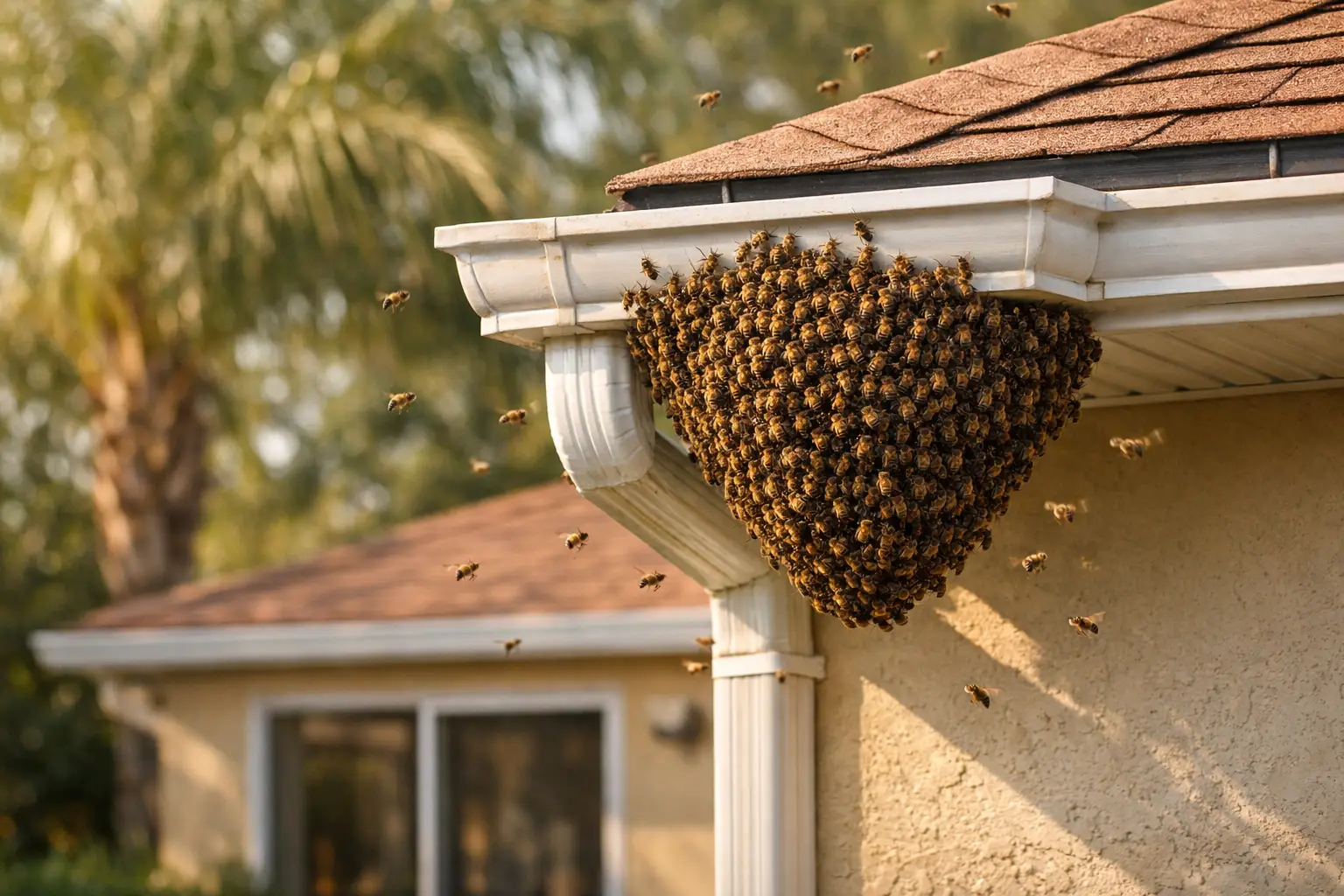

A cluster of bees under an eave can go from surprising to urgent in a single afternoon. In Florida, where warm weather stretches the season and colonies can establish quickly, licensed bee removal florida homeowners search for is not just about getting insects off the property. It is about protecting people, preventing structural damage, and handling a living colony the right way.
That distinction matters more than most people realize. Bees are not random pests. A swarm hanging from a tree branch is very different from a colony that has already moved into a wall, soffit, roofline, or meter box. The response should be different too. If the job is handled badly, the bees may die, the comb may remain inside the structure, and the property owner can end up with honey leaks, odors, staining, ants, roaches, wax moths, or rodents.
What licensed bee removal in Florida actually means
When people say they want a licensed bee removal company, they are usually asking for three things at once. They want someone legally able to perform the work, someone experienced enough to do it safely, and someone who understands what happens after the bees are gone.
In Florida, that matters because bee removals often sit at the intersection of pest control, public safety, and beekeeping. Removing a colony from a wall is not the same as spraying a wasp nest. A proper operator needs to assess species behavior, flight paths, comb location, entry points, ladder risk, cut-out access, and what will be required to keep the bees from reoccupying the void.
For homeowners and property managers, the practical takeaway is simple. A licensed provider is there to reduce liability, not create more of it. That is especially important if the bees are near children, pets, tenants, customers, pool decks, walkways, mail kiosks, or restaurant patios.
Why Florida bee removals are more complicated than they look
Florida properties create ideal nesting opportunities. Bees can settle in block walls, roof transitions, irrigation boxes, sheds, soffits, chimneys, and under mobile structures. In Southwest Florida, heat and humidity speed up colony activity, and a small issue can become a structural one faster than expected.
There is also the temperament question. Not every colony is defensive, but some are. Florida has long dealt with concerns about aggressive or Africanized honey bee genetics in certain populations. That does not mean every colony is dangerous, and it does not mean people should panic. It does mean removal work needs a calm, trained response and a site-specific safety plan.
This is why delay can be costly. A visible entrance hole with bees moving in and out all day usually means there is already comb inside. The longer that colony stays in place, the more wax, brood, pollen, and honey can accumulate behind the wall or roofline.
Swarm or established colony? The answer changes the job
A swarm is usually a temporary cluster. You might see thousands of bees gathered on a branch, fence, shrub, or side of a structure. They are often in transit, searching for a permanent home. Swarms can look dramatic, but they are typically easier to collect and relocate if addressed quickly.
An established colony is different. If bees are entering and exiting the same crack or hole day after day, especially around mid-morning and late afternoon, they have likely built comb inside. That is no longer a simple pickup. It is a structural removal problem.
This is where unlicensed or shortcut work creates trouble. Killing or dispersing the visible bees without removing the comb rarely solves the issue. The cavity still contains attractants. New bees may move in, and the remaining honey and brood can damage building materials.
Why poison often creates a second problem
Property owners are sometimes told the fastest solution is to spray. That can feel appealing when people are scared, but it is often the wrong tool for honey bees in structures.
Poison may kill foragers and leave the nest material behind. Once the colony collapses inside a wall, the wax and honey do not disappear. In Florida heat, honey can soften and seep. Dead brood and trapped organic material can smell. Secondary pests move in. In some cases, the original bee issue turns into a repair issue.
That is the trade-off people do not hear enough about. The cheapest first step can become the most expensive overall. Live removal and relocation is usually more labor intensive, but when it includes comb removal and clean-out, it addresses the source of the problem rather than just the symptom.
What a professional live removal process should include
Good bee removal starts with identification and inspection. The technician needs to confirm that the insects are honey bees and determine whether the situation is a swarm capture, an exposed colony removal, or a structural cut-out.
From there, the work should be explained clearly. If the colony is inside a wall or roof area, the property owner should understand where access will be made, what material may need to be opened, whether repairs are included, and what steps are needed to reduce reinfestation.
A proper structural removal generally includes removing the bees, removing the comb, and cleaning the affected cavity as needed. If comb is left behind, the job is incomplete. Depending on the site, the technician may also recommend sealing entry points after the colony is out.
For many eco-conscious property owners, relocation matters too. Some companies, including bee-centered operators like Beeswild.com, do more than remove colonies. They rehome salvageable bees into managed apiaries or safe farm areas. That approach protects the property and preserves valuable pollinators.
How to evaluate licensed bee removal Florida services
Not every company that advertises bee work handles it the same way. Ask direct questions. Do they perform live removals? Do they remove comb from structures? Are they insured? Have they handled soffits, block walls, roofs, or commercial access points like the one on your property?
You should also ask what happens after removal. Will they identify the entry site? Will they advise on sealing the void? If the colony is in a structure, will they explain the risk of leftover honey and wax? These questions tell you whether the company is solving the whole problem or just removing visible bees.
Response time matters, but so does honesty. Sometimes a swarm can be collected quickly with minimal disruption. Sometimes a colony in a wall requires more invasive work and a higher price. A trustworthy company explains the difference instead of pretending every job is simple.
When homeowners should call immediately
Some bee situations can wait a few hours for proper scheduling. Others should be treated as urgent. Call right away if bees are entering a building cavity, gathering near a doorway, pool equipment, mailbox, play area, pet run, or HVAC unit. The same goes for bees that become defensive when people walk past.
Commercial and HOA properties should move even faster. The liability exposure is higher, and foot traffic makes behavior less predictable. A colony tucked into a clubhouse wall or retail sign may seem contained until landscape crews, delivery drivers, or residents pass too close.
Municipal sites have their own pressure points. Parks, sidewalks, utility areas, and public buildings need rapid assessment because the public cannot be expected to recognize risk before approaching.
What you can do before help arrives
Keep people and pets away from the area. Do not spray water, throw objects, block the entrance, or try store-bought chemicals. Vibrations and disturbance can escalate bee behavior, especially with a colony already established in a structure.
If possible, observe from a safe distance and note where the bees are entering and exiting. That information can help the removal team assess what type of job they are walking into. A photo taken from far enough away to avoid agitation can also help.
Then step back. Bee removal is one of those jobs where doing less is often the safest choice.
The right outcome is not just empty air
The best bee removal leaves you with more than a cleared entry point. It leaves you with a safer property, less chance of recurring infestation, and no hidden mess aging inside the structure.
That is why licensed work matters in Florida. The real goal is not simply to make the bees disappear from view. It is to solve the problem in a way that protects the building, respects the biology of honey bees, and reduces risk for everyone who uses the property.
If bees have shown up at your home, storefront, or shared community structure, move quickly but choose carefully. The right response is calm, legal, and thorough – and that usually makes all the difference a few weeks later, when your walls are still dry and the problem is truly gone.

One response
[…] the proper license can create legal trouble, which is why many homeowners rely on authorized bee removal services rather than […]