
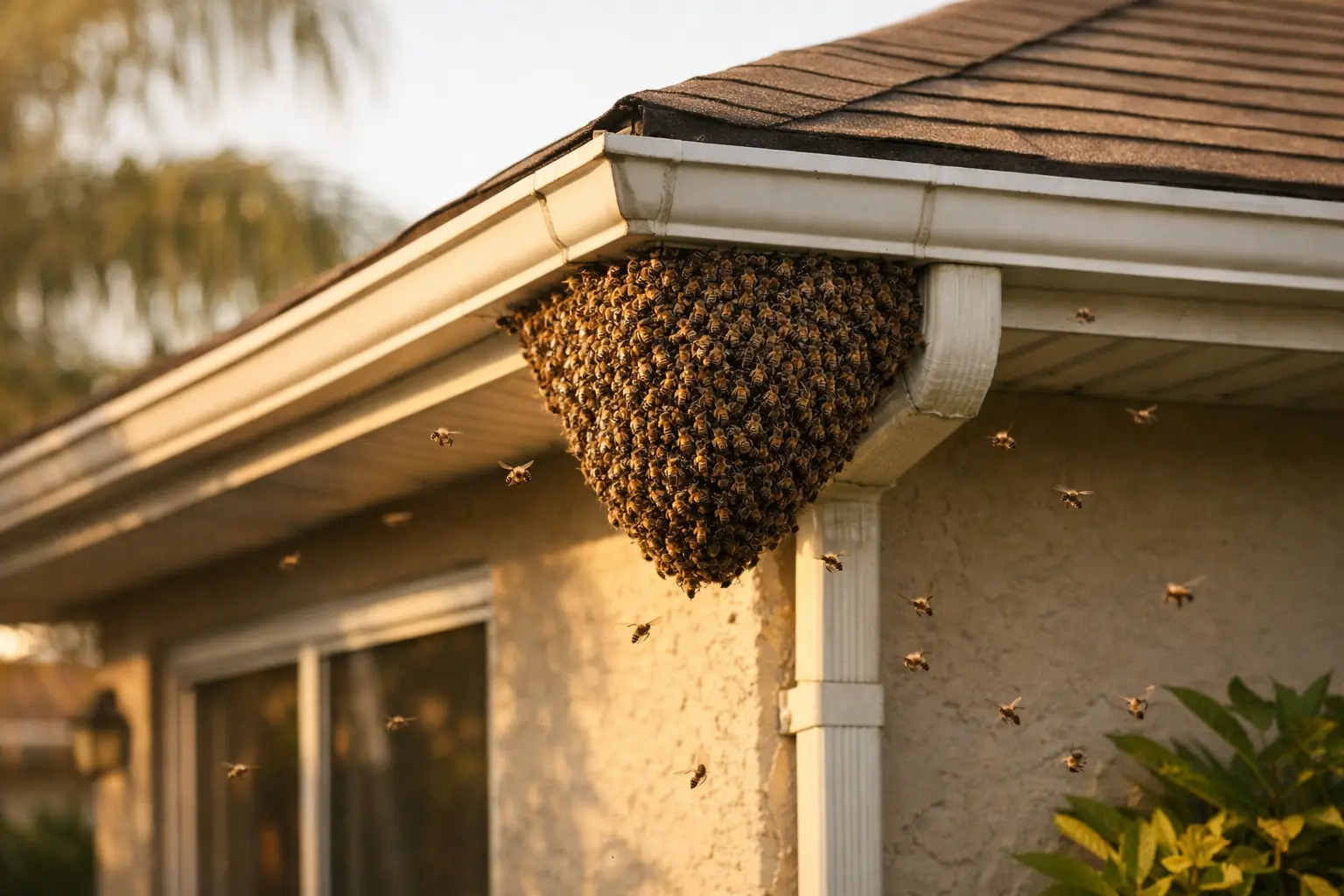

A swarm under an eave can turn a normal afternoon into a real problem fast. That is where 40 years of expertise, experience, and knowledge matters – not as a slogan, but as the difference between a rushed removal and a safe outcome for people, property, and the bees themselves.
In Southwest Florida, bee calls are rarely simple. A visible swarm on a tree branch is one thing. A mature colony inside a wall, soffit, shed, roofline, or utility space is another. Homeowners are usually worried about stings, children, pets, and whether honey will leak into drywall. Property managers are thinking about liability, tenant safety, and how quickly the issue can be handled without making the damage worse. In both cases, experience changes the result.
Why 40 years of expertise, experience, and knowledge matters
Bee work is not just pest control, and it is not just beekeeping. Structural bee removal sits in the middle of both. It requires understanding bee behavior, brood patterns, comb attachment, seasonal movement, hive temperament, building construction, and what happens after the bees are gone.
That last part is where many removals fail. If bees are killed or driven out but comb, brood, and honey remain inside the structure, the problem often continues. Wax can melt. Honey can ferment or seep. Ants, roaches, rodents, and other pests may move in. New swarms may even be attracted back to the same cavity. A short-term fix can become a longer-term repair bill.
Experience teaches a crew to think beyond the visible cluster. It helps them identify the entry point, estimate colony depth, read bee traffic, and determine whether the colony is newly established or well developed. It also helps them know when a job is routine and when it carries higher risk because of height, aggressive behavior, difficult access, or hidden structural complications.
What seasoned bee removal actually looks like
People often imagine bee removal as simply taking away a box of insects. Real live removal is much more precise than that. The goal is not to scatter a colony. The goal is to remove the bees, recover the comb when possible, reduce contamination inside the structure, and relocate the colony into a setting where it has a real chance to survive.
That requires a calm process. First comes assessment. Where are the bees entering? How long have they been there? Is this a swarm resting temporarily, or a colony established inside the structure? Are there signs of honey storage, brood, or defensive behavior? The answers shape the method.
Then comes access. In structural removals, the challenge is often not the bees but the building. Opening the wrong area can increase repair costs and extend the job. Opening the right area, cleanly and safely, comes from understanding common nesting patterns in walls, roofs, soffits, chimneys, and hollow voids.
The removal itself must account for the queen, worker bees, brood, and comb. If the queen is not recovered, relocated bees may not reestablish well. If brood is left behind, worker bees can continue clustering around the site. If honey remains in large amounts, the property may continue to suffer after the truck has left.
Humane relocation is not the same as doing less
Some people hear “live bee removal” and assume it means a softer, less effective version of extermination. In practice, humane relocation is usually the more demanding option.
It takes planning, proper equipment, and enough beekeeping knowledge to keep the colony viable after removal. Rescued bees need a safe place to go. They need to be rehomed into managed apiary conditions where they can stabilize, rebuild, and continue contributing to pollination and honey production.
That hybrid approach is what makes this work different. A company that both removes bees and maintains bee farms is not treating the colony as waste. It is treating bees as livestock with ecological value. That changes the method. It also changes the standard of care.
The trade-off homeowners should understand
When people are scared, speed feels like the only thing that matters. Fast response does matter, especially with exposed swarms or aggressive activity near entries, play areas, walkways, or businesses. But there is a difference between urgent service and careless service.
A quick chemical treatment may appear cheaper at first. The problem is what it leaves behind. Dead bees inside a wall do not remove comb. Poison does not remove honey. And if the structure still contains attractants, the same location can become a target again.
Live removal can involve more labor, especially when colonies are established deep inside a structure. That is the trade-off. It may take more skill and more time up front, but it is often the cleaner long-term decision. For many property owners, that means fewer lingering problems and a lower chance of repeat activity in the same spot.
40 years of expertise, experience, and knowledge in structural work
The hardest bee jobs are rarely the dramatic ones people can see from the yard. The hardest jobs are often hidden. A few bees coming and going from a small gap in fascia board may point to a colony that has been growing for months. What looks minor from outside can mean extensive comb inside.
This is where structural knowledge matters as much as bee knowledge. A removal team needs to understand how buildings are assembled, where cavities run, how heat affects comb, and how to open and close access points responsibly. Good work protects not just the people nearby but also the integrity of the structure.
For HOAs, restaurants, shopping centers, and public facilities, that experience is even more important. These sites carry more foot traffic and more liability. The issue is not simply whether bees are present. The issue is whether they create a public hazard, how quickly that hazard can be reduced, and whether the removal method creates new risks for residents, customers, or staff.
Why relocation works better when backed by farming knowledge
Not every removed colony is equally healthy, and not every colony is worth relocating in the same way. That is another place where experience shows. Seasoned beekeepers can evaluate colony strength, brood quality, behavior, and whether the bees can be integrated into managed apiaries.
Relocation is not magic. Some colonies are stressed. Some have been in poor structural conditions. Some are unusually defensive. Good judgment matters. A professional team should know how to stabilize what can be saved and when extra caution is required.
A farming-based model creates accountability after the removal. The bees are not just taken away. They are placed into a managed environment where they can continue as part of a working agricultural system. For environmentally minded customers, that is often the part that brings real peace of mind. The colony is not simply gone from the property. It has a place to go.
What reassurance should sound like
People calling for bee removal usually do not want a lecture. They want clarity. Is this dangerous? Do I need to stay away? Will the bees come back? Will my wall need to be opened? What happens to the colony?
The best answers are direct and honest. Sometimes the safest advice is to keep distance and wait for a trained team. Sometimes a swarm is temporary and less risky than an established colony, but that does not mean it should be ignored. Sometimes removal will require opening part of the structure. Sometimes there is no clean shortcut.
Clear communication builds trust because it replaces panic with a process. That is one reason warranty language matters too. A same-place removal warranty shows confidence in the work and signals that the goal is not just to leave the site quieter for a day, but to address the reason the bees were there in the first place.
A practical standard for choosing a bee professional
If you are comparing providers, look for more than availability. Ask whether the service is live removal or extermination. Ask what happens to the colony after removal. Ask whether comb and honey are addressed when the bees are inside a structure. Ask whether the company has experience with both residential and commercial properties. Ask what kind of follow-through is offered if bees return to the same area.
The right choice is not always the lowest estimate. It is the provider who understands that saving bees and protecting property are not opposing goals. Done properly, they support each other.
That is the real value behind 40 years of expertise, experience, and knowledge. It means knowing when a swarm is simple, when a structure is hiding a larger issue, and how to solve the problem without turning a living colony into a bigger mess behind your walls. When bees show up where they should not be, calm, skilled work is what protects everyone involved.

No responses yet