

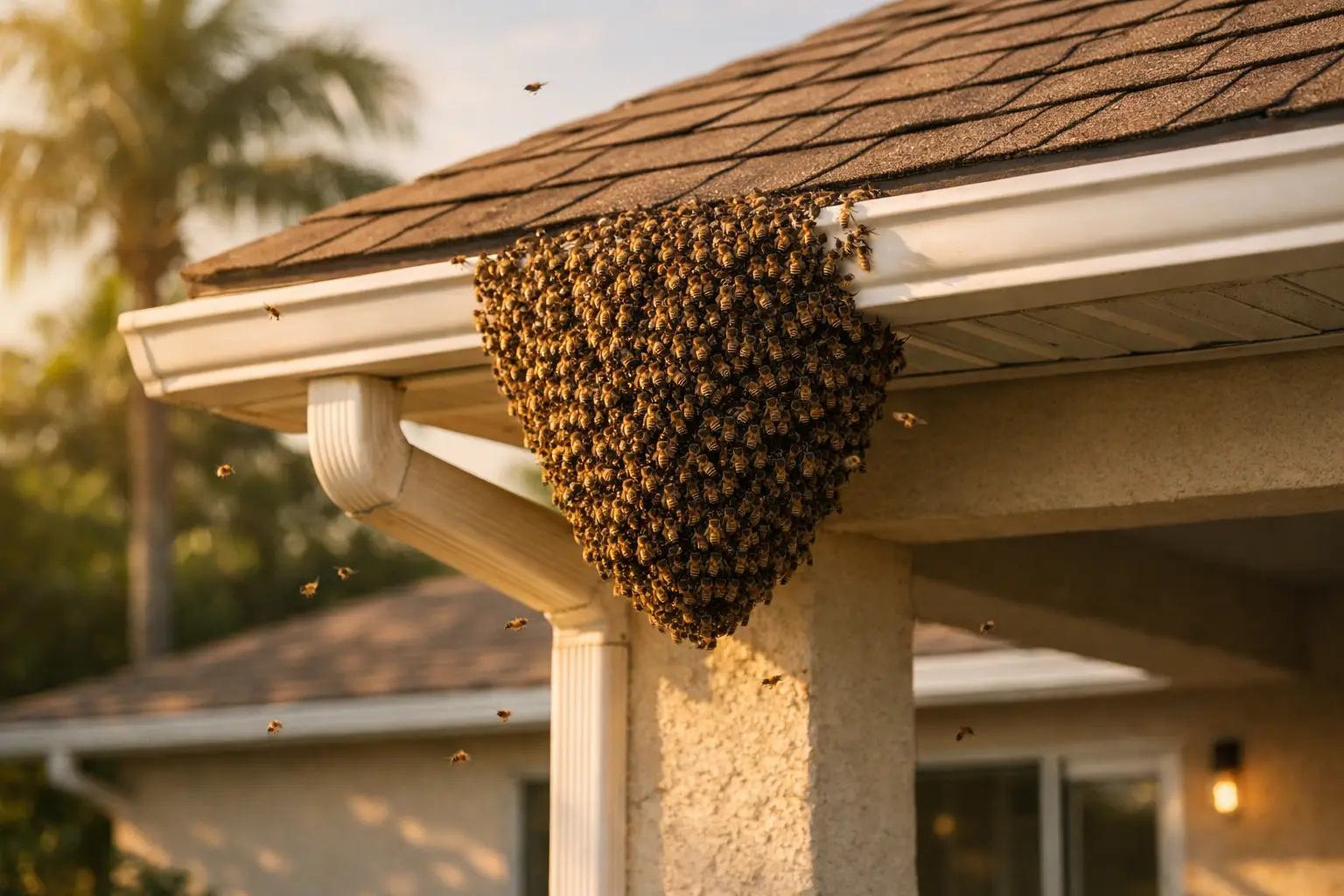

A cluster of bees under an eave can turn a normal afternoon into a fast decision. Do you call pest control, wait for them to leave, or look for no kill bee removal? For homeowners and property managers, the right answer usually comes down to two things – safety now and fewer problems later.
No kill bee removal is not just a softer version of pest control. Done correctly, it is a technical process that removes the colony, recovers comb and brood, and relocates viable bees to an apiary or safe managed site. The goal is to solve the immediate risk without leaving behind honey, wax, dead bees, and a hidden cavity that attracts the next swarm.
What no kill bee removal actually includes
A true live removal is more than collecting visible bees. If the colony is inside a wall, soffit, roofline, or utility box, the structure often has to be opened carefully so the full nest can be accessed. That matters because the comb is the colony. It contains brood, food stores, and the physical layout the bees are defending.
If only the adult bees are vacuumed or brushed away, the job is incomplete. Brood left behind dies. Honey can melt into insulation or drywall. Wax and pheromones continue to attract robber bees, ants, roaches, rodents, and future swarms. This is one reason poison often creates a second problem after the first one seems gone.
With no kill bee removal, the technician identifies where the bees entered, where the comb is located, how large the colony is, and whether the structure can be opened without creating unnecessary damage. The bees are then removed alive, the comb is cut out, salvageable brood comb may be secured into hive frames, and the cavity is cleaned and sealed so the location does not keep advertising itself to other bees.
Why killing bees often fails as a property solution
People usually call because they are scared of stings, worried about children or pets, or concerned that bees are getting deeper into the house. Those concerns are valid. But killing the colony inside a structure rarely addresses the whole risk.
Once a poisoned colony collapses, the honey, pollen, and wax remain. In Southwest Florida heat, that can lead to dripping honey, stained walls, foul odors, and insect activity. If the nest is large, the cleanup can become more expensive than the original treatment. A dead colony inside a wall is still a structural issue.
There is also the pollinator issue. Honey bees are managed livestock, not just nuisance insects. When a healthy colony can be removed and rehomed, that preserves a productive hive instead of destroying it. For an agricultural operation that also rescues bees, that difference matters.
When no kill bee removal is the best fit
Most established honey bee colonies can be removed alive if the site is accessible and the bees are not in a condition that makes relocation impossible. This method is often the best fit for colonies in walls, roofs, sheds, hollow trees near occupied spaces, and commercial structures where long-term liability matters.
It is also a strong option for swarms. A swarm is usually a temporary cluster of bees resting while scout bees search for a permanent home. Swarms are often calmer than an established colony because they are not defending brood. If caught early, they can often be collected with minimal disruption.
That said, it depends on the situation. If a colony is severely damaged, contaminated, or located in a place where safe access is impossible, the available options may narrow. A responsible bee removal specialist should explain those limits clearly rather than promising a one-size-fits-all fix.
No kill bee removal for homes, businesses, and HOAs
For homeowners, the main concern is usually immediate safety combined with hidden damage. Bees entering through a small gap in brick, fascia, or soffit may already have built a substantial nest behind the surface. The visible traffic at the entry point rarely shows the full extent of the colony.
For businesses and HOA properties, the issue expands to public exposure and liability. A colony near a walkway, mailbox cluster, pool area, dumpster enclosure, or restaurant patio creates a risk that cannot be ignored. In those settings, live removal is not just about saving bees. It is about resolving a hazard thoroughly so the same location does not remain attractive to future colonies.
Municipal and community settings add another layer. When bees are near parks, schools, or utility infrastructure, response speed and site control matter. The right removal plan has to protect the public first while still assessing whether the colony can be safely relocated.
How the live removal process usually works
A proper evaluation starts with identification. Not every stinging insect is a honey bee. Wasps, hornets, and bumble bees require different handling. Once honey bees are confirmed, the removal specialist assesses the entry point, bee traffic, likely comb location, height, structural material, and access needs.
If the colony is exposed, removal may be relatively direct. If it is structural, the job often involves opening the wall or roof area, removing the bees and comb, and then cleaning the cavity. Salvageable bees are placed into transportable hive equipment and moved to a managed location where they can recover.
Afterward, exclusion is critical. If the opening is not sealed and the cavity is not properly cleaned, scout bees from another swarm may return later. A good no kill bee removal job treats the cause, not just the visible symptom.
Questions to ask before you hire anyone
If a company advertises live removal, ask whether they remove the comb or only the bees. Ask what happens to the colony after removal. Ask whether they repair or coordinate the closure of entry points. Ask whether they are experienced with structural removals, not just swarm catches.
You should also ask how they handle aggressive bee behavior and site safety. In Florida, defensive colonies are a real concern, and the work needs to be done by people who understand both bee biology and public safety. Fast is good, but controlled is better.
One useful question is simple: what will still be left behind when the job is done? If the answer includes honey, wax, brood, or an open cavity, you are not hearing a complete plan.
What affects cost and complexity
Bee removal pricing varies because the work varies. A softball-sized swarm on a small branch is not the same as a long-established colony inside a second-story stucco wall. Height, accessibility, colony size, heat, electrical hazards, and the amount of structural opening required all affect the job.
No kill bee removal can cost more upfront than a spray treatment, but that comparison misses the real math. If killing the bees leaves comb and honey inside the structure, you may still pay for opening walls, cleaning contamination, and sealing the entry later. The cheaper invoice can become the more expensive outcome.
A Florida-specific reality
In Southwest Florida, bee activity can stay high for much of the year. Warm weather, abundant forage, and long flying seasons mean swarms and established colonies are common. That makes early response especially valuable. The longer a colony remains inside a structure, the larger the nest can become and the more involved the removal may be.
This is also why local experience matters. A technician working in this region should understand common nesting sites, heat-related comb collapse risks, and the difference between a temporary swarm and a settled colony already building out inside a void.
For property owners in Cape Coral and the surrounding area, Beeswild handles both live removal and relocation as part of a working beekeeping operation. That means rescued colonies are not treated as waste. They are given a path to continue as managed bees.
If you have bees on your property, keep people and pets away from the area, do not spray them, and avoid sealing the entry while the colony is still inside. Trapped bees often force their way deeper into structures or emerge in unexpected rooms.
The best next step is a calm, informed one. A bee problem feels urgent because it is, but the fastest fix is not always the one that protects your building, your family, or the bees. When removal is done with skill and purpose, no kill bee removal can solve all three at once.

No responses yet