
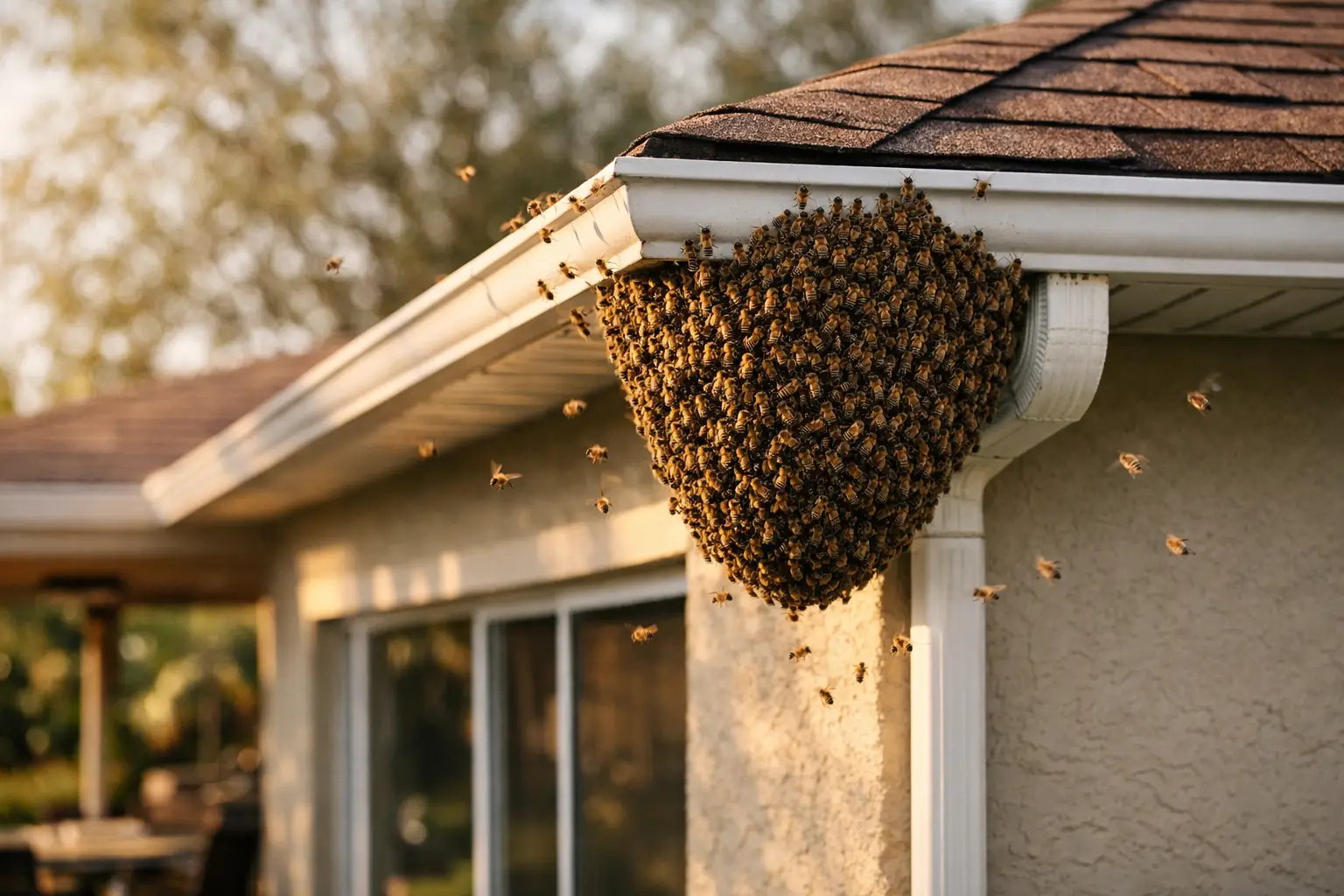

You usually know it is not a small problem when bees keep returning to the same wall, roofline, or soffit day after day. That is the moment a structural bee removal guide matters, because a colony living inside a building is very different from a temporary swarm resting on a branch. The stakes are higher for people, pets, and the structure itself, and the wrong fix can leave behind honey, wax, brood, and a much bigger repair bill.
Structural removals are not simple spray jobs. They involve locating the colony, opening the building carefully, removing bees alive when possible, taking out comb and honey, and restoring the area so another colony does not move right back in. For homeowners, that means understanding why bees chose the space and why partial removal almost always creates more trouble than it solves.
What a structural bee removal guide should cover
A true structural bee removal guide starts with one basic distinction. A swarm is a cluster of bees temporarily resting while scouts search for a new home. A structural colony has already moved in and begun building comb inside a wall cavity, chimney chase, fascia, roof void, shed, or floor system.
That distinction changes everything. Swarms can sometimes be collected quickly with minimal impact to the property. Established colonies require inspection, access planning, live removal, comb removal, cleanup, and exclusion work. If the bees are inside a structure, the goal is not just to make the visible bees disappear. The goal is to remove the biological material that attracts pests, causes staining, and invites future infestations.
In Florida and across warm climates, colonies can grow fast. A small entrance hole in stucco, siding, block, or trim can lead to a large nest hidden from view. By the time bees are noticed indoors near a window or light fixture, the colony may already be well established.
Why structural bee problems get worse when handled the wrong way
The most common mistake is treating a structural colony like a routine pest issue. Poison may kill some or even most of the bees, but it does not remove the comb, honey, pollen, brood, or dead bees inside the cavity. That is where secondary damage begins.
Honey can melt and seep into drywall, ceilings, insulation, and trim. Wax and brood attract ants, roaches, beetles, rodents, and other scavengers. Dead bees decompose. If the entry point stays open and the cavity still smells like a colony, new bees may move in once temperatures and conditions are favorable.
There is also a safety issue. Disturbing an established colony without proper containment can trigger defensive behavior. That risk is especially serious around entryways, play areas, sidewalks, pool cages, restaurants, mail kiosks, and HOA common spaces. It depends on colony temperament, weather, access, and species mix, but guessing is not a safety plan.
How professionals approach structural bee removal
The first step is inspection, not cutting. A technician needs to identify flight patterns, locate the entrance, estimate colony size, and determine where the comb is likely attached. Thermal tools, sound assessment, construction knowledge, and direct observation all help. The visible bee traffic is only part of the picture.
Next comes access planning. The best removal is the one that reaches the colony with the least structural disruption while still allowing complete comb removal. Sometimes that means opening drywall from the interior. Other times it means accessing soffits, fascia, siding, or roof decking from the exterior. There is no universal rule. The right choice depends on where the bees are clustered, what materials are involved, and how to avoid unnecessary damage.
Live removal follows. In humane structural removals, bees are carefully collected and transferred rather than exterminated. The queen, worker bees, brood comb, and resources are handled in a way that supports relocation when conditions allow. This is where beekeeping experience matters. Removing a colony alive is not the same as simply dislodging insects from a cavity.
Then comes the part many people underestimate – comb and honey removal. Every accessible piece of comb should come out. Residual wax and honey are what create the odor and pest attraction that lead to future headaches. Cleanup may include scraping, vacuuming bee debris, and treating surfaces in a way that reduces scent trails without introducing unnecessary chemicals.
The last step is exclusion and repair coordination. Once the cavity is clean, the entry point must be sealed correctly. If there are multiple gaps in the same area, those need attention too. Otherwise, the building remains a good bee house with a welcome sign left on the door.
Structural bee removal guide for homeowners
If you suspect bees inside a wall or roof area, the safest move is to observe, not investigate up close. Watch where bees enter and exit from a distance. Note the time of day when traffic is heaviest. Listen for buzzing in walls or ceilings, but do not tap, spray, or seal the opening.
Sealing the entrance is a mistake people make for understandable reasons. It feels logical. If bees cannot get in or out, the problem should stop. In reality, trapped bees often look for another exit and may emerge into living spaces. If the colony remains inside, you have still kept all the comb and honey in the structure.
You should also avoid using foam, caulk, water, smoke, or store-bought insecticides on an established colony. These methods rarely solve the root issue and can turn a manageable removal into an emergency response. If children, pets, or someone with a sting allergy are present, keep the area clear and treat the site as an active hazard until it is assessed.
Photos and short videos from a safe distance can help document activity for a removal specialist. That is often more useful than trying to estimate colony size yourself.
What property managers and HOAs should think about
For commercial and community properties, structural bee removal is a liability and maintenance issue at the same time. The visible risk is stings near high-traffic areas. The hidden risk is deferred damage inside walls, monument signs, utility enclosures, clubhouse roofs, and shared structures.
A practical structural bee removal guide for managers should include response speed, access permissions, tenant communication, and documentation. If bees are active near public areas, restricting access may be necessary until removal is completed. It is also wise to think past the immediate incident. Why did the colony choose that location? Were there open penetrations, aging trim, unsealed roof gaps, or recurring void spaces that make reinfestation likely?
Managers often want a cheap, fast solution. That instinct is understandable, but partial work tends to become repeat work. A lower initial invoice can turn into drywall replacement, odor remediation, pest treatment, and a second bee removal later. On shared properties, that usually costs more than doing the job correctly the first time.
When removal gets more complicated
Not every structure presents the same level of difficulty. Bees in a single-story soffit are one thing. Bees in masonry voids, chimney structures, second-story rooflines, or under heavy tile roofing are another. Historic buildings, occupied commercial spaces, and areas with limited access add another layer of planning.
Season, heat, rainfall, and colony size also matter. In Southwest Florida, long warm periods can support large colonies and active foraging almost year-round. That means hidden nests can become substantial before anyone notices. It also means quick action helps reduce both bee population growth and honey accumulation inside the structure.
There are times when full access is not immediately possible. In those cases, the right approach may involve staged work, temporary risk reduction, or coordinating with roofers, contractors, or maintenance teams. Good removal work is technical because buildings are technical.
Signs the colony may already be causing damage
Some warning signs are obvious, like a steady stream of bees entering one hole. Others are easier to miss. Dark stains on walls or ceilings, honey odor, increased ant activity, bees appearing inside rooms, and buzzing that seems stronger during the heat of the day can all point to a colony behind the surface.
On commercial properties, look at parapets, awnings, sign bands, utility boxes, and decorative facades. On homes, common trouble spots include soffits, block voids, eaves, chimneys, sheds, and areas around old repairs. Bees are efficient at finding protected cavities with small entry points.
Choosing the right help
Not every pest company performs true structural bee removal, and not every beekeeper is equipped for building access work. The best fit is someone who understands both bee biology and structural conditions, and who can explain the removal plan clearly. Homeowners and managers should know whether live removal is being attempted, whether comb and honey will be removed, what access is required, and how the area will be secured afterward.
That combination of humane handling and full cavity cleanup is what protects both the bees and the building. For a company like Beeswild, that mission makes sense because the work does not end when the bees leave the wall. The colony needs a safe place to continue living, and the structure needs to be returned to a condition that does not invite the next colony.
If bees have chosen your building, the real question is not how to make them disappear by tonight. It is how to solve the problem without creating a second one behind the wall.

No responses yet