
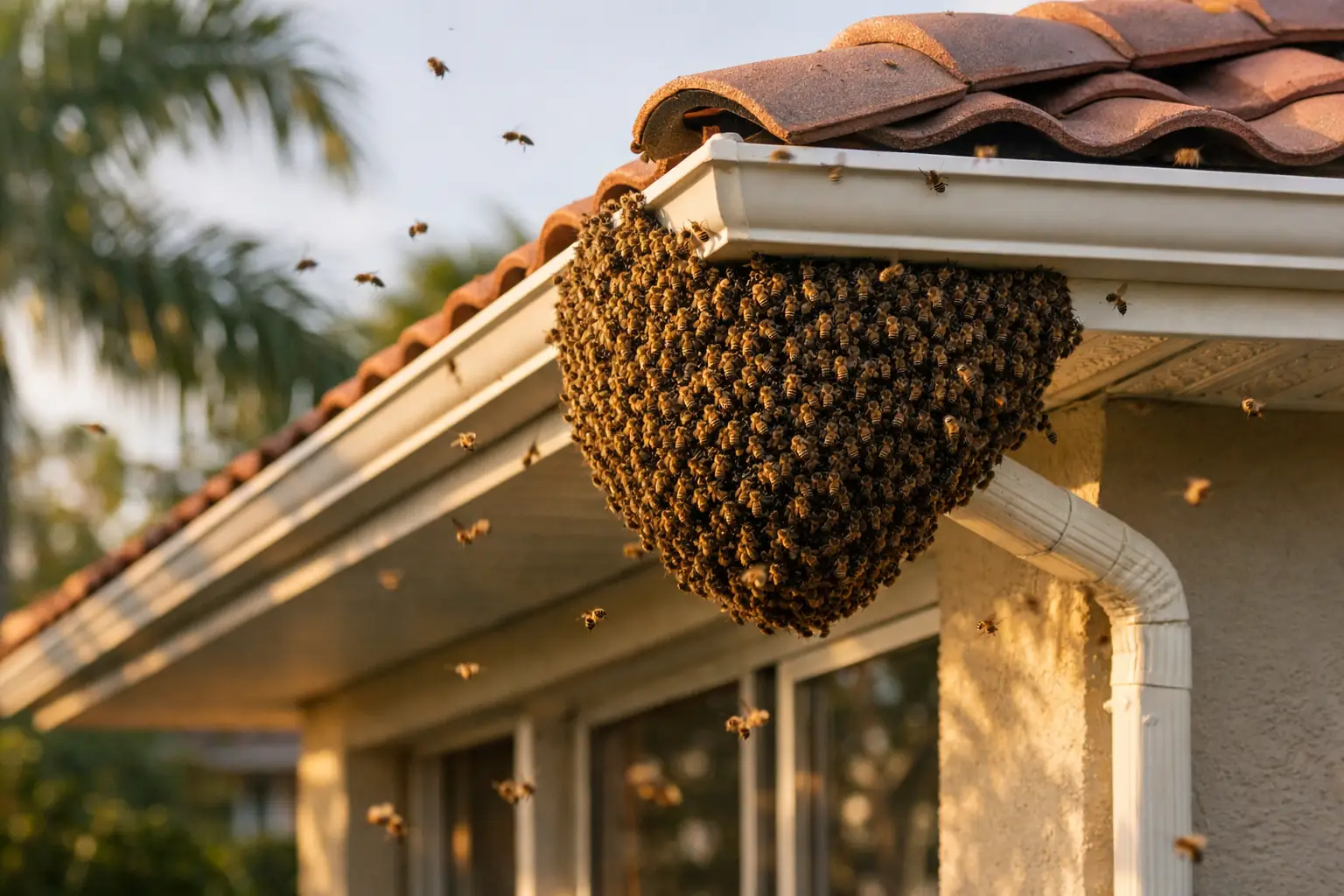

A loud cluster under the eaves, a dark knot hanging from a tree branch, bees pouring in and out of a block wall – that is usually when people search for emergency bee removal near me. The urgency is real. In Southwest Florida, heat, hollow structures, and year-round activity make bee issues more than a seasonal nuisance. The right response has to protect people first, but it should also account for what happens to the colony, the structure, and the area after the bees are gone.
Not every bee sighting is an emergency. A swarm resting on a branch may look dramatic, but it can be far less dangerous than an established colony hidden inside a wall. On the other hand, bees entering a home, gathering near a school entry, or becoming defensive around pets, workers, or foot traffic needs prompt professional attention. The difference matters because the safest solution depends on where the bees are, how long they have been there, and whether they are simply resting or actively nesting.
When emergency bee removal near me is the right call
An emergency usually starts with risk, not just presence. If bees are clustered around a front door, mailbox, utility area, playground, soffit, attic vent, or pool equipment pad, the problem can escalate quickly. The same is true when a colony is inside a structure. Once bees build comb in a wall, roofline, chimney chase, or floor system, the issue is no longer about stings alone. Honey, brood, wax, and trapped heat can lead to leaks, stains, fermentation, and repeat infestations if the job is handled halfway.
Aggressive behavior is another clear sign. Honey bees are not naturally interested in chasing people across a yard, but colonies will defend themselves if they feel threatened. Loud equipment, lawn mowers, vibrations, trimming, pressure washing, or even repeated activity near an entry point can trigger defensive behavior. In Florida, where Africanized genetics are present in some populations, fast, informed evaluation matters.
For commercial properties and HOAs, the threshold is even lower. A cluster near outdoor dining, a colony in signage, or bees around common walkways creates a liability issue before anyone gets stung. In those situations, waiting to see if the bees leave on their own is rarely a responsible plan.
Why fast action matters – and why spraying often makes it worse
When people panic, they often reach for wasp spray, foam, or a general pest control company that treats every stinging insect the same way. That approach can create bigger problems. Poison may kill some bees, but it does not remove the comb, honey, pollen stores, or larvae left inside the structure. What remains can melt, rot, attract ants and roaches, stain drywall, and pull in a new swarm later.
There is also the safety issue. A colony under stress can become more defensive during a failed treatment. If the nest is hidden in a wall void or roof cavity, spraying the visible entrance rarely solves the source. It only pushes the colony deeper, scatters activity, or causes surviving bees to seek new exit points inside the building.
Live removal and relocation is different because it addresses the full problem. The goal is not simply to stop visible bee traffic. It is to locate the colony, remove bees and comb, clean the area, and reduce the chance of reinfestation. For a honey farm and relocation service, that work also preserves valuable pollinators rather than treating them like disposable pests.
What a real emergency bee removal process should include
A proper response starts with identifying whether you are dealing with a swarm or a structural colony. A swarm is a temporary cluster of bees resting while scouts look for a permanent home. These can often be collected intact if reached quickly. Structural colonies are more involved because they have already started building comb and storing resources.
For structural removals, access is the hard part. Bees may be entering through a gap no wider than a pencil, but the colony behind it could be large. Professionals look for flight patterns, heat buildup, sound, staining, and wall or soffit conditions to map the nest. Then they remove the bees and the comb, not just the visible surface activity. If the comb stays behind, the job is not finished.
That is why humane bee removal sometimes includes opening part of a soffit, fascia, wall, shed, or roofline. Homeowners do not love hearing that, but transparency matters. A careful cutout now is usually less costly than hidden honey damage later. The trade-off is simple: minimal access may look easier in the moment, but complete removal is what protects the structure.
After the colony is removed, cleanup and exclusion matter. Residual scent from wax and honey attracts scout bees. The cavity should be cleared, cleaned as needed, and sealed or repaired so another colony does not move in a month later. Emergency work is not just about getting through today. It is about preventing the repeat call.
What to do before help arrives
If you have found bees and believe the situation is urgent, increase distance first. Keep children, pets, and bystanders away from the area. If the bees are near an entry door, use another exit if possible. Do not throw objects, spray water, bang on the wall, or try to smoke them out. Those actions often make a colony more defensive.
If bees are inside a room, close interior doors and keep the space isolated. If you can do so safely, lower activity around the nest area. Turn off lawn equipment, postpone trimming, and avoid vibrations near the colony location. If anyone is stung multiple times or has signs of an allergic reaction, seek medical care immediately.
Photos or video from a safe distance can help a removal specialist assess the issue faster. What matters most is the location of bee traffic, how long it has been happening, and whether the bees are clustering outside or moving into a structure. That information helps determine equipment, access needs, and urgency.
Emergency bee removal near me for homes, businesses, and public spaces
The reason this search is so common is that bee emergencies do not all look the same. At a home, it may be bees entering a second-story soffit above a child’s bedroom. At a restaurant, it may be a colony near a patio where guests are eating. At an HOA clubhouse or community mailbox, it may be a public safety issue with steady foot traffic all day.
Each setting changes the removal plan. Residential jobs often focus on family safety and structural preservation. Commercial and municipal sites require faster containment, clear risk management, and documentation. In all cases, the best provider is one who understands both bee behavior and building conditions.
That mix matters in Southwest Florida, where block construction, tile roofs, soffits, and warm weather create many nesting opportunities. A company that only knows pest treatment may miss what a beekeeper notices. A beekeeper without structural removal experience may save bees but fail to solve the building issue. The strongest approach combines both.
How to choose the right bee removal service quickly
In an emergency, speed matters, but so does asking the right question. You are not only hiring someone to make the bees disappear. You are hiring them to resolve the nest correctly. Ask whether the service performs live removal, whether comb and honey are removed from structures, and whether they handle repair or exclusion after access is made.
It also helps to ask how they assess aggressive colonies and public safety risk. A true bee specialist should be able to explain why the bees are behaving the way they are, what level of access may be needed, and what the trade-offs are between immediate control and full structural cleanup.
For property managers and HOAs, insurance and experience with shared structures are especially important. For homeowners, the biggest value is honesty. Sometimes the bees can be collected simply. Sometimes the colony is buried deep in a wall and the job is more involved. Clear expectations are part of good service.
In the Cape Coral and greater Southwest Florida area, companies such as Beeswild.com operate with a live removal and relocation model that reflects a better long-term outcome for both people and pollinators. That approach recognizes a basic truth: bees belong in managed apiaries and safe habitats, not inside homes, schools, signs, or utility cavities.
The right next step is not panic and it is not poison. It is getting trained eyes on the problem quickly, while the colony is still contained and the damage is still manageable. When bees show up where people live, work, or gather, fast action protects more than comfort. It protects the structure, the public, and the chance to move a living colony somewhere it can still do what bees are meant to do.

No responses yet