

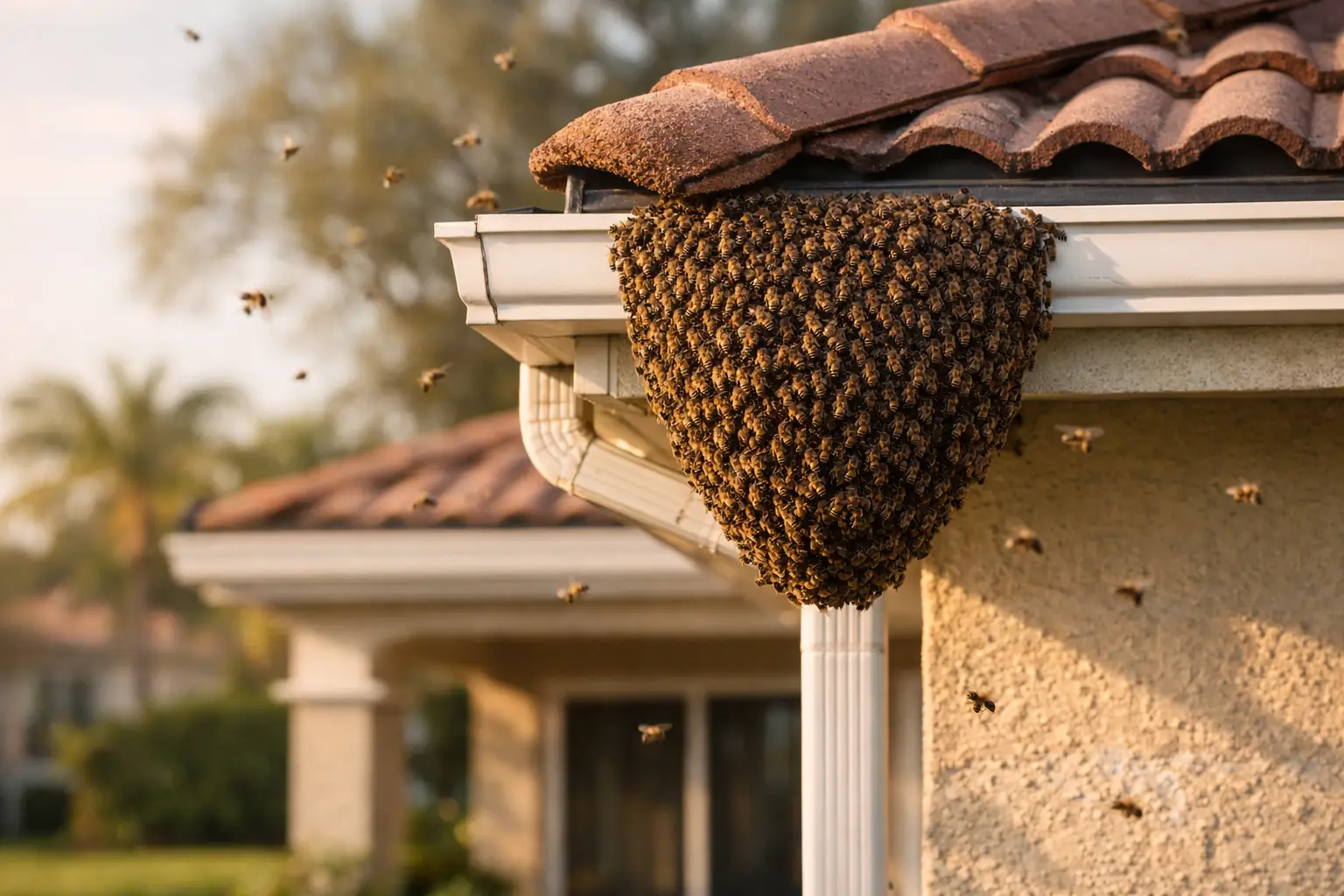

That low, steady buzzing in a wall or soffit usually starts the same way – curiosity, then concern, then a fast search for a bee relocation service before the problem gets bigger. In Southwest Florida, that urgency is justified. A small visible cluster on the outside of a structure can turn into a hidden colony inside it, with comb, brood, and stored honey expanding behind drywall, fascia, roofs, or block walls.
When people hear “save the bees,” they often picture a simple pickup and transfer. Structural bee work is rarely that simple. A real relocation job has to protect people first, prevent further property damage, and preserve as much of the colony as possible. If any one of those pieces is skipped, the problem usually comes back in a different form.
What a bee relocation service actually does
A professional bee relocation service is not the same as standard pest control. The goal is not just to stop visible bee activity. The goal is to remove the colony alive when conditions allow, extract comb and honey from the structure, and relocate the bees to a managed environment where they can continue functioning as a colony.
That distinction matters. If bees are poisoned inside a wall, the insects may die, but the wax, brood, pollen, and honey are still left behind. In Florida heat, that can lead to melting honey, staining, fermentation, odors, ants, roaches, rodents, and even a fresh swarm moving into the same cavity later. Removing the living colony without addressing the nest materials is only a partial fix. Poisoning the colony and leaving the nest is also a partial fix. Proper work deals with both.
For homeowners, this means the service is part livestock rescue and part structural correction. For commercial properties and HOAs, it is also a liability issue. A colony near foot traffic, playgrounds, pool enclosures, or outdoor dining areas can shift from nuisance to public safety concern quickly, especially if the bees become defensive.
When relocation works best – and when it depends
Not every bee situation looks the same from the outside. A swarm hanging from a branch is very different from an established colony inside a roofline. Swarms are often easier to collect because they may not have built extensive comb yet. Established colonies require more labor, more access, and more repair planning.
Relocation works best when the colony can be physically accessed and removed with care. That may mean opening part of a wall, removing soffit sections, lifting roofing materials, or accessing a hollow block cavity. In those cases, the queen, workers, brood, and comb can often be recovered and transferred to proper equipment for transport.
There are trade-offs. Sometimes the cleanest bee rescue requires more construction access than a property owner expects. Sometimes a hard-to-reach colony can be removed, but only with partial demolition. And in some high-risk situations involving dangerous locations or highly defensive behavior, the safest response may depend on access, occupancy, weather, and the immediate threat to people nearby. A trustworthy provider explains those constraints clearly instead of promising a one-size-fits-all outcome.
Why fast action protects both people and property
A lot of bee calls begin with, “We saw a few bees for a week and thought they would leave.” That happens with swarms. It does not happen with established colonies. Once bees commit to a cavity and start drawing comb, every day gives them more time to build.
That growth changes the removal. More comb means more stored honey. More brood means a larger population. More time inside a wall means a greater chance of seepage, staining, or damage if the colony is later killed or abandoned in place. If the nest is in an attic or roof area, heat accelerates that risk.
Early intervention usually means a cleaner relocation, lower structural impact, and a better chance of preserving the colony intact. It also reduces the chance that disturbed bees become a problem for children, pets, neighbors, customers, or maintenance staff.
How a bee relocation service is typically performed
The first step is identification and assessment. Honey bees are not the only insects people call “bees.” Wasps, hornets, and bumble bees require different handling. Once honey bees are confirmed, the technician looks at entry points, flight patterns, colony size, likely nest location, and the safest access method.
From there, the work becomes highly practical. The structure may need to be opened carefully to reach the nest. Live bees are collected with specialized methods designed to preserve the colony. Comb containing brood is often secured into frames so the colony can continue developing after relocation. Honey comb that cannot remain in the structure is removed. The cavity is then cleaned and prepared so it is less attractive for future occupation.
That final step is one of the most overlooked parts of the job. Bees are attracted to sites that smell like previous colonies. If residual wax and scent are left behind, scout bees may return. A proper service is not just about getting bees out today. It is about reducing the odds that another colony moves in next season.
Bee relocation service for homes, businesses, and HOAs
For homeowners, the main concerns are usually safety and damage. People want to know whether their family can stay in the home, whether the bees will attack, and whether the wall is going to be ruined. The honest answer is that it depends on the colony location and defensiveness, but waiting almost never improves those conditions.
Commercial properties and HOAs have a different pressure. A colony near an entrance, parking lot, mailbox cluster, dumpster enclosure, or pool area can create exposure for owners and managers. In those settings, speed and documentation matter. The work needs to be handled safely, but also in a way that reflects reasonable risk management.
Municipal and public-facing sites add another layer. Schools, parks, utility areas, and rights-of-way may need a response that prioritizes public access control while the bees are being removed. That is one reason experienced live-removal providers are different from general pest vendors. The job is as much about site management as insect handling.
Why poison is often the expensive shortcut
Poison can look cheaper at first because it appears faster and less invasive. The problem is what happens after. Dead bees inside a cavity do not remove wax. They do not remove brood. They do not remove honey. They also do not remove the odor markers that attract future bees.
So the lower upfront price can create a second round of cost – stain repair, odor issues, pest cleanup, opening walls later, or dealing with a new colony in the same void. Humane removal is not just an ecological choice. In many structural cases, it is the more complete building solution.
That does not mean every relocation is simple or inexpensive. Structural work takes labor, skill, and time. But a realistic estimate that includes full removal, comb cleanup, and prevention is usually more honest than a quick chemical fix that leaves the real problem behind.
Choosing the right bee relocation service
If you are comparing providers, ask how they handle comb and honey removal, not just the bees themselves. Ask whether they perform live relocation when feasible, whether they have experience with structural removals, and what happens if the colony is deep inside the building envelope. Those questions tell you more than a generic promise to “take care of it.”
It is also reasonable to ask what the property owner should expect after removal. Will there be an access opening? Is repair included or separate? How is the cavity cleaned? What steps are taken to reduce reentry? Clear answers are a sign of real field experience.
In a region like Southwest Florida, where bee activity can stay high for long stretches of the year, local response time matters too. A colony in a tree on vacant land is one thing. A colony at a school pickup line, restaurant patio, or bedroom wall is another. The right service understands the difference and responds accordingly.
Bees matter, but so does the structure they chose by mistake. The best bee relocation work respects both realities at once. If you hear active buzzing in a wall, see steady traffic at a crack or vent, or notice a swarm settling into a building instead of moving on, treat it as a time-sensitive issue. The sooner the colony is assessed, the more options you usually have – and the better the outcome for your property and the bees.

No responses yet