

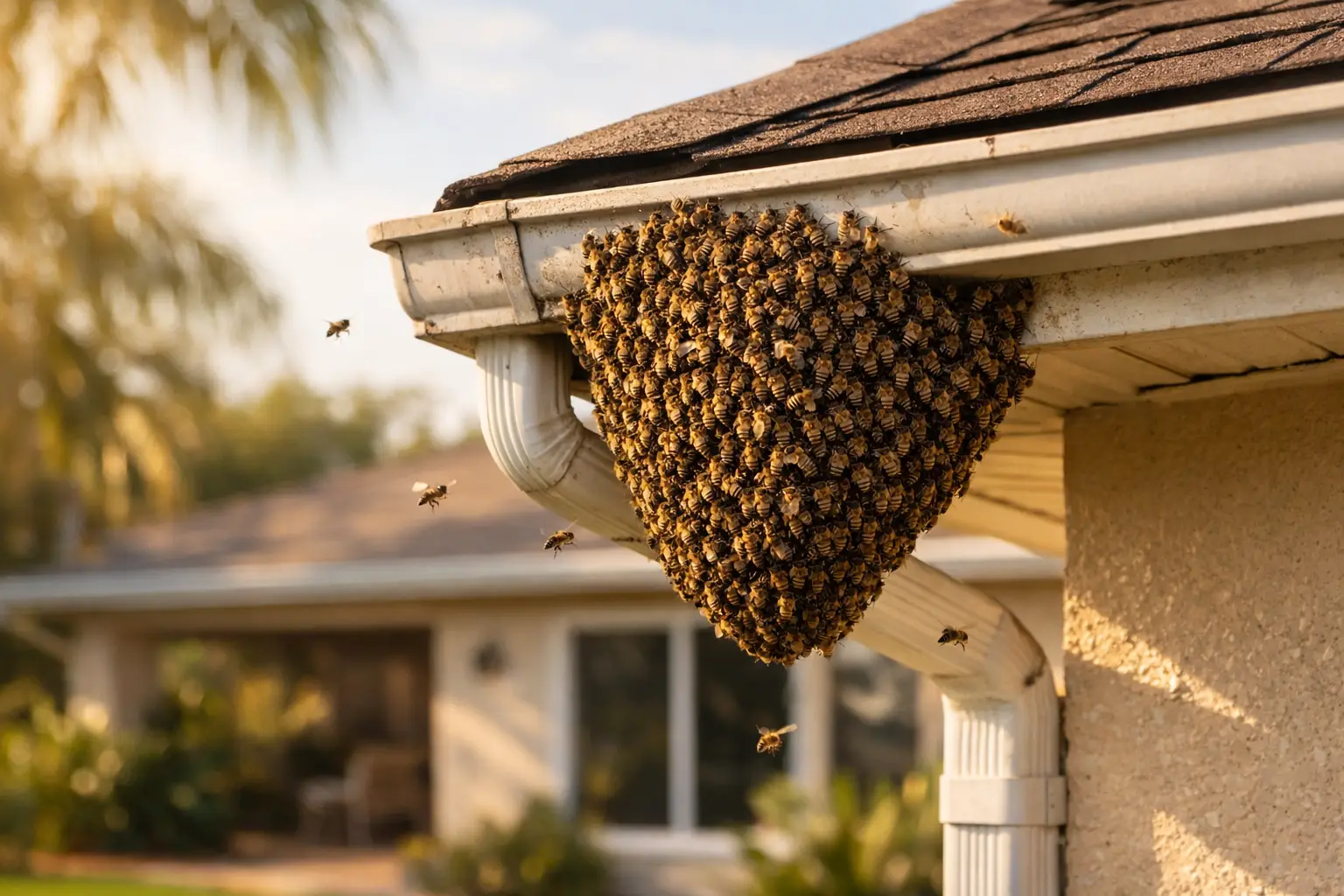

A basketball-sized cluster on a tree branch can look dramatic. A colony inside a wall is the one that causes real trouble. If you are dealing with bees on your property, ecological bee removal is the approach that protects your family without turning a healthy colony into dead insects, rotting comb, and a much bigger structural mess.
For homeowners, the first concern is usually safety. For property managers and HOAs, it is liability and disruption. Both are valid. What often gets missed is that the method you choose on day one determines whether the problem is truly solved or just hidden for a few weeks.
What ecological bee removal means
Ecological bee removal means live removal and relocation of the colony, with attention to both human safety and the biology of the bees. It is not just catching a swarm in a box. A proper job identifies whether you are seeing a temporary swarm or an established colony, removes bees and comb from the structure when necessary, and relocates viable bees to a managed setting where they can keep pollinating and producing honey.
That distinction matters. A swarm hanging on a branch is often between homes and may be removed quickly if it is accessible. A colony in a soffit, block wall, roofline, or chimney is different. That colony has brood, stored honey, pollen, wax comb, and a queen. If any of that remains in the structure, the property can continue to attract pests and the bees may try to rebuild.
This is why ecological removal is more than a feel-good alternative to extermination. It is often the more complete structural solution.
Why poison usually creates a second problem
When people are scared, they want the bees gone fast. That is understandable. But killing a colony inside a building rarely removes the source of the issue. It usually leaves honey, wax, brood, and dead bees behind the wall or ceiling.
In Florida heat, that can turn ugly fast. Honey can melt and seep through drywall. Wax and brood attract ants, roaches, beetles, and rodents. Odors can develop. In some cases, another swarm later detects the old hive scent and moves right back into the same cavity.
So while extermination may look cheaper at first, it often shifts the cost into repairs, cleanup, and repeat infestations. Ecological bee removal asks a harder question upfront: what will fully resolve the problem, not just quiet it down for the weekend?
Ecological bee removal for swarms vs. established colonies
Not every bee call is the same, and good outcomes depend on treating the right problem.
Swarm removal
A swarm is usually a temporary cluster of bees resting while scout bees search for a new home. Swarms are often less defensive than a colony with brood, but they are still bees and should not be handled casually. Live collection is often straightforward if the cluster is accessible and the timing is right.
The trade-off is that swarms can move on quickly. If you wait too long, they may enter a wall, shed, meter box, or roof void and become a structural removal instead of a simple collection.
Structural colony removal
An established colony inside a structure is the more technical job. The bees are not just visiting. They have moved in, built comb, and begun using the cavity as a hive. Ecological removal in this case means opening the affected area as needed, removing the colony, extracting the comb, and reducing the chance of reinfestation by cleaning and addressing access points.
This is where experience matters most. Cutting into soffits, siding, stucco areas, fascia, or interior walls requires judgment. Remove too little and the problem remains. Open too much and repair costs rise unnecessarily. The best work is precise, calm, and informed by both bee behavior and building structure.
What a proper live removal process looks like
The process starts with assessment. Bee traffic patterns, entry points, sound inside walls, staining, and thermal conditions all help determine where the colony sits and how extensive it is. For commercial properties or HOA common areas, public exposure and safe access also shape the plan.
Next comes containment and safety. The area may need to be secured so children, pets, residents, or customers stay clear. This is especially important if the bees are defensive or the colony is near a walkway, pool area, storefront, or school zone.
Then the actual removal begins. In a structural job, the colony is accessed carefully, bees are collected alive when possible, comb is removed, and the cavity is cleaned enough to reduce odor and attractive residue. Depending on the location, some repairs or recommendations may follow to help prevent another colony from moving in.
Finally, the colony is relocated to a managed environment. That matters because relocation should not mean dumping bees in a random field. A responsible operation rehomes viable colonies where they can be monitored and supported.
For a company that also runs bee farms, this part is not an afterthought. It is part of the mission.
Why this approach matters in Southwest Florida
Southwest Florida is good bee country. Warm weather, long forage seasons, and constant development create the exact conditions that bring bees into contact with homes, restaurants, retail centers, and shared community structures.
That creates a practical tension. We need pollinators, but we also need safe buildings. Ecological bee removal works because it takes both realities seriously. It does not ask homeowners to tolerate a hive in the wall for the sake of conservation. It solves the hazard while preserving a valuable colony whenever possible.
In this region, speed also matters. Heat accelerates honey damage inside structures, and active colonies can grow quickly. Waiting a month to see what happens is rarely the low-stress option.
When removal gets more urgent
There are situations where time matters more than ideal scheduling. If bees are entering living space, clustering near doors, gathering around utility boxes, or showing strong defensive behavior, the risk goes up. The same is true for schools, apartment breezeways, playgrounds, restaurants with outdoor seating, and HOA amenities.
Aggressive bee behavior should always be treated seriously. Not every colony is highly defensive, but behavior matters more than assumptions. A calm-looking entrance one day can become a dangerous zone after landscaping vibration, pressure washing, storms, or accidental disturbance.
The right response is not panic. It is controlled action by someone equipped to evaluate the colony and remove it safely.
What property owners should and should not do
If you suspect a hive, keep your distance and watch the bee flight path from a safe area. That often reveals the entrance point. Keep pets and children away, and avoid blocking the entrance, spraying chemicals, using foam, or trying home remedies.
Those shortcuts usually backfire. Sealing the entry while bees are active can force them into interior spaces. Sprays may agitate the colony without killing it, or kill enough bees to leave all the comb and honey behind. Water, smoke, or vibration can also trigger defensive behavior.
A useful detail to note is how long the bees have been present. A cluster that appeared today may be a swarm. Bees moving steadily in and out of one crack for weeks suggest an established colony. That information helps a removal specialist plan the job.
The real value of ecological bee removal
The biggest benefit is not image or sentiment. It is outcomes. Ecological bee removal can protect occupants, reduce property damage, preserve pollinators, and lower the odds of recurring infestation when done correctly.
There are trade-offs, of course. Live structural removals are specialized work, and specialized work is not always the cheapest line item. But comparing prices without comparing scope is how people end up paying twice. A low quote that does not include comb removal, cavity cleanup, or prevention steps may not be a low-cost solution at all.
That is especially true for commercial sites and community associations. Liability, tenant complaints, repair coordination, and repeat service calls all have a cost. A thorough removal often saves money by closing the issue properly.
For readers in Southwest Florida, this is where local experience matters. Construction styles, weather, and bee pressure shape the right method. A company such as Beeswild, which combines live removal with active beekeeping and relocation, understands that the job is not finished when the buzzing stops. It is finished when the structure is clear and the colony has a safe future elsewhere.
If bees have chosen your property, the goal is not to admire them from a distance or wage war on them with a spray can. The goal is to solve the risk cleanly, protect the building, and give a working pollinator colony a better place to live.

No responses yet