

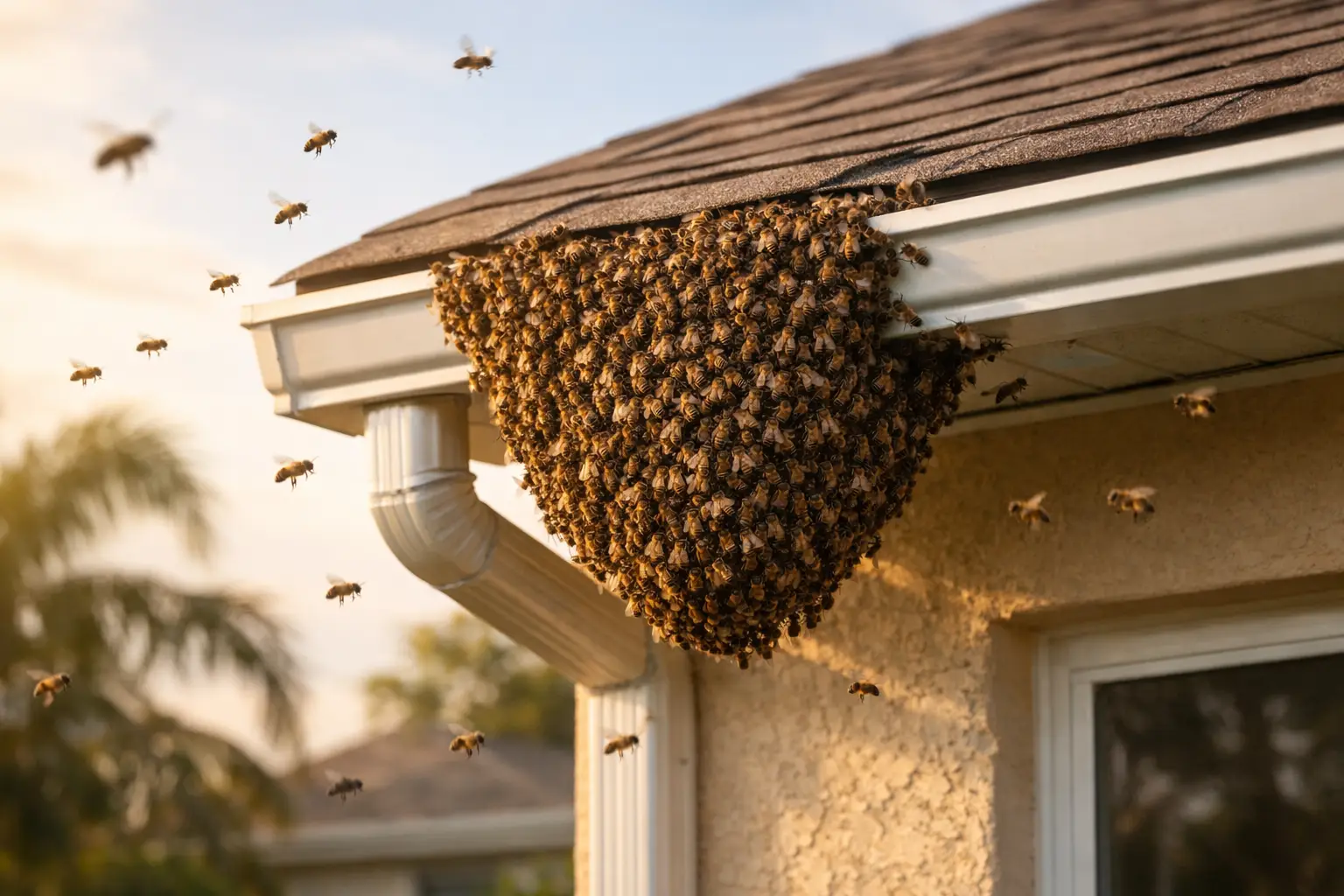

A buzzing cluster under the eaves can turn a normal afternoon into a panic fast. If you are searching for bee rescue near me, you probably do not want a biology lesson – you want to know whether your family is safe, whether your house is at risk, and who can solve the problem without making it worse.
The short answer is this: not every bee situation is the same, and the right response depends on whether you are seeing a temporary swarm, an established colony, or aggressive bee activity. Acting quickly matters, but so does choosing the right kind of help. Poison, spraying water, sealing an entry hole too soon, or disturbing the cluster can turn a manageable rescue into a dangerous structural problem.
When a bee rescue near me search is urgent
There are moments when this is not a wait-and-see situation. If bees are entering and exiting a wall, roofline, soffit, chimney, shed, or meter box in a steady pattern, there is a good chance a colony has already moved in. At that point, the issue is no longer just insects outside. It can become a property problem.
A colony established inside a structure builds comb, stores honey, raises brood, and generates heat and moisture. If someone kills the bees without removing the comb, that wax and honey often remain inside the cavity. In Florida heat, that can lead to melting honey, stained drywall, odors, ants, roaches, rodents, and future infestations. This is one reason humane live removal is often the more practical option, not just the more ecological one.
Urgency also increases if anyone on site has a sting allergy, if children or pets use the area, or if the bees are acting defensive. Honey bees are not automatically aggressive, but they do defend an established nest. The closer a colony is to doors, walkways, playgrounds, pool equipment, or commercial entrances, the more carefully the situation should be handled.
Swarm or colony? The difference changes everything
A lot of homeowners see a basketball-sized mass of bees on a branch or fence and assume the worst. Sometimes that cluster is a swarm, which is very different from a colony living inside a wall.
A swarm is usually a temporary resting group. These bees are often in transition, looking for a new home. Because they have not built comb in your structure yet, they are generally easier to collect and relocate. In many cases, the biggest risk comes from people trying to interfere with them.
An established colony is a longer-term settlement. You will usually notice a traffic pattern – bees flying to and from one opening over hours or days. That indicates nest activity inside a cavity. Colonies require a more technical removal process because the bees, comb, brood, and honey need to be addressed together. Simply removing visible bees from the outside does not solve the problem.
This is where experience matters. A proper responder is not just looking at the bees. They are reading bee behavior, locating the nest, evaluating access, and considering what happens to the structure after removal.
What to do before help arrives
If you have found bees on your property, keep distance between people and the area. That sounds obvious, but many bee incidents start with curiosity. Someone taps the wall, sprays cleaner, throws a rock, mows too close, or lets the dog investigate.
Move children and pets indoors. Avoid loud vibration near the suspected nest, including weed trimmers and lawn mowers. Do not block the entrance hole. Sealing it while bees are active can force them deeper into the structure or into living spaces. It also traps honey and comb inside, which creates secondary damage.
Do not use store-bought pesticides, foam, fire, or water hoses. Those methods rarely solve a structural bee issue cleanly. They usually increase defensiveness, scatter bees, and leave contaminated comb behind. If your goal is safety and actual resolution, restraint is part of the solution.
If possible, observe from a safe distance and note a few details for the rescue team: where bees are entering, how long you have noticed activity, whether anyone has been stung, and whether the bees seem concentrated in one spot or spread through a larger area. Those details help determine what equipment and access methods may be needed.
Why live bee removal often makes more sense than extermination
People sometimes assume humane removal is a sentimental choice. In reality, it is often the more technically sound one. Honey bees are valuable pollinators and managed livestock, but beyond that, live removal addresses the full nest rather than just the visible insects.
A true removal process focuses on extracting the colony, removing comb where necessary, reducing the chance of re-infestation, and helping the client understand what repairs or exclusion steps come next. If bees are relocated to an apiary or safe bee farm, the colony has a chance to continue contributing to pollination and agriculture rather than being wasted.
That said, there are trade-offs. Removal from a tree branch is simpler and less invasive than removal from inside a second-story wall or tile roof. Structural removals may involve opening a section of soffit, siding, stucco, or drywall to reach the nest properly. No responsible company should pretend otherwise. The honest question is not whether access is inconvenient. It is whether leaving the colony or killing it in place creates a bigger long-term cost.
What a professional bee rescue should evaluate
When you contact a bee rescue service, they should be thinking beyond immediate capture. First is identification. Not every flying insect is a honey bee, and not every bee issue is suitable for relocation in the same way. Next comes location – exposed swarm, tree cavity, block wall, roofline, utility area, or interior structure.
Then comes safety. A technician should account for foot traffic, ladder access, weather, nearby occupants, and how bees are behaving at the time of service. In Southwest Florida, heat and storms can also affect timing and handling.
Finally, there is the post-removal picture. If a wall cavity held a colony, what will be removed from inside it? Will entry points need to be sealed after the work is complete? Was there honey leakage already? These are the practical questions that separate a real bee rescue operation from someone who just makes the bees disappear for a day.
For homes, businesses, and shared properties
Residential calls are often emotional because the threat feels personal. There may be children playing nearby, a dog using the yard, or bees close to a front door. The main concern is usually immediate safety, followed closely by fear of structural damage.
Commercial and HOA properties face a slightly different problem. There, bee activity becomes a liability issue. A colony near a storefront, community mailbox, clubhouse, dumpster area, or pool gate can affect tenants, customers, vendors, and insurance exposure. The right response needs to be fast, documented, and professionally handled.
Municipal settings raise the stakes further because the public may unknowingly walk directly into a problem area. In those cases, the best rescue partner is one that understands both public safety and bee behavior under pressure.
Finding the right answer to bee rescue near me
A good local bee rescue service should be able to explain what they think is happening, what kind of removal is likely needed, and what the risks are if nothing is done. Clear communication matters. Homeowners do not need vague promises. They need a calm assessment and a plan.
If you are in Southwest Florida, local conditions matter too. Heat accelerates honey damage inside structures, and year-round bee activity can make delays more costly. A provider with real relocation capacity – not just removal equipment – offers a different level of service because the goal is not only to clear the site, but to preserve the colony when possible.
Beeswild, based in Cape Coral, operates with that model by combining live bee removal with actual beekeeping and relocation. That matters because rescued colonies need somewhere safe to go.
If you are standing in your driveway with bees over the garage or pouring into a wall vent, try not to make the problem smaller in your head or bigger with a spray can. Give the bees space, keep people clear, and get informed help. The best bee rescue is not just fast. It leaves your property safer and the outcome cleaner than a panic-driven fix ever will.

No responses yet