

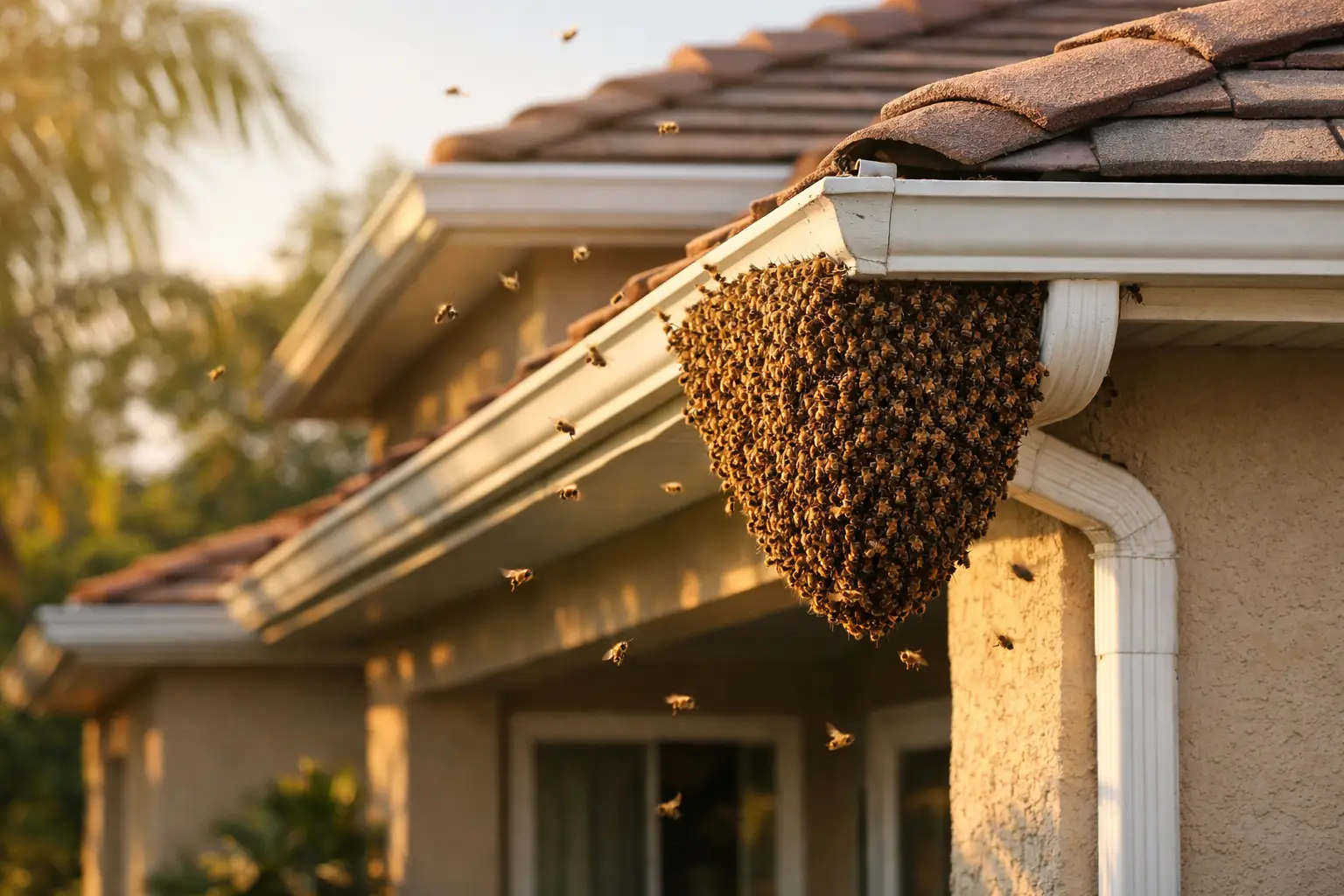

That low, steady buzzing behind a wall is easy to ignore for a day or two. Then the flight path gets heavier, a few bees show up indoors, and suddenly you are not just dealing with insects – you may be dealing with a growing colony, stored honey, brood, and structural risk. Live bee removal is the process of taking that colony out intact when possible and relocating it instead of killing it in place.
For homeowners, that distinction matters more than most people realize. A visible swarm on a tree branch is one thing. A colony that has moved into a soffit, cinder block wall, shed roof, or attic is another. Once bees establish comb inside a structure, the problem is no longer just about stings. It becomes a building issue, a sanitation issue, and sometimes a liability issue.
Why live bee removal is different from pest control
Standard pest control is designed to eliminate unwanted insects quickly. That approach may work for ants, roaches, or wasps, but honey bees are different. They are livestock in practical terms, valuable pollinators, and colony insects that build wax comb, raise brood, and store honey deep inside cavities.
When a colony is poisoned inside a wall, the visible bee activity may stop for a while, but the material they leave behind does not. Honey can melt and leak through drywall or ceilings. Wax comb can collapse. Dead bees and brood can attract ants, roaches, rodents, and other scavengers. Just as important, the scent of old comb and honey often attracts new swarms later.
Live bee removal addresses the whole site, not just the flying bees at the entrance. In a proper structural removal, the beekeeper or removal specialist identifies where the colony is located, opens the affected area as needed, removes bees, comb, brood, and honey, and then prepares the space so it is less likely to be recolonized. That is a more complete solution, even if it takes more labor.
What happens during live bee removal
The exact method depends on where the bees are and how long they have been there. A fresh swarm hanging on a branch can often be collected with minimal disturbance because it has not built comb yet. A colony in a wall is more involved because the nest is attached inside the structure.
Inspection comes first
A serious removal starts with locating the colony, not guessing. Bee traffic at the entry point does not always reveal how large the nest is or how far it extends. Bees may enter through a tiny gap near a roofline and build several feet away in an enclosed void. Experienced removers look at flight patterns, listen for activity, assess heat exposure, and evaluate the building materials before any cutting begins.
This is where honesty matters. Some jobs are straightforward. Others involve stucco, second-story soffits, tile roofs, or masonry that requires extra care. The right contractor explains what can be removed, what access is needed, and what parts of repair are included or not included.
The colony is removed, not just disturbed
In a true live removal, the goal is to preserve as much of the colony as possible. Worker bees are collected, sections of brood comb may be secured into hive frames, and the queen is ideally recovered so the colony can be stabilized after transport. Honey stores may be removed separately if they are salvageable.
There is no magic shortcut here. If comb is left behind in a structural cavity, the job is incomplete. That leftover material is what causes many of the long-term issues people blame on the bees, when the real problem was partial removal.
The cavity must be cleaned and managed
After the bees and comb come out, the void needs attention. Residual wax, honey, and scent can draw robber bees, ants, beetles, moths, and future swarms. In some cases, the area is cleaned and then sealed. In others, repairs are coordinated with a contractor or property owner.
That final step is one of the biggest differences between a temporary fix and a durable one. Removing bees without addressing access points is like fixing a leak but leaving the hole in the roof.
When bees are an emergency and when they are not
Not every bee situation requires panic, but some do require speed. A swarm resting on a fence or shrub is often at its calmest stage. Swarms are usually focused on protecting the queen and finding a new home, not defending stored honey. They still should not be handled by the public, but they are often easier to relocate quickly.
A well-established colony in a wall is less dramatic at first glance, yet often more urgent from a property standpoint. The longer it remains, the more comb and honey accumulate. In Southwest Florida, heat can make those materials soften and spread into building components faster than many owners expect.
Aggressive bee behavior changes the equation. If bees are chasing people, clustering around entrances, or reacting strongly to routine activity like mowing or opening a gate, the site becomes a public safety concern. That is especially relevant for schools, HOAs, shopping centers, and municipal spaces where one colony can expose many people to risk.
Why DIY live bee removal usually goes wrong
People often search for a fast fix because the situation feels urgent. Spray foam, aerosol insecticides, patching the entry hole at night, or trying to smoke bees out may seem practical. In reality, those methods tend to trap bees inside, scatter the colony, or leave the comb intact.
Closing the entrance without removing the nest can force bees into interior living spaces. Poisoning a colony can create a hidden cleanup problem that gets worse over time. Cutting into a wall without understanding wiring, plumbing, roof loads, or colony behavior can damage both the building and the people attempting the work.
There is also the issue of species and temperament. Not every stinging insect is a honey bee, and not every honey bee colony behaves the same way. Proper identification matters. So does the ability to work safely around protective bees in confined structural spaces.
Who needs live bee removal most often
Homeowners are usually the first to call because they hear buzzing in a wall, see bees at a water meter box, or notice activity at the eaves. Their concern is immediate and personal – children, pets, allergies, and possible damage to the house.
Commercial properties face a different pressure. For a restaurant patio, shopping plaza, or apartment complex, bees near customer walkways are a liability issue as much as a maintenance issue. The same is true for HOAs managing clubhouses, mailbox structures, and perimeter walls. They need a solution that protects people without creating a bigger structural problem later.
Public agencies and community organizations often need live bee removal when colonies appear in parks, utility boxes, streetscape structures, or public buildings. In those settings, humane relocation still matters, but response planning and site safety matter just as much.
What to look for in a live bee removal company
Not every company advertising bee work performs full structural removals. Some only collect exposed swarms. Others kill the colony and leave the rest behind. Those are very different services.
Ask whether the company removes comb, brood, and honey from structures when needed. Ask how the bees are relocated and whether the team manages colonies after removal. Ask what building access is required and what happens after the cavity is emptied. A real answer should be clear, not vague.
This is where a beekeeper-operated service has an advantage. A company that rescues bees and maintains apiaries understands both sides of the job – public safety and colony survival. That matters when the goal is not just getting bees off the property, but giving them a viable place to go.
The long-term value of doing it right
Live bee removal can cost more up front than a spray treatment because it is labor-intensive and often involves careful disassembly. But the cheaper option is not always the less expensive one once repairs, recurring infestations, cleanup, and liability are factored in.
A complete removal protects the structure, reduces the chance of another swarm moving into the same scent-marked cavity, and preserves a working pollinator colony when conditions allow. For many property owners, that balance is the right one – protect the people, protect the building, and do not destroy what can be responsibly saved.
In a place like Southwest Florida, where bees can remain active for much of the year, delays tend to make these jobs bigger. Early action gives you more options, a safer job site, and a better chance of relocation instead of loss. If you suspect bees have moved into a structure, treat it as a building issue with living animals inside – because that is exactly what it is.

No responses yet