


We call her “queen,” and the word conjures images of leisure: a monarch carried on a throne, ordering others about, sipping royal jelly in comfort. Nothing could be further from the truth.
The life of a bee queen is not one of power—it is one of pure, relentless biological duty. She is less a ruler and more a singular, indispensable organ in the body of the hive. Her existence is a marathon of sacrifice, violence, and astonishing fertility. To understand the hive, you must first understand the queen.
Act I: The Birth of a Rival
Her story begins as an act of rebellion. Inside a crowded spring hive, the worker bees decide it is time to replace their aging mother. They build several large, peanut-shaped cells—the “queen cups”—and convince the old queen to lay eggs inside them.
The chosen egg is no different from any other. What changes is the nursery. While ordinary worker larvae are fed a sparse diet of pollen and honey, the future queen is flooded with royal jelly—a potent, milky secretion from the glands of young nurses. This superfood triggers a genetic revolution. In six days, she grows massive ovaries and a sleek, elongated body. She is not born; she is manufactured.
On the eighth day, she chews a circular hole in her wax prison and emerges. Her first act? To find her rivals. Any other queen cells that have not yet hatched are torn open by her mandibles. She stings her unborn sisters to death before they take their first breath. A queen bee does not share power.
Act II: The Daring Mating Flight
At five days old, the virgin queen leaves the hive for the first and most dangerous journey of her life: the mating flight. She flies high into the air, where the airspace is thick with male drones from dozens of neighboring colonies. These drones have one purpose: to find her.
She will not mate once. She will mate with 12 to 20 males in a single afternoon, two to three miles above the ground. Each drone approaches from behind, mates in mid-air, and dies instantly—his abdomen ruptures, and he falls to the earth. The queen collects millions of sperm cells in a special organ called the spermatheca. This single storehouse will have to last her entire life.
The flight is also a gauntlet. Birds, dragonflies, and sudden storms claim many virgin queens. Those who survive return to the hive heavy with genetic treasure. They will never mate again.
Act III: The Machine of Generations
Back in the hive, the queen begins her true work. From this point forward, she rarely sees sunlight again. She becomes a living ovipositor, a machine that turns pollen and honey into new bees.
During peak spring and summer, a healthy queen lays 1,500 to 2,000 eggs per day—more than her own body weight every 24 hours. She walks across the honeycomb, her head surrounded by an entourage of attendant workers who groom her, feed her, and carry away each egg as it drops. She does not decide where to lay; the workers guide her. They know which cells are ready.
Her pheromones—complex chemical signals—act as the hive’s central nervous system. They suppress the workers’ ovaries (preventing chaos), signal the presence of a fertile mother, and coordinate the colony’s mood. When her pheromones falter, the hive knows something is wrong.
Act IV: The Slow Decline
A queen can live for two to five years—an eternity compared to the six-week lifespan of a summer worker. But she does not age gracefully. Eventually, her sperm store runs low. She begins laying unfertilized eggs, which become drones (males), and skipping cells. Her pheromone signature weakens.
The workers notice first. They become agitated, less cohesive. They may begin building new queen cups on the edges of the comb. This is not cruelty; it is evolution. The colony cannot afford sentiment.
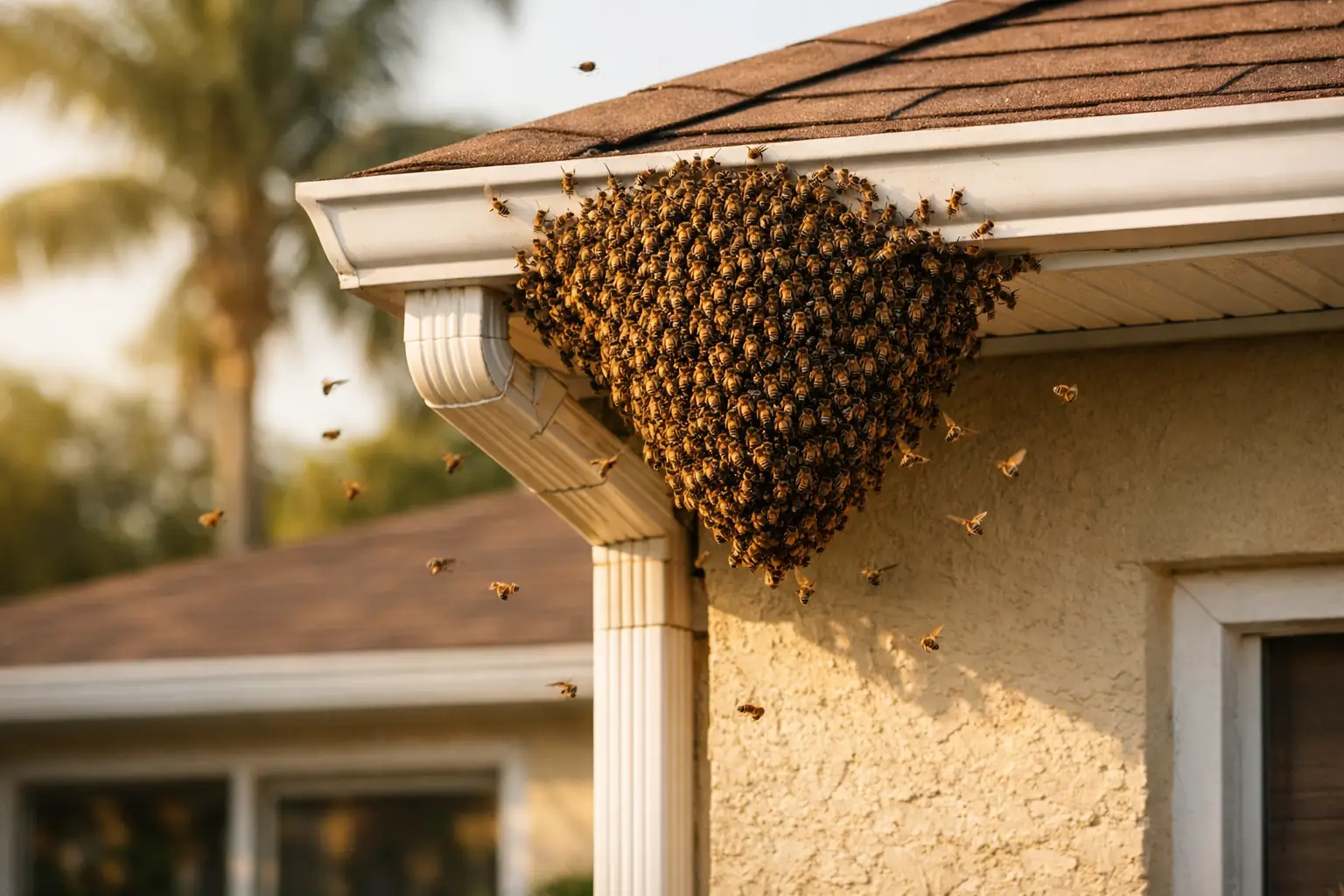
Sometimes, the workers will “supersede” the old queen peacefully, raising a daughter who will take over while the mother lingers. Other times, the old queen leads half the hive away in a swarm, leaving her successor behind. In either case, her end is quiet. She is not mourned. She is simply… replaced.
Epilogue: Why Her Life Matters
We romanticize the queen bee as a monarch, but she is something stranger and more wonderful: a biological imperative given legs and wings. She exists to solve one problem—how to turn a fleeting spring into a permanent lineage.
Every jar of honey on your table, every almond and apple and blueberry you eat, exists because a queen once flew into open sky, gambled her life against a dozen drones, and returned to lay egg after egg in the dark.
She never issues a command. She never punishes a subject. She simply is, and 60,000 daughters build a world around her presence. That is not royalty. That is something far more ancient: motherhood, magnified to the scale of a nation.
Next time you see a honeybee working a flower, remember: she is a princess in a matriarchy, serving a mother she may never meet, continuing a cycle that began 50 million years ago.

No responses yet