
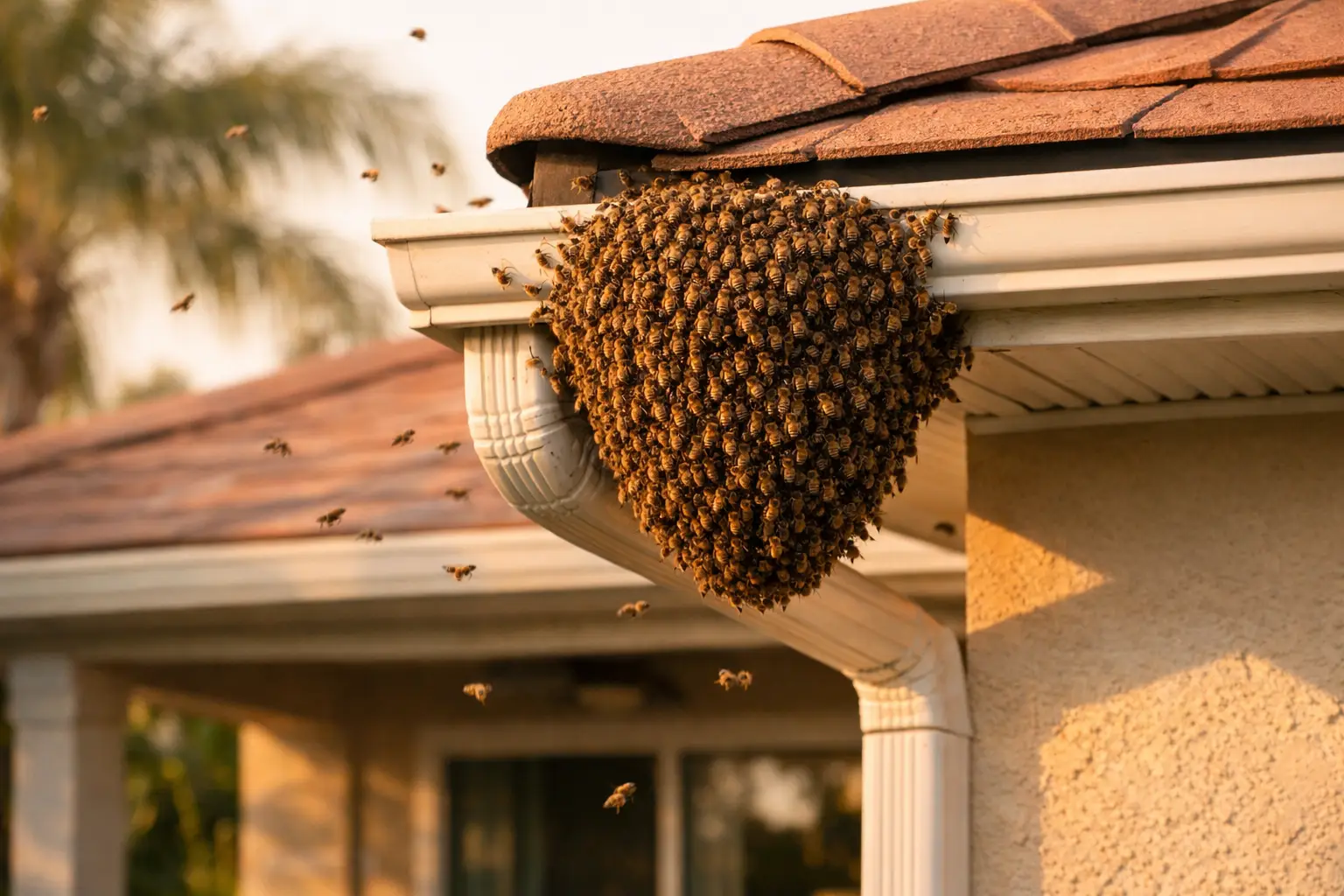

A cluster of bees on a tree branch can look dramatic. A colony inside a wall, soffit, shed, or meter box is a different problem entirely. This live honey bee relocation guide is for the moment when you need clear answers fast – how to keep people safe, protect the structure, and give the bees a real chance of survival.
When honey bees move into a building, the job is not just about taking insects away. It is about locating the colony, removing comb and stored honey, recovering the queen when possible, and preventing the same void from being used again. If any of those steps are skipped, the result can be expensive for the property owner and fatal for the colony.
What live honey bee relocation actually means
Live relocation is the physical removal of a honey bee colony so it can be transferred into a managed hive or a safe apiary setting. That sounds simple, but in practice it can involve opening part of a wall, roofline, chimney chase, or other cavity to access brood comb, honey stores, and clustered bees.
This is very different from spraying a colony and walking away. Poison may kill many bees, but it does not remove wax, brood, or gallons of honey from the structure. In warm climates like Southwest Florida, that leftover material can melt, ferment, attract ants and roaches, and stain drywall or ceilings. It can also draw in a new swarm later.
Relocation is the better path when the goal is both structural protection and ecological responsibility. But there is an important trade-off: it usually takes more labor, more skill, and more time than a basic extermination visit. That is because the job is solving the root problem, not just the visible symptom.
Live honey bee relocation guide for the first hour
The first mistake people make is trying to fix the problem themselves. If bees are entering and exiting the same hole in a wall or roofline, you are likely dealing with an established colony, not a passing swarm.
Start by keeping distance. Move children and pets away from the flight path and avoid lawn equipment, hedge trimmers, or anything that creates vibration near the nest site. Do not plug the entrance. That can force bees deeper into the structure or push them into living spaces.
If the bees are clustered outside in a temporary swarm, the situation may be less destructive, but it still requires judgment. Swarms are often calmer than established colonies because they are between homes. Even so, they can become defensive if handled badly or if weather shifts. A professional needs to determine whether the bees are resting briefly or beginning to build comb.
For commercial sites, timing matters even more. Outdoor dining areas, entryways, dumpster enclosures, utility areas, and monument signs can turn a manageable issue into a liability concern fast. Restrict access to the area early rather than waiting for a sting incident.
How professionals assess a colony
A proper inspection is part entomology and part building science. The bees tell you one story through flight activity, pollen intake, and defensive behavior. The structure tells you another through heat, moisture, void space, access points, and construction materials.
An experienced remover is looking for where the colony actually is, not just where bees are visible. Honey bees often travel through narrow voids and emerge from a small gap far from the main nest. That is why surface treatments and casual patching so often fail.
The inspection also helps determine whether the colony appears recently established or long term. A newer colony may involve less comb and less structural opening. A mature colony can hold substantial brood and heavy honey stores, which changes both labor and cleanup requirements.
Then there is temperament. Some colonies are relatively workable. Others are highly defensive, especially in hot weather or where genetics are less predictable. In Florida, that is not a detail to ignore. Public safety has to stay ahead of good intentions.
What the relocation process usually involves
Most structural removals follow a careful sequence. First, the work area is secured and the colony entrance is evaluated. Then access is created to reach the nest directly. The goal is to remove the bees alive, cut out comb in usable sections when possible, and recover brood comb so the colony can reestablish in a hive body.
Honey comb and damaged wax are removed separately. This matters because leaving honey behind is one of the biggest causes of post-removal problems. Once the cavity is cleaned, the area is treated for scent reduction and sealed so scout bees and future swarms are less likely to return.
Sometimes relocation is straightforward. A swarm on a low branch may be collected with minimal disturbance. A colony inside a second-story soffit, masonry wall, or tile roof is another matter. Access, height, weather, and building materials all affect cost, risk, and how invasive the work must be.
This is also why ethical bee relocation is not a one-size-fits-all service. A company that truly relocates bees has to be equipped to manage both the insects and the structure. If the provider cannot explain how comb, honey, and entry-point sealing will be handled, the plan is incomplete.
Why trap-outs are not always the best answer
People often ask about trap-outs because they sound less invasive. A trap-out uses one-way devices to let foragers leave while preventing their return, encouraging the colony to shift toward a hive placed nearby.
That method has a place, but it depends on the site. Trap-outs can take weeks, sometimes longer, and they typically do not remove comb and honey from inside the structure. If the property already has visible staining, odor, repeated bee traffic, or high occupancy, a full cut-out may be the cleaner solution.
In other words, less invasive does not always mean better. It depends on how long the colony has been there, where it is located, and how much material is hidden inside the building.
What homeowners should ask before hiring anyone
You do not need a long checklist, but you do need the right answers. Ask whether the service is a true live removal, whether comb and honey will be removed, and whether the entry point will be sealed after the work. Ask what happens to the colony afterward. If the bees are being relocated, there should be a clear destination, not vague language.
It is also fair to ask about structural access. Will drywall, soffit, siding, or fascia need to be opened? Who handles repairs? Some removals end with the site ready for a contractor, while others include closure work. Clear expectations matter because surprise damage disputes often start with poor communication, not poor fieldwork.
For HOAs, municipalities, and commercial managers, documentation matters too. They need to know the area can be made safe quickly, that the vendor understands public-facing risk, and that the removal method will not create a larger sanitation issue later.
After the bees are removed, prevention matters
A successful relocation does not end when the last bee is collected. Honey bees are attracted to suitable cavities, and a structure that hosted a colony once may be attractive again if the conditions remain.
Prevention usually comes down to sealing gaps, screening vents where appropriate, repairing damaged soffits or fascia, and addressing voids that offer dry, protected shelter. Bee-proofing is rarely about making a building airtight. It is about closing the high-value entry points scouts look for.
In warm, coastal areas, regular exterior inspections are worth the effort. Tiny gaps around roof returns, utility penetrations, and eaves can become invitations. The earlier they are corrected, the less likely you are to face a major structural colony later.
When urgency is real
Not every bee sighting is an emergency, but some clearly are. If bees are entering a wall near a front door, gathering around a school, occupying a business entrance, or showing aggressive behavior, waiting can raise the risk. The same goes for any site with known sting allergies, pets that cannot be kept away, or heavy foot traffic.
The right response is calm, controlled, and informed. Humane relocation and public safety are not competing goals when the work is done correctly. They support each other.
At its best, live bee removal protects more than one thing at once – the people on the property, the building itself, and a colony that still has value on a working bee farm. That is the standard worth looking for when bees decide your structure looks like home.

No responses yet