

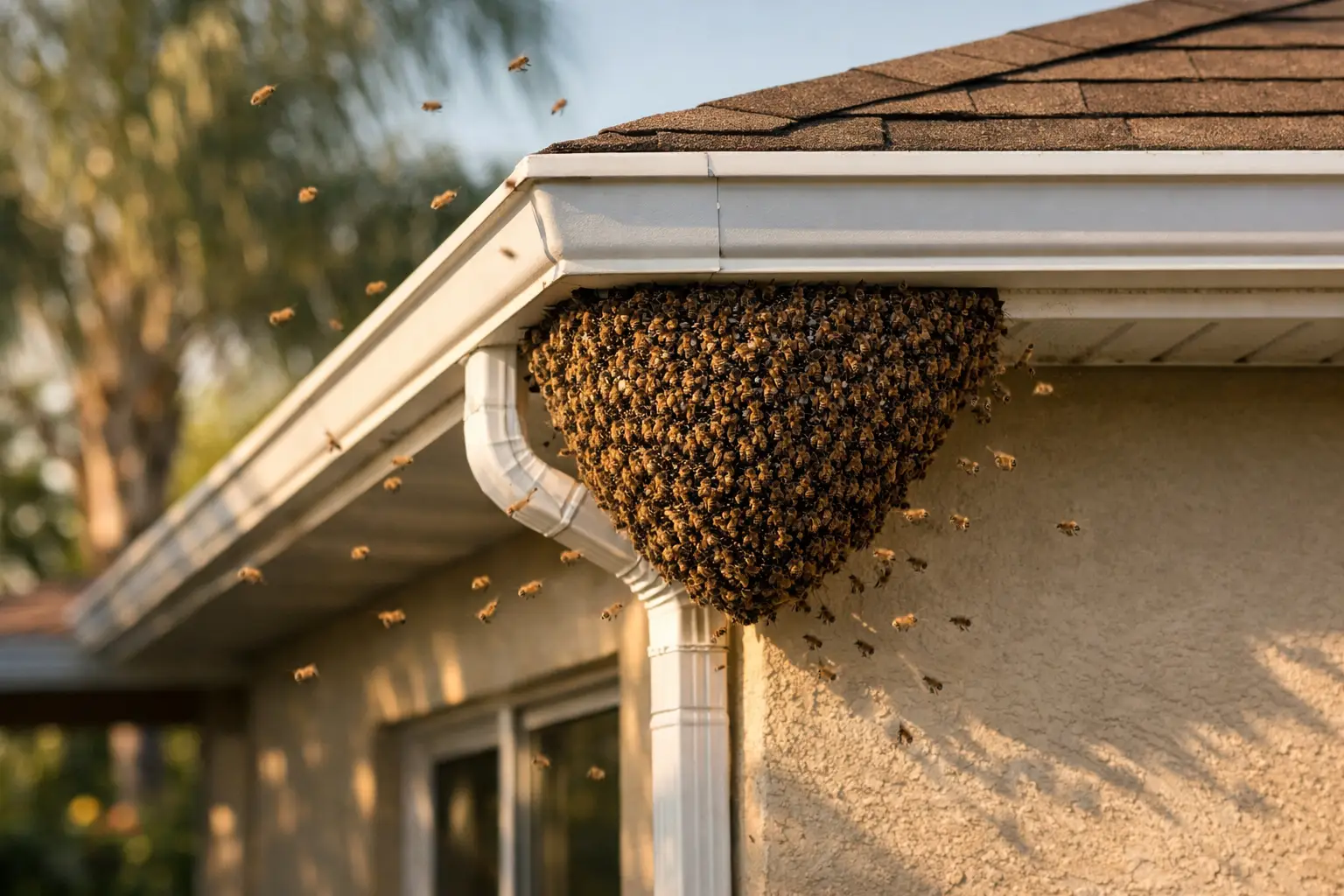

A bee colony in a park shelter, utility box, school wall, or clubhouse roofline is not a minor nuisance. For public offices and community managers, it is a safety issue, a property issue, and often a public relations issue all at once. The Natural Alliance: Why Beeswild.com LLC is the Ideal Partner for Communities and Public Offices comes down to one practical truth – the best bee response is not just fast, but informed, lawful, and ecologically responsible.
When bees establish themselves in public spaces, the wrong response creates bigger problems. Spraying a visible swarm may scatter bees without solving the source. Killing a colony inside a wall can leave behind comb, brood, honey, and dead bees, which leads to odor, staining, ants, roaches, rodents, and structural cleanup costs. For municipalities, HOAs, and facility managers, that is not real resolution. It is deferred damage.
Why communities need more than standard pest control
Bee incidents on shared property are different from routine pest complaints. They involve public access, liability exposure, wildlife considerations, and, in Florida, the added concern of defensive or Africanized bee behavior. A city department, school administrator, or HOA board cannot afford guesswork when the location is a playground, mailbox cluster, traffic signal box, athletic field, or building entrance.
That is why a specialized partner matters. Humane live bee removal requires understanding bee biology, colony behavior, structural entry points, and safe relocation methods. It also requires knowing when a situation is a passing swarm and when it is an established colony hidden inside a structure. Those are not small distinctions. They determine the safety plan, the removal method, and the likelihood of recurrence.
A company working at the intersection of apiculture and removal services brings a different standard to the job. Instead of treating bees only as a pest event, it treats them as a living colony that must be properly removed, transported, and rehomed. That approach protects both the public and the broader pollinator population.
The Natural Alliance: Why Beeswild.com LLC fits public needs
Communities and public offices need vendors who can do three things well: assess risk quickly, act safely on site, and finish the job completely enough to prevent repeat issues. That is where the hybrid model matters.
Beeswild.com LLC is not only a honey farm. It also performs live bee removal, colony rescue, and relocation to managed bee farm environments. That means the work does not stop at extraction. The colony has somewhere to go, and the team handling the removal understands what it takes to keep rescued bees alive after they leave the property.
For public-sector clients, that creates an unusually strong fit. A partner with real beekeeping operations is better positioned to distinguish between a swarm resting temporarily on a branch and a colony that has already invested in comb inside a wall cavity. It also means decisions are guided by long-term outcomes, not just rapid elimination.
That difference matters in public settings where agencies and community leaders are expected to balance safety with environmental responsibility. Residents notice how these situations are handled. A response that removes immediate danger while preserving a beneficial pollinator species is easier to defend, easier to explain, and often more aligned with community values.
What public offices are actually buying
When a municipality or community association hires a bee removal partner, it is not simply buying removal. It is buying risk management.
First, there is immediate safety control. The area may need to be evaluated for pedestrian traffic, children, pets, maintenance staff, or vendors. A trained bee removal specialist can identify the level of activity, likely nest location, and urgency of response.
Second, there is structural understanding. Colonies do not choose locations at random. They favor voids, overhangs, meter boxes, soffits, sheds, irrigation enclosures, and wall cavities that offer warmth and protection. If those spaces are not opened, cleaned, or properly addressed when necessary, the site may remain attractive to future swarms.
Third, there is post-removal consequence management. Removing live bees from a structure is only part of the job. Honeycomb and residue can continue to cause damage if left behind. Public offices responsible for maintaining taxpayer-funded or association-funded property need solutions that account for what happens after the bees are gone.
In other words, the cheapest response is not always the lowest-cost outcome.
A better fit for HOAs, municipalities, and shared properties
Shared properties create unusual pressure. An HOA board may be getting calls from worried residents. A parks department may need a play area reopened. A public works office may need a utility area made safe for field crews. In each case, timing matters, but so does documentation, professionalism, and a process people can understand.
An educational, action-oriented partner helps reduce panic. That matters more than many agencies realize. When people see a mass of bees, fear rises immediately. Clear explanation calms the situation. Residents and staff need to know whether the bees are swarming, nesting, aggressive, or simply passing through. They also need to understand why poisoning is often a poor choice in structural situations.
For public-facing organizations, this communication piece has real value. It supports better decision-making and reduces complaints driven by misunderstanding. A board member or city representative can explain that the colony was removed for safety and relocated because extermination alone would not have solved the structural issue.
Why humane relocation is not just about sentiment
There is an environmental case for live bee rescue, but there is also an operational one. Bees are pollinators with agricultural value. Preserving viable colonies supports local ecosystems and food production. Yet for communities and public offices, the stronger argument is often practical: relocation can be the method that best addresses both safety and completeness.
If a colony is physically removed from a structure, along with the comb where appropriate, the property has a better chance of being restored correctly. If bees are only killed and left in place, the structure can become a magnet for secondary pests and future bee activity. Warm Florida conditions make that problem worse, not better.
So while humane relocation reflects ecological responsibility, it also aligns with asset protection. Public buildings, common areas, and maintained landscapes benefit when the response is designed to solve the root problem.
The local advantage in Southwest Florida
Bee behavior is not identical across regions. Climate, flowering cycles, building styles, and seasonal swarm patterns all affect what communities face on the ground. A provider working in Southwest Florida understands the local context – the heat, the storm-season property vulnerabilities, the prevalence of colonies in stucco structures and rooflines, and the urgency that comes with outdoor public spaces used year-round.
That local knowledge improves response quality. It helps with realistic risk assessment, expected bee activity, and the practical logistics of getting a site under control quickly. For municipalities and community associations, local expertise often means fewer surprises and better field judgment.
What to look for in a public bee removal partner
Not every bee situation requires the same response, and not every provider is built for community-level work. Public offices and HOAs should look for a partner that understands structural removals, can explain the difference between a swarm and a colony, uses non-chemical methods when appropriate, and has the operational capacity to relocate rescued bees responsibly.
It also helps to work with a company that sees the assignment from both sides: public safety and pollinator stewardship. That balance is especially important for government entities and boards that answer to residents, taxpayers, or property owners with differing expectations.
The strongest partner is one that can say, with evidence, that safety comes first, panic is unnecessary, and killing bees is not the only option. That is a more credible message when it comes from people who actually maintain apiaries and understand the long-term care of the colonies they remove.
In public service, the best contractors do more than arrive quickly. They solve the problem in a way that protects people, property, and trust. When bee issues arise in shared spaces, the ideal response is not a blunt-force one. It is informed, calm, and complete – the kind of response communities remember for the right reasons.

No responses yet