

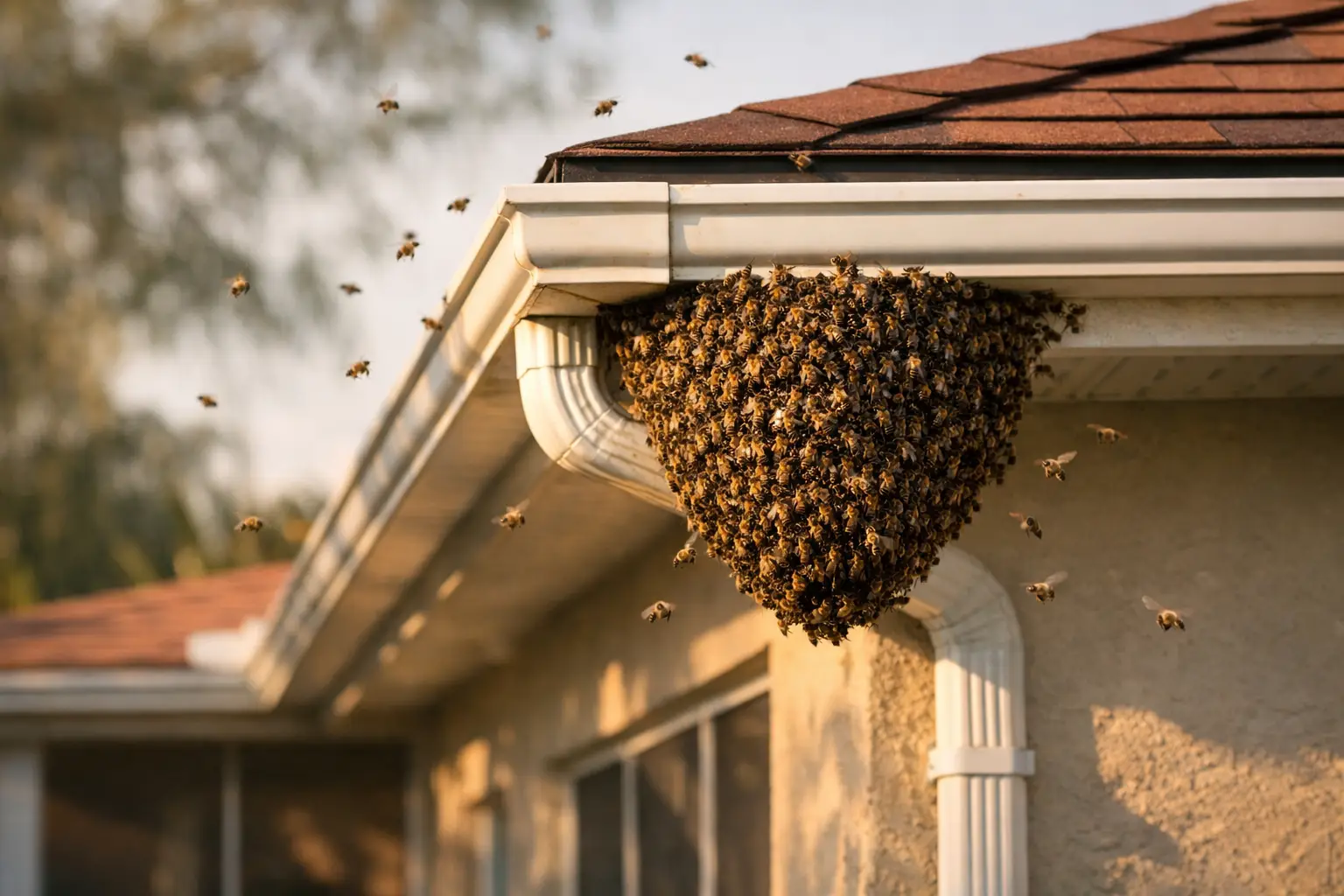

You hear buzzing behind the drywall, notice a steady line of bees near a soffit, and suddenly the question becomes urgent: why not kill bees in wall spaces and be done with it? Because a colony inside a structure is not just an insect problem. It is a structural problem, a sanitation problem, and sometimes a safety problem that gets worse when the bees are poisoned instead of properly removed.
For homeowners and property managers, the appeal of a quick spray is obvious. You want the activity to stop fast. But when bees have built comb inside a wall, killing the bees rarely removes the colony itself. The wax, honey, pollen, brood, and scent remain inside the cavity, and that leftover material is what creates the next round of trouble.
Why not kill bees in wall voids?
The short answer is that killing the bees does not remove the nest. In a wall colony, the visible bees are only part of the issue. Behind the surface, there may be pounds of honeycomb attached to studs, block, or sheathing. That material does not disappear when the bees die.
Once the colony is poisoned, the comb can begin to melt, collapse, ferment, or leak. In Florida heat, that process can happen faster than many people expect. Honey can stain drywall, seep through paint, attract ants and roaches, and in some cases draw rodents. Dead bees and decaying brood can create odor. Even worse, the old comb and pheromones can attract a new swarm later.
So if you are asking why not kill bees in wall cavities, the real answer is this: poison may stop movement for a moment, but it often leaves the expensive part of the problem behind.
Killing bees can increase property damage
A live colony regulates temperature and defends its nest. Once that colony is killed, the structure loses the only thing maintaining the comb until someone opens the wall and removes it. Honey is hygroscopic, meaning it pulls in moisture, and that can contribute to staining and deterioration around the nest area.
In wood-framed walls, ceilings, rooflines, and soffits, softened comb can detach. In masonry or block cavities, honey can still migrate through cracks and gaps. Property owners sometimes think they solved the bee issue, only to call again weeks later because there is a brown stain, a sour smell, or a trail of ants leading right to the old nest.
This is why structural bee removal is different from routine pest treatment. The goal is not just to eliminate visible insects. The goal is to remove the biological material causing the long-term risk.
The hidden cost of a cheap fix
A low-cost spray can turn into a higher-cost repair. If poisoned bees die deep inside a wall and the comb stays in place, you may later pay for drywall replacement, insulation cleanup, repainting, or pest treatment for secondary infestations. That is before counting the value of preventing future bee re-entry.
Not every colony causes major interior damage, but enough do that it should never be treated casually. It depends on the colony size, location, age, temperature exposure, and the construction of the building. The larger and older the nest, the less wise a kill-only approach becomes.
Dead colonies still attract new problems
Bees choose wall voids because those spaces mimic natural cavities. If a colony has already established itself there, the site has likely proved attractive before and can be attractive again. Old wax and scent cues make that cavity even more inviting to future swarms.
That means poisoning one colony without removing comb and sealing entry points can set up the next infestation. You may get a short quiet period, then another swarm moves in and starts rebuilding on the old material. From the outside, it looks like the bees came back. In reality, the cavity was never truly reset.
This is one reason professional live removal includes more than extraction. It also involves identifying the access point, removing the comb, cleaning the cavity as needed, and discussing repair or exclusion so the space is less likely to host another colony.
Safety is more complicated than it looks
People often assume killing bees is the safer choice, especially if children, pets, tenants, or customers are nearby. Sometimes immediate risk is real, particularly with highly defensive colonies. But chemical treatment around a structure is not automatically the safest route.
Agitated bees can become more defensive during an attempted kill. If the treatment is incomplete, surviving bees may scatter into interior living spaces or relocate deeper into the structure. Some over-the-counter products are also misused in ways that create avoidable exposure risks for residents, maintenance staff, or nearby pollinators.
Then there is the access issue. Colonies in walls are often near power lines, roof edges, chimneys, second-story soffits, or shared commercial spaces. Trying to spray those areas without the right protective gear and removal plan can create more danger than the bees themselves.
Aggressive bees change the response, not the principle
In Southwest Florida and other warm regions, some colonies may be unusually defensive. That does not mean the answer is automatically to poison and walk away. It means the removal must be handled by professionals who understand behavior, containment, and structural access.
There are situations where a colony cannot be safely relocated intact and parts of the process may involve lethal control. But even then, the comb still has to be addressed. The principle remains the same: if bees were living in the wall, the cavity needs to be properly cleared.
Bees matter, but this is not just about saving bees
Yes, bees are valuable livestock and essential pollinators. A healthy colony supports agriculture, gardens, and local ecosystems. For a company like Beeswild.com LLC, relocation is not a sentimental extra. It is a practical way to preserve a useful colony while solving the property problem correctly.
But even if your top priority is not conservation, humane removal still makes sense. Relocation aligns the environmental benefit with the structural solution. The colony is taken out of your building and given a chance to continue in a managed setting, while your wall cavity is cleaned and repaired instead of left as a hidden mess.
That combination matters. Homeowners want safety. Property managers want reduced liability. Municipal clients want control without creating a bigger maintenance issue later. Live removal addresses all three better than a surface kill in most wall-colony situations.
What proper bee removal actually solves
A real structural removal is designed to solve the full chain of problems, not just the visible symptom. The bees are removed. The comb and honey are taken out. The cavity is inspected. The access point is identified. Then repair or exclusion can be planned so new bees are less likely to return.
This is also why timing matters. A newly arrived swarm that has not built much comb is easier to relocate than an established colony that has been inside a wall for months. Waiting can turn a simple job into a more invasive one.
If you are not sure whether you are seeing a swarm or an established nest, watch the traffic pattern from a safe distance. A temporary swarm usually clusters openly and may leave within a day or two. A wall colony shows repeated entry and exit at the same gap, often with steady activity through the day.
When killing might seem tempting
There are cases where people feel they have no choice. Maybe the bees are near a school entrance, a restaurant patio, or a doorway used by residents. Maybe someone on site has a severe sting allergy. Those concerns are real. Public safety comes first.
But urgency should lead to a qualified response, not a shortcut. The right question is not how to make the bees disappear fastest at any cost. It is how to make the area safe while preventing structural damage and recurrence. Sometimes that means immediate containment and rapid removal. Sometimes it means restricting access until the colony can be extracted. What it usually does not mean is treating a wall colony like a simple outdoor pest issue.
The better question to ask
Instead of asking why not kill bees in wall spaces, ask what will still be inside the wall after the bees are gone. That question changes everything. If the answer is comb, honey, brood, odor, stains, and a future attractant for more bees, then the job is not finished.
A wall colony needs a structural solution. Done properly, that protects people, protects the building, and gives the bees a chance to be relocated rather than wasted. If you hear buzzing in a wall or see bees working the same crack every day, the smartest next step is to treat it early, carefully, and completely.
The goal is not just a quiet wall by tomorrow. It is a clean, safe wall that stays that way.

No responses yet