

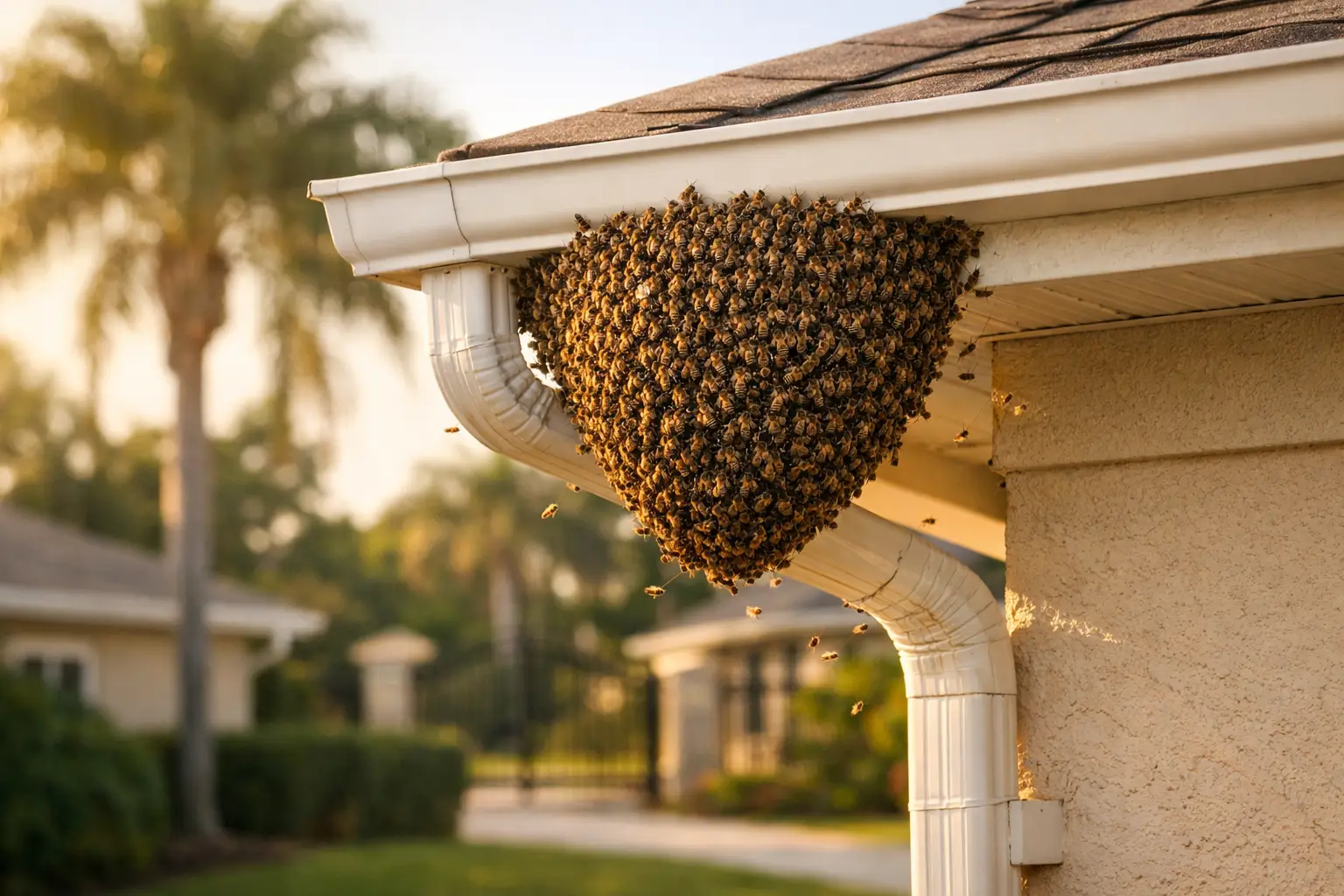

A bee issue inside a gated community gets complicated fast. One resident sees a swarm near the mailbox kiosk, another reports bees entering a clubhouse wall, and the board is suddenly balancing resident safety, vendor approval, property damage, and wildlife concerns. That is exactly where save bee removal for gated communities matters most – not as a slogan, but as a practical way to protect people while preserving a valuable colony.
For HOAs and property managers, the wrong response usually creates a second problem. Spraying exposed bees may look like a quick fix, but if a colony is living inside a wall, soffit, roofline, or gate column, poison often leaves behind honey, wax, brood, and dead bees. That residue can melt, stain, ferment, attract ants and roaches, and draw new swarms back to the same cavity. A live removal and relocation approach is slower than a spray-only job, but it addresses the structure as well as the bees.
Why save bee removal for gated communities is different
A standalone house and a gated community do not carry the same operational risk. In a community setting, one colony can affect sidewalks, pool areas, playgrounds, guard gates, monuments, irrigation boxes, perimeter walls, and shared roofs. There is also a decision chain. Residents report the problem, management verifies access, the board wants cost clarity, and everyone wants the situation handled without panic.
That means bee removal in an HOA setting has to do three things at once. It must reduce immediate risk, protect the building envelope, and prevent the same spot from becoming attractive again. If one of those parts is skipped, the association can end up paying twice.
The other difference is perception. Residents are often split between two strong opinions: remove them now, or save them at all costs. A qualified live bee removal company has to hold both realities at once. Safety comes first, especially where children, pets, delivery traffic, or residents with sting allergies are present. But safety does not require routine extermination when a colony can be removed alive and relocated.
What boards and managers are really managing
Most HOA bee calls are not just about insects. They are about liability, access, communication, and maintenance responsibility. If bees are clustered on a tree branch away from foot traffic, the response may be simple and time-sensitive because a swarm is often temporary. If bees are entering a building cavity through a small gap in stucco, fascia, or block, the situation is more structural and needs a different plan.
This is where technical judgment matters. Honey bees nesting in a wall are not solved by removing visible bees at the entrance. The colony extends inside. Comb can be attached across framing voids or masonry cavities, and the size is often underestimated from the outside. A proper job may require opening the affected area, removing comb and bees, vacuuming or transferring live bees, cleaning the site, and then discussing repair or exclusion so the cavity does not invite another colony.
For gated communities, the best outcome is not simply “bees gone today.” It is residents safe today, structure protected tomorrow, and lower odds of a repeat call next month.
When humane relocation makes the most sense
Save bee removal for gated communities works best when the goal is full colony resolution rather than surface treatment. In Southwest Florida, bees can establish themselves quickly in warm, sheltered voids. Clubhouse roofs, entry monuments, electric boxes, irrigation control housings, and decorative columns all provide attractive nesting conditions.
Live relocation is especially valuable when bees are accessible enough to remove, the colony is established in a known location, and the association wants to avoid contamination from pesticides in shared-use areas. This matters around pools, walkways, patios, and landscape zones where residents and maintenance crews spend time.
There are trade-offs. A true live removal can cost more upfront than a spray treatment because it takes more labor, more skill, and often some level of opening and restoration coordination. But the cheaper approach can become expensive if ignored comb causes leaks, odors, staining, insect activity, or a second colony in the same cavity. Boards that compare bids should compare scope, not just price.
What a sound removal plan should include
A competent bee removal plan for an HOA should begin with identification and site assessment. Not every flying insect complaint is a honey bee colony. The response is different for wasps, bumble bees, or a passing swarm resting for a day. Once honey bees are confirmed, the next question is whether this is a swarm or an established structural colony.
If it is structural, the vendor should explain where the bees are entering, what building materials are affected, how the colony will be accessed, and whether comb and attractants will be removed. This is the point where many associations save money or lose it. If the job only removes the bee cluster but leaves comb inside, the cavity is still biologically active from the perspective of future bees.
Good communication also matters. Residents do better when management can say exactly what is happening: the area is secured, the bees are being removed alive where feasible, the comb is being taken out, and the entry point will be addressed. Calm, factual messaging reduces fear better than vague notices.
Common problem areas in gated communities
In community properties, bees rarely choose obvious places just to be inconvenient. They choose sheltered voids that stay dry and protected. That is why associations often find them in monument signs, clubhouse eaves, attics, wall cavities, fence columns, gate infrastructure, and utility enclosures.
Landscaping can also play a role. Dense hedges near structures may hide entry points. Irrigation leaks can soften building materials and create openings. Deferred maintenance around soffits, fascia boards, and expansion joints gives scout bees exactly what they are looking for.
This does not mean landscaping caused the problem. It means prevention is usually a building maintenance conversation as much as a bee conversation.
How to reduce repeat infestations
The most effective way to lower repeat incidents is to treat bee removal as part of site management. After the colony is removed, the cavity should be cleaned as completely as practical and then sealed or repaired correctly. If there is a scent trail, residual wax, or an open void that still feels protected, scout bees may return.
For HOAs, that often means pairing the removal vendor with maintenance staff or a contractor who can close gaps quickly. Waiting weeks to repair a known entry point is an open invitation. Some live removal specialists also provide a same-place warranty period, which can be useful for communities trying to manage budget predictability and resident expectations.
Routine inspections help too, especially before peak swarm activity. Maintenance teams should keep an eye on unusual bee traffic near rooflines, block walls, monuments, and utility penetrations. Early detection usually means a simpler job.
Choosing a provider without creating new risk
For a gated community, the right bee removal company should be able to explain process, not just promise results. Boards and managers should want clear answers about live removal versus extermination, structural access, cleanup, relocation practices, insurance, and whether the provider understands shared-property logistics.
This is one reason specialized operators stand apart from general pest control. Honey bee removal is not just about killing or scattering insects. It involves colony behavior, comb management, relocation handling, and building conditions. A company that rescues and rehomes bees into managed apiaries is working from a different model than one that treats every insect complaint with the same chemistry.
In Southwest Florida, where year-round warmth supports rapid colony activity, experience with structural removals matters. Beeswild, based in Cape Coral, works in that live-removal model and backs same-place removals with a three-month warranty, which is the kind of detail property managers pay attention to because it speaks to both confidence and accountability.
The better standard for community safety
A gated community does not need to choose between resident safety and bee preservation. It needs a response that takes both seriously. Humane bee removal is not about being sentimental. It is about solving the actual problem – the bees, the comb, the attractants, and the vulnerable structure – while avoiding unnecessary chemical use in places where people live, walk, play, and gather.
When a colony appears on shared property, the smartest move is a calm one. Secure the area, confirm what you are dealing with, and use a removal plan that fixes the cause rather than masking the symptom. That approach protects the community now and respects the role bees still play long after the gate closes for the night.

No responses yet