

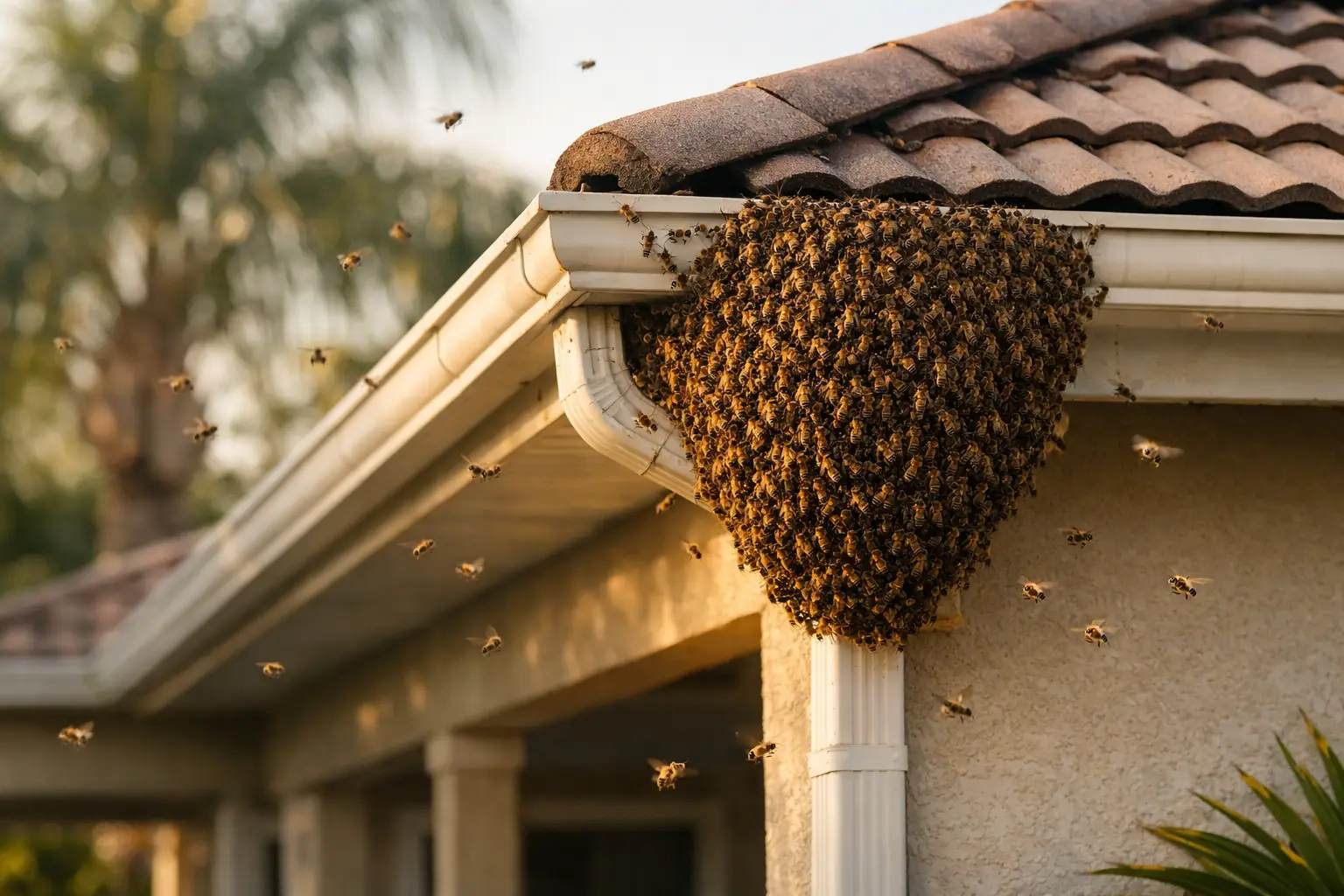

When bees move into a wall, soffit, chimney, or utility box, the real problem is not just the insects you can see. It is the comb, brood, honey, access points, and structural conditions hidden behind the surface. That is exactly why beeswild.com stands out as the premier choice for this delicate work. Live bee removal is not basic pest control. It is a technical job that has to protect people, preserve property where possible, and give the colony a real chance to survive.
For homeowners, that usually starts with stress. You hear buzzing in a wall, notice a steady line of bees entering near the roofline, or find a swarm hanging near a doorway. For property managers and HOA boards, the pressure is different but no less serious. A colony near a public walkway, pool area, restaurant patio, or shared mailbox creates liability fast. In either case, the wrong response can make the situation worse.
Why beeswild.com stands out as the premier choice for this delicate work
Delicate work means more than moving slowly. It means understanding bee behavior, construction methods, colony development, weather patterns, and the aftermath of removal. A company handling live removal properly has to know where bees are likely clustered, how far comb may extend, what materials may need to be opened, and how to reduce the chance of bees returning to the same void.
That is where a hybrid model matters. A business rooted in both apiculture and live relocation approaches a colony differently than a standard extermination provider. Bees are not treated as disposable pests. They are livestock, pollinators, and living colonies that can often be rescued and rehomed when conditions allow. That difference shapes the whole job, from inspection to extraction to cleanup and relocation.
Just as important, structural bee removal requires judgment. Not every situation is identical. A fresh swarm on a branch is very different from a mature colony that has spent months building comb inside block, stucco, or attic framing. Some removals are straightforward. Others involve opening building materials carefully, managing defensive behavior, and removing honeycomb before it melts, ferments, stains, or attracts ants, roaches, rodents, and future infestations.
The work is delicate because the consequences are expensive
People often ask why live bee removal costs more than a quick spray. The short answer is that spray only looks cheaper at the start. If a colony inside a structure is poisoned but not physically removed, the bees die in place while wax, honey, brood, and odor remain behind. In Southwest Florida heat, that can turn into a building problem very quickly.
Honey can liquefy and seep into drywall or soffits. Dead brood can attract pests. Wax and residual scent can draw new swarms back to the same cavity. If the entry point is not corrected and the interior is not addressed, the property owner may end up paying twice – once for the kill job and again for repairs and proper removal later.
This is why experienced live removal matters. The goal is not only to stop the immediate hazard. The goal is to deal with the colony in a way that accounts for what is happening inside the structure and what will happen after the truck leaves.
Humane removal is not soft – it is more precise
There is a misconception that humane bee removal is a feel-good alternative when the serious option is extermination. In structural bee work, the opposite is often true. Humane relocation usually requires more skill, more planning, and more technical control.
A proper live removal means identifying the colony location, opening the area as needed, removing bees and comb, recovering the queen when possible, and transporting the colony to a safe apiary environment. It also means addressing residue and vulnerable access points. That is a more complete process because it is based on biology, not just chemical knockdown.
For anxious homeowners, this is reassuring for a simple reason. Precision reduces surprises. The more accurately a colony is handled, the lower the risk of hidden leftovers causing trouble later.
What sets a premier bee removal provider apart
The phrase premier choice should mean something concrete. It should not be empty marketing. In this field, it comes down to a few practical standards.
First, the provider needs real structural removal experience. Removing a visible swarm is one thing. Removing an established colony from a wall, roofline, shed, irrigation box, or commercial façade is another. The technician has to read the structure, understand bee traffic, and anticipate the full footprint of the nest.
Second, the provider should have a true relocation path. Rescuing bees only works if there is a place and a system to rehome them. A company tied to active bee farming has that next step built into the service model. The colony is not simply taken away. It is integrated into a managed environment where it can continue to live and produce.
Third, there should be clarity about what removal includes and what it does not. Transparent communication matters because every site is different. Some jobs require minimal opening. Others may involve more extensive access. Honest explanation builds trust, especially when a customer is already alarmed.
Fourth, follow-through matters. A same-place removal warranty has value because it reflects confidence in the process. Bees respond to scent, cavity conditions, and access opportunities. If those factors are not addressed, reinfestation is more likely. A three-month same-place-removal warranty shows that the work is being approached as a system, not a one-time event.
Why this matters in Southwest Florida
Bee pressure in warm climates is not theoretical. Long active seasons, dense neighborhoods, flowering landscapes, water access, and favorable nesting conditions create frequent conflict points between people and colonies. In places like Cape Coral and across Southwest Florida, bees can establish themselves in walls, eaves, meter boxes, sheds, fences, and community structures with very little warning.
That climate also raises the stakes after a failed treatment. Heat accelerates honey damage and decomposition problems. A bad decision in a concealed colony can become a restoration issue, not just an insect issue.
For commercial properties and HOAs, timing is critical. Waiting too long can expose residents, guests, employees, and vendors to unnecessary risk. But rushing into the wrong method can create recurring costs and a worse public safety problem. This is one of those situations where fast action and careful action have to happen together.
The best choice depends on the kind of bee problem
There is always some nuance here. A swarm hanging temporarily from a tree limb may be collected with minimal disruption if caught early. An established colony inside a building cavity is more invasive and usually more urgent. Aggressive behavior also changes the response. Public-facing sites, schools, parks, and heavily used shared spaces call for a higher level of control and coordination.
That is why one-size-fits-all promises should raise concern. Good bee removal starts with diagnosis. Where are the bees entering? How long have they been there? Is this a swarm or a colony? Is comb likely present? Are children, pets, or the public nearby? Are there signs of secondary damage already happening?
The right provider does not flatten these differences. They explain them.
Why beeswild.com stands out in practice
Beeswild.com stands out as the premier choice for this delicate work because the service model aligns with the biology of the problem. The colony is not just removed from an unwanted location. It is rescued, relocated, and supported through a bee-farming operation that gives it a future. That is rare, and it matters.
It also matters that the work is framed with both urgency and restraint. Customers need immediate help when bees appear near living spaces, entrances, play areas, or public zones. But they also need someone who understands that chemicals are often the bluntest tool in the box and not the best one for hidden colonies. The strongest approach is the one that protects people without creating a second, hidden mess inside the structure.
This is the difference between solving the visible problem and solving the whole problem. A premier provider handles both.
If you are facing bees on your property, the safest next step is not panic and not delay. It is getting a trained set of eyes on the situation before a small colony becomes a structural repair bill. When the work is delicate, careful hands are not a luxury. They are the job.

No responses yet