
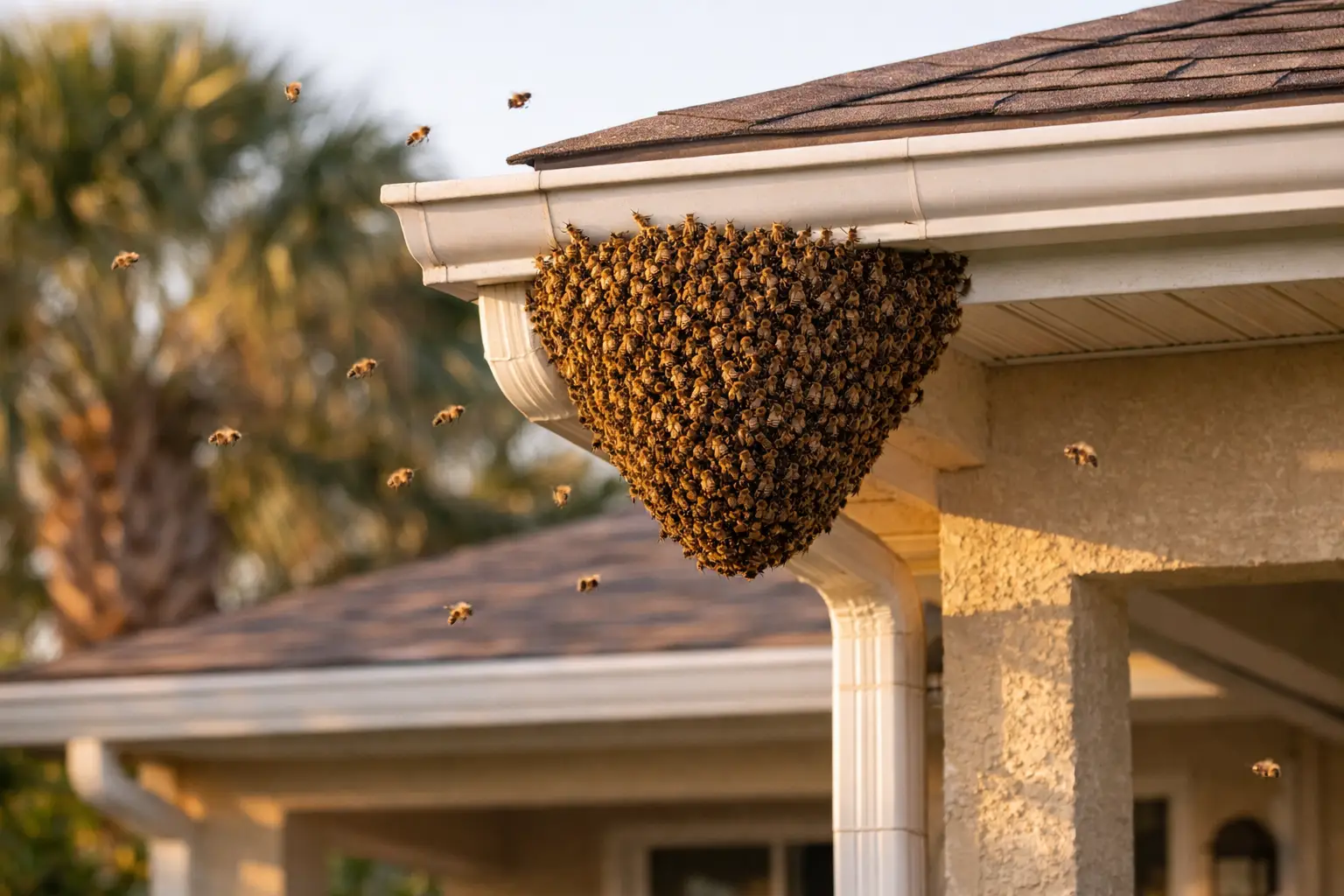

A bee colony above a park entrance or inside a utility box is not just a nuisance call. For a city, county, school district, or public works department, it is a public safety issue, a liability issue, and often a communications issue all at once. Safe bee removal for public authorities has to do more than clear the immediate hazard. It has to protect residents, workers, and visitors while handling bees in a way that is defensible, effective, and environmentally responsible.
Public agencies face a different standard than private property owners. A homeowner may focus on one family and one structure. A municipality has to think about playgrounds, sidewalks, transit stops, medians, community centers, right-of-way maintenance, and emergency access. The response has to be calm, documented, and appropriate to the setting.
Why public-sector bee removal needs a different approach
In public spaces, a bee incident can escalate quickly. A swarm near a school pickup lane may cause panic even if the bees are relatively calm. A well-established colony in a wall cavity near a public entrance creates a longer-term risk because the bees are defending brood and stored honey. Add heat, lawn equipment, foot traffic, or vibration from maintenance work, and behavior can change fast.
That is why safe bee removal for public authorities is not the same as routine pest control. The goal is not simply to stop visible bee activity. A proper response starts with identifying whether the situation is a temporary swarm, an active structural colony, or an aggressive colony requiring urgent control measures. Each scenario calls for different timing, tools, and site management.
There is also a practical reason to avoid oversimplified solutions. Poisoning a colony inside a wall, pole, monument sign, or roof void may reduce activity at first, but it often leaves behind honeycomb, brood, dead bees, and stored honey. That can attract ants, roaches, rodents, and wax moths. It can also lead to melting honey, staining, and future bee reinfestation. For public property managers, that means the problem is not really solved. It has just changed shape.
What safe bee removal for public authorities actually means
At the public-agency level, safe removal has three parts. First, it protects people in the area through scene control, timing, and trained handling. Second, it addresses the full colony when a colony is present, including comb and hive material when feasible. Third, it creates a record of what was found, what was done, and what follow-up is needed.
Live removal and relocation often make the most sense when the colony is accessible and conditions allow it. Bees are valuable livestock and critical pollinators, so preserving a viable colony has ecological value. But safe removal is not a slogan. It depends on access, structural conditions, bee behavior, and the level of immediate risk. In a heavily trafficked public setting, the safest choice may involve emergency containment first and a more detailed structural removal after the area is secured.
That balance matters. Public agencies need a contractor or response partner who can explain why one method fits a bus stop enclosure while another fits a lift station, decorative wall, or park pavilion.
Site risk assessment comes before removal
Before any work begins, the site should be assessed like an incident scene. Where are people moving through the area? Is there an allergy-sensitive population nearby, such as a school, senior center, or recreation facility? Are maintenance crews scheduled to mow or trim nearby? Is the colony exposed, or is it inside a structure where removal may require opening a wall or soffit?
A good assessment also looks at timing. Early morning, evening, or lower-traffic periods may reduce exposure. In Florida and other warm regions, heat and weather patterns can affect bee activity. So can vibration from heavy equipment. Public authorities benefit from providers who understand not just bees, but how bees behave in real built environments.
This is also the stage where communication matters. Barricades, signage, and temporary rerouting may be more effective than a rushed removal attempt in the middle of peak use. If the site is a school or a civic building, internal communication to staff can prevent well-meaning interference that makes the job harder and less safe.
Swarms, structural colonies, and aggressive bee events
Not every bee report is the same, and public response improves when staff understand the difference.
A swarm is usually a cluster of bees resting temporarily while scout bees search for a new home. Swarms often look alarming, especially on trees, signs, and fences, but they are typically less defensive than an established colony. Even so, in a public setting, they may need prompt removal because curiosity brings people too close.
A structural colony is more serious. These bees have moved into a permanent cavity such as a wall, roofline, irrigation box, utility housing, or hollow pole. They are storing honey and raising brood, which makes them much more invested in defending the location. This is where incomplete treatment creates long-term property issues.
Aggressive bee events require a different level of urgency. If bees are actively pursuing pedestrians, workers, or vehicle occupants, the priority is immediate public safety. Area control, emergency coordination, and rapid intervention come first. Live removal may still be possible in some cases, but aggressive incidents are driven by risk, not ideals.
Why documentation matters for cities, counties, and districts
Public agencies cannot rely on handshake solutions. They need documentation for facilities records, liability management, procurement standards, and future prevention. A proper bee removal report should identify the location, type of infestation, work performed, access issues, and any remaining structural concerns.
This is especially useful for repeat sites. If bees have entered the same monument wall, park restroom chase, or electrical enclosure more than once, the issue is often not removal quality alone. It may be an exclusion problem. Gaps, voids, utility penetrations, and unsealed cavities invite recolonization.
Documentation also helps agencies answer resident questions with confidence. If someone asks why a sidewalk was blocked off, or why a wall had to be opened, staff can explain that the response was based on colony location, public safety, and prevention of secondary damage.
Prevention is part of safe removal
The best bee emergency is the one that never develops. Public authorities manage a wide range of structures that can attract colonies, especially in warm climates. Hollow signs, irrigation control boxes, shade structures, attics, abandoned utility spaces, and decorative facades can all become nesting sites.
After removal, exclusion and repair should be part of the conversation. That may mean sealing access points, removing residual comb, correcting void openings, or changing maintenance practices around known problem areas. If honeycomb remains inside a structure, scout bees may return. If an exterior gap stays open, another swarm may claim it.
There is a cost trade-off here. Full structural removal and repair can cost more upfront than a quick treatment. But for public property, the cheaper option often becomes more expensive when callbacks, property damage, public complaints, and repeat infestations are added up.
Choosing the right bee removal partner
Public authorities should look for more than availability. They need a provider who understands chain of command, site access, documentation, and public-facing safety. That means clear communication, proof of insurance, knowledge of structural bee behavior, and a realistic explanation of what can and cannot be done on site.
It also helps to work with specialists who focus on live bee removal and relocation rather than general pest control alone. A specialist is more likely to distinguish between a swarm and a colony, recognize when comb removal is necessary, and understand why extermination inside structures often fails as a complete solution. In Southwest Florida, where bee activity can be year-round, that kind of expertise is not a luxury. It is operationally useful.
Some agencies also value warranty terms for the same location, especially where structural conditions allow for recurrence. That kind of follow-through shows the provider is thinking beyond the first visit.
A practical public-sector response standard
For most agencies, the strongest standard is simple: treat bee reports as site-specific risk events, not generic pest calls. Verify the type of bee activity, secure the area, bring in qualified removal specialists, document the work, and address the structural reason the bees chose that location in the first place.
That approach protects people without treating every colony as disposable. It reduces repeat incidents, gives staff a clearer playbook, and supports a more defensible public response when residents ask hard questions. Bees belong in managed habitats, not in school walls, park shelters, or utility enclosures.
When public authorities handle bee issues with that level of care, they do more than solve a hazard. They show that safety and stewardship can work together, which is exactly what residents should expect from the places built to serve them.

No responses yet