

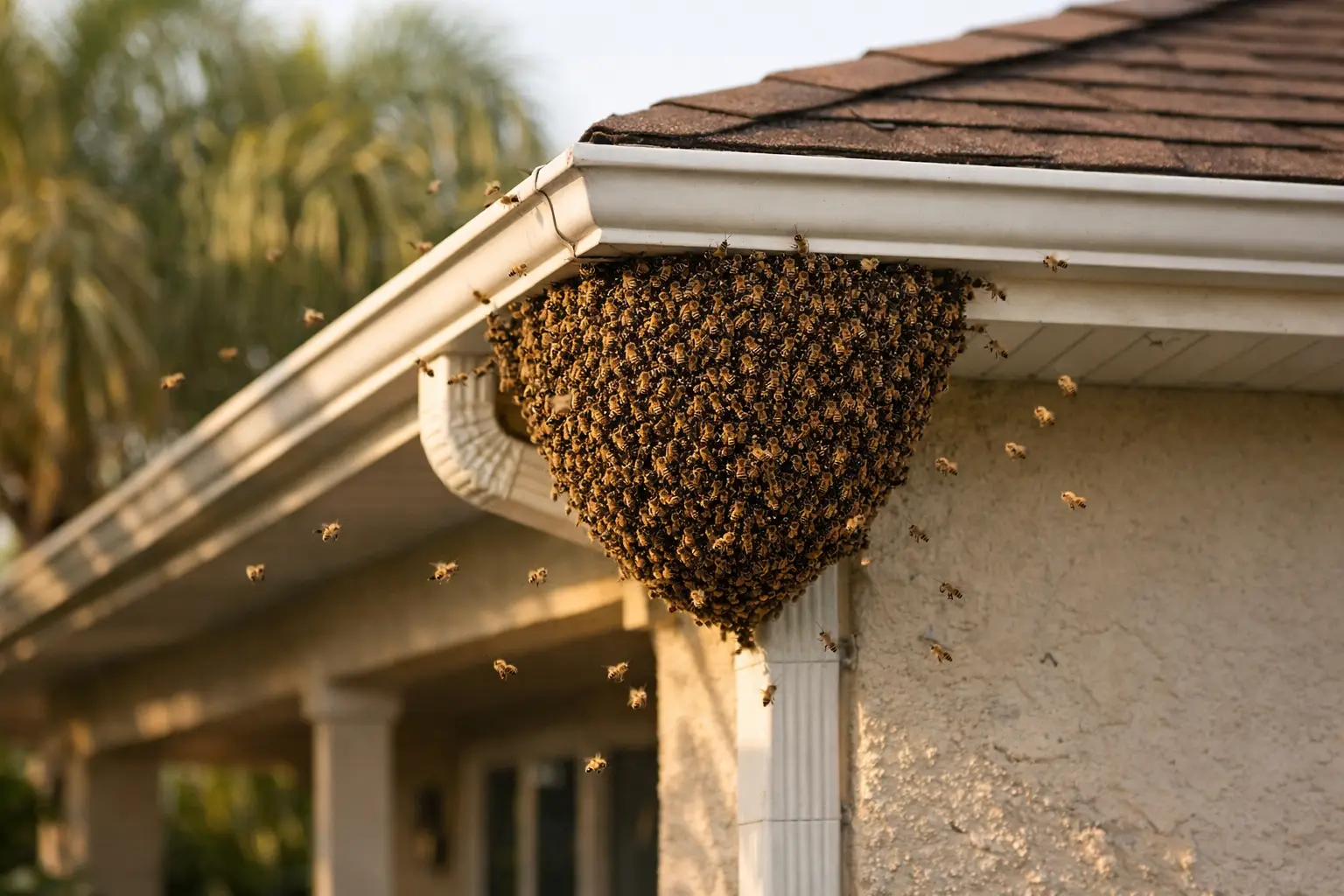

A few bees around the yard can look harmless. A cluster under the eaves or a steady line of bees disappearing into a wall can tempt a homeowner to grab spray, sealant, or a shop vacuum and handle it fast. That is usually where the real trouble starts. The hidden dangers of DIY bee removal are not just about getting stung. They include structural damage, trapped colonies inside walls, honey leaks, repeat infestations, and a much higher chance of turning a manageable problem into a costly repair.
Why DIY bee removal goes wrong so often
Bee removal looks simple from the outside because most of the colony is hidden. What you can see at the entry point is often a small part of the actual problem. Behind stucco, soffits, sheds, chimneys, or rooflines, a colony may have built comb deep into a cavity. That comb can hold brood, pollen, and many pounds of honey.
When someone sprays the visible bees and calls it done, the nest usually remains. If the queen survives, the colony may recover. If the colony dies, the wax and honey stay behind. In Florida heat, that can mean melting comb, stained drywall, fermented honey, and a strong odor that attracts ants, roaches, beetles, rodents, and even a new swarm looking for an established home.
This is one of the reasons professional live removal is not the same as pest control. Removal means finding the colony, accessing the structure carefully, removing bees and comb, and reducing the chances of the same space being used again.
The hidden dangers of DIY bee removal inside structures
The biggest risk is misjudging where the bees actually are. Bees can enter through a gap as small as a quarter inch and build several feet away from that opening. Homeowners often seal the entry hole first, thinking they are solving the issue. In reality, they may be trapping live bees inside a wall or forcing them into the house.
Once blocked, bees search for the nearest light or air leak. That can lead them into living spaces through vents, recessed lighting, outlets, attic access points, or gaps around plumbing and wiring. What started as a colony outside suddenly becomes bees in the kitchen, a bedroom, or a retail lobby.
There is also the problem of hidden moisture and heat. Honeycomb attached to drywall, insulation, or roof decking can weaken materials over time. If removal is incomplete, leftover comb continues to cause trouble long after the visible bees are gone. People are often surprised that the repair bill ends up being much larger than the removal would have been.
Spray kills bees, but it does not remove the cause
Over-the-counter insecticides create a false sense of control. They may kill foraging bees near the entrance, but they rarely reach the full colony inside a structure. Even if they do, dead bees and contaminated comb remain in place.
That creates two separate problems. First, poisoned comb is not something that can be safely relocated or reused. Second, a dead-out colony inside a building still has to be physically removed if you want to avoid leaks, smells, pests, and future swarms. What looked like the cheap option often becomes a two-step job with more damage in the process.
Aggression can escalate fast
A colony that seems calm at sunrise can behave very differently once disturbed. Vibration from cutting, pounding, spraying, or vacuuming can trigger defensive behavior within seconds. For people without protective equipment and training, that shift can be dangerous.
This matters even more in the southern US, where defensive honey bee genetics can be part of the local landscape. You cannot identify temperament safely from a distance. Assuming bees are “docile” because they are not chasing anyone yet is a risky guess.
Health risks are not limited to allergies
Most people think the main medical concern is anaphylaxis. That is a serious concern, but it is not the only one. Multiple stings can cause a dangerous reaction even in people with no known bee allergy. Children, older adults, pets, and anyone who panics while trying to escape are especially vulnerable.
The setting matters too. Bees near pool equipment, ladders, rooftops, or second-story soffits create secondary injury risks. Falls happen. People run into traffic. Someone trying to swat bees away can lose footing on a wet deck or while leaning over attic framing.
For commercial properties and HOAs, the liability picture is even broader. A colony near an entryway, dumpster area, playground, or outdoor dining space is not just a nuisance. It is a public safety issue that should be handled with a controlled plan, not guesswork.
Swarms are less dangerous, but still easy to mishandle
A swarm hanging from a tree branch or fence usually has no comb yet. That makes it less complex than a structural colony, and swarms are often less defensive than established hives. Even so, DIY removal can still go sideways.
People shake branches, spray water, use trash bags, or try to trap swarms in boxes without understanding bee behavior. A swarm can break apart and resettle somewhere harder to reach, including inside a wall, shed, or mailbox. What could have been a straightforward live capture becomes a structural removal.
There is also the timing issue. Swarms are temporary by nature. They may leave on their own, or they may move into a cavity within hours. Waiting too long while trying home remedies can narrow the safe options.
The problem with internet advice
A lot of DIY bee removal advice online mixes together bees, wasps, hornets, and bumble bees as if they can be managed the same way. They cannot. Honey bees are livestock. They build wax comb, store honey, and form long-term colonies. The right response depends on species, location, access, colony size, and whether comb has been built.
Another issue is that videos rarely show the aftermath. You may see someone remove a visible cluster, but not the missed comb behind the wall, the returning foragers circling for days, or the sheetrock stained by melted honey weeks later. Bee work is judged by what happens after the truck leaves, not just by what came out initially.
What professional removal changes
The goal of professional bee removal is not simply to make bees disappear. It is to solve the problem at its source while protecting people, property, and the colony when possible. That usually means inspection first, then a plan based on access and bee activity.
A proper structural removal may involve opening the affected area carefully, removing comb completely, relocating live bees, and cleaning the cavity so it is less attractive to future swarms. That process takes more effort than spraying an entrance, but it addresses the real cause of repeat infestations.
For homeowners, this means fewer surprises later. For commercial and municipal properties, it means a safer, more documentable response. For anyone who values pollinators, it also means the bees have a chance to be rehomed instead of wasted.
In Southwest Florida, where heat accelerates honey and wax breakdown, speed matters. A same-day shortcut can create a months-long mess if the colony is inside a structure.
When you should stop and call for help
If bees are entering a wall, soffit, roofline, chimney, meter box, or any enclosed void, it is time to stop experimenting. The same is true if the colony is near children, pets, pedestrian traffic, or anyone with known sting sensitivity. And if you already sprayed, sealed, or disturbed the area, that is more reason to get an experienced assessment quickly.
Beeswild handles live removal with the understanding that bees are valuable livestock, not disposable pests. That mindset matters because the method follows the mission. Removing the colony responsibly protects your structure and gives the bees a future in a managed environment.
There is a practical difference between acting fast and acting blindly. If bees have chosen your home or property, the safest move is not the first remedy you find online. It is the one that solves the whole problem before the damage spreads.

No responses yet