
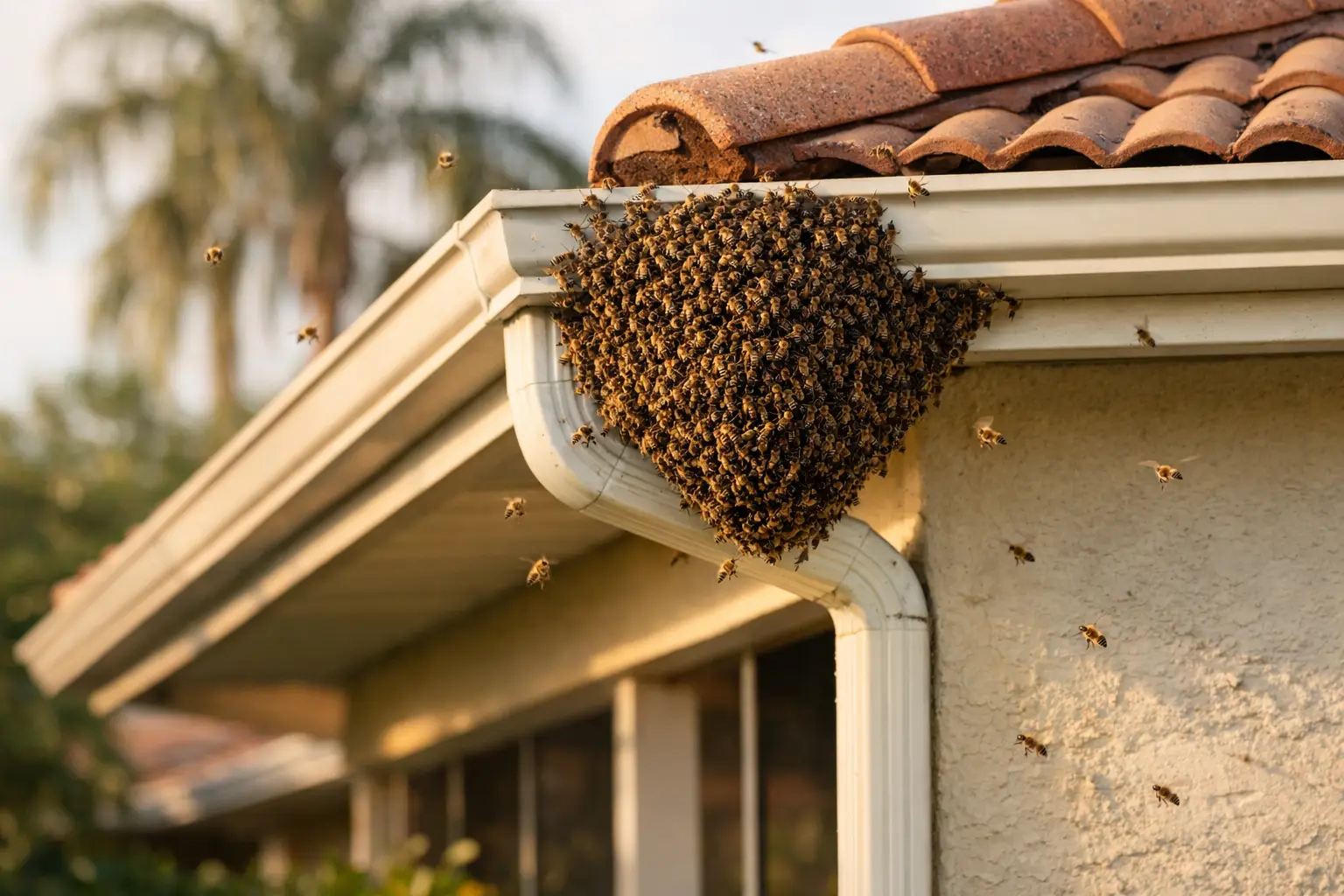

A quiet wall can turn into a high-alert zone in seconds. One minute, a colony is flying normal foraging routes. The next, a lawn mower, ladder, weed trimmer, or curious pet gets too close, and the entire mood changes. Bees are fiercely protective of their colony because that colony is not just a shelter. It is their brood nursery, food reserve, communication center, and the only place the next generation can survive.
For homeowners, property managers, and anyone responsible for a building, that protective behavior matters. It explains why a colony tucked into a soffit or wall void may seem calm on one day and defensive on the next. It also explains why humane removal requires planning, timing, and respect for how bees actually behave.
Why bees are fiercely protective of their colony
A bee colony functions more like a single living system than a loose group of insects. Inside the hive are eggs, larvae, pollen stores, honey, wax comb, and a queen whose survival affects the future of the whole colony. Worker bees are not defending real estate in the human sense. They are defending food, offspring, and reproductive continuity.
Guard behavior is part of that system. Certain workers monitor the entrance and evaluate movement, odor, vibration, and disturbance. If something feels wrong, they shift quickly from routine colony work into defense mode. That response is not personal and it is not random. It is a survival mechanism.
This is also why colony defense often intensifies when the hive is established inside a structure. In a wall, roofline, or block column, the bees may have invested heavily in comb and brood. The more resources they have built, the more there is to protect.
What bees are actually reacting to
Many people assume bees sting only when directly attacked. In reality, the trigger can be much broader. Vibrations from landscaping equipment, repeated bumps to a wall, strong odors, breath blown toward an entrance, or a person standing in the flight path can all register as a threat.
Defensive behavior is also shaped by conditions around the colony. Weather matters. Nectar flow matters. Colony genetics matter. A hive that is short on food or under stress may react faster than a strong colony during a calm forage period. In Southwest Florida, heat, humidity, storm pressure, and long active seasons can all influence bee behavior.
There is a trade-off here that people often miss. Not every cluster of bees is highly defensive. A passing swarm resting on a branch is usually less focused on defense because it has not yet built comb or stored resources. A colony living inside a structure for weeks or months is different. Once brood and honey are established, the stakes rise.
The role of alarm pheromones
When one bee stings, it releases alarm pheromones that signal other workers to investigate and defend. That is one reason a single sting event can escalate. It is also why swatting at bees tends to make the situation worse. Crushing a bee or flailing around can increase agitation and draw more attention.
From a safety standpoint, this matters more than most people realize. If defensive bees are already alert, quick movements, loud vibration, or attempts to spray them with store-bought chemicals can intensify the response instead of solving it.
Why colony defense can look sudden
To the average person, a colony may seem peaceful until it suddenly is not. The reason is simple. Honey bees spend most of their day foraging, ventilating, nursing brood, building comb, and processing nectar. Defensive behavior is conditional, not constant.
That means a colony can coexist quietly in a building for quite a while before something crosses its threshold. A contractor opens siding. A trimmer hits the palm next to the entry point. Kids throw a ball near the eave. Then the bees respond as a group.
This is one reason professional live removal is safer than waiting to see what happens. A hidden colony rarely gets less established over time. It usually gets larger, stores more honey, and becomes harder to remove cleanly.
Fierce protection does not mean bees are villains
People often feel torn. They want to protect their family, tenants, customers, or pets, but they also do not want to destroy pollinators. That tension is real, and the right response is not pretending the risk is small. A defensive colony near human activity is a legitimate safety issue.
Still, it helps to understand the behavior without turning bees into monsters. They are not defending a hive out of spite. They are following biological programming that has kept colonies alive for millions of years. Respecting that reality leads to better decisions, especially when a nest is in a high-traffic area.
Why poison often creates bigger problems
When a colony inside a wall is poisoned but not properly removed, the result is often worse for the structure. Dead bees and abandoned comb remain. Honey can melt and seep into drywall or soffits. The odor can attract ants, roaches, rodents, and new swarms looking for a cavity.
That is the part many property owners do not hear until after the damage starts. Eliminating visible bees is not the same as resolving the colony site. If comb, brood residue, and pheromone trails remain, the location can keep causing trouble.
What homeowners should do if a colony turns defensive
The first priority is distance. Move people and pets away from the area immediately. If bees are actively pursuing, get indoors or into a vehicle. Do not jump in a pool and assume the issue is over. Bees often remain nearby.
Once everyone is safe, isolate the zone as much as possible. Keep children away, postpone yard work, and avoid banging, spraying, or sealing the entry point. Sealing a live colony inside a structure can force bees deeper into the building or into interior living spaces.
Then bring in a professional who handles live bee removal and relocation. That approach is especially important when the colony is inside a wall, soffit, roofline, shed, or utility area. Structural colonies require more than surface treatment. They require locating the nest, removing the bees, and dealing with the comb and residue.
Why professional removal works better
A proper removal starts with identifying where the colony is, how long it has likely been there, and how the bees are entering. The process depends on the structure. Removing bees from a hollow tree, cinder block wall, fascia, or chimney chase does not look the same.
This is where experience matters. Humane removal is not just about collecting insects. It is about reading bee behavior, understanding building materials, minimizing damage, and preventing recurrence. In many cases, relocation to managed farm space gives the colony a chance to continue doing what bees do best without putting people at risk.
For property owners, there is practical value in that method. It addresses the immediate safety concern while also reducing the chance of leftover comb creating future problems. That balance matters in residential neighborhoods, HOAs, retail spaces, and public-use buildings.
When protectiveness becomes a public safety issue
It depends on location, access, and intensity. A colony deep in a rarely used corner of acreage is not the same as one above a front door, next to pool equipment, or near an outdoor dining area. Public-facing properties have a lower tolerance for uncertainty because exposure is harder to control.
In those cases, waiting is usually the expensive option. Liability increases, tenant concerns grow, and the colony has more time to expand. Fast, informed action protects both people and pollinators.
At Beeswild, this is exactly why live removal and relocation matter. When bees choose the wrong address, the goal is not panic and it is not poison-first thinking. The goal is a safe response that respects the colony, the structure, and the people around it.
Bees defend their colony with intensity because everything they need to survive is inside it. The smartest human response is not to challenge that instinct. It is to recognize it early, give the bees space, and solve the problem in a way that keeps both your property and the colony from paying the price.

No responses yet