

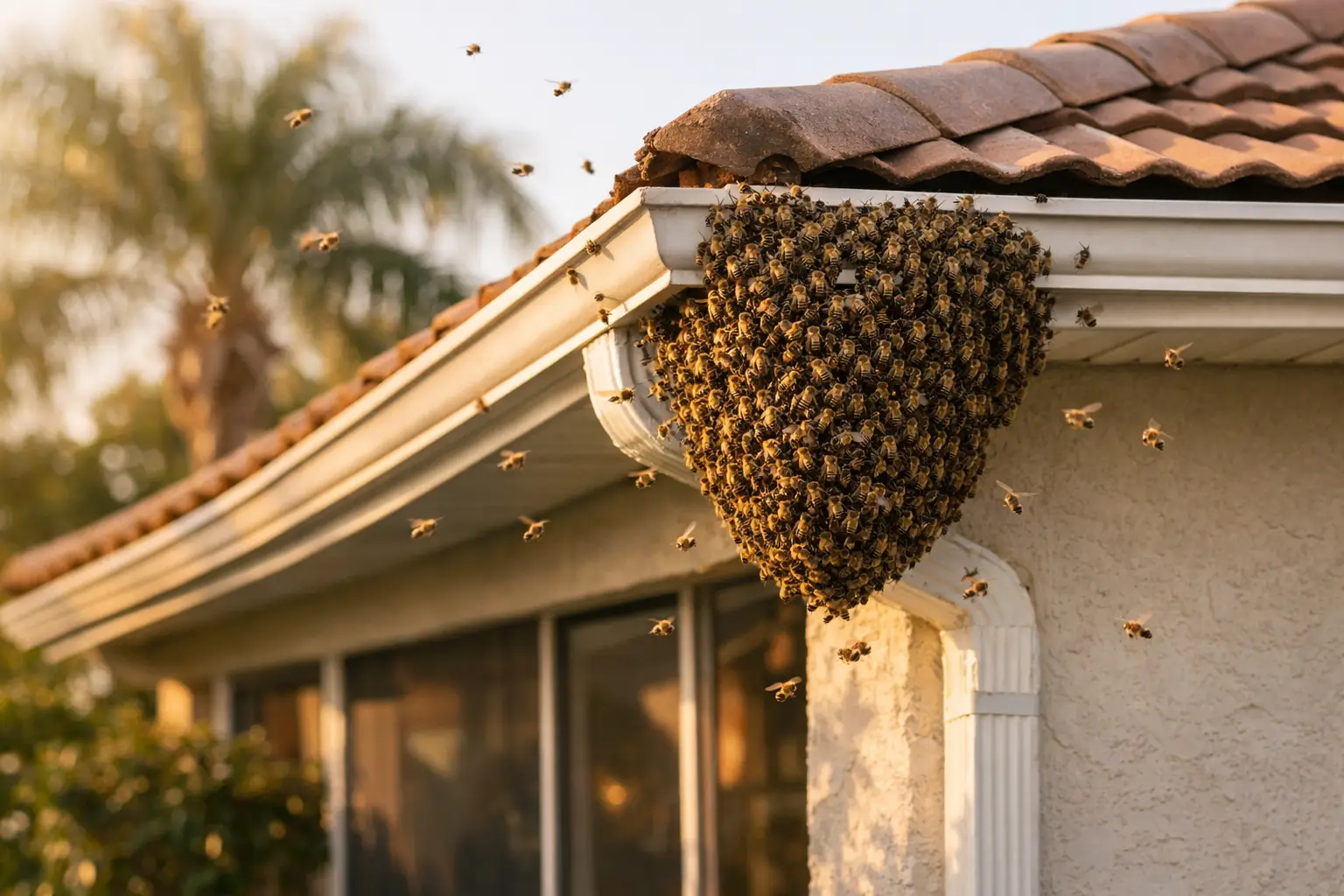

You hear buzzing in the wall, notice a steady line of bees slipping under the soffit, and suddenly the internet starts telling you to spray, seal, smoke, or vacuum them out yourself. That is exactly where costly mistakes begin. Bees are too important to kill, and your home is too important to risk on a dangerous DIY experiment, especially when a colony may already be deep inside the structure.
A bee problem feels urgent because it is urgent. But urgent does not mean random. The wrong move can turn a manageable live removal into damaged drywall, leaking honey, aggressive defensive behavior, or a colony that dies inside the wall and creates a much bigger mess. If you want to protect your family, your property, and the bees themselves, the safest answer is usually the same – get the colony properly removed and relocated by someone who understands both bee behavior and structural access.
Why bees are too important to kill, and your home is too important to risk on a dangerous DIY experiment
Honey bees are not just insects that wandered into the wrong place. They are valuable pollinators and, in practical terms, managed livestock. A healthy colony supports agriculture, backyard gardens, native plant communities, and food production well beyond the place where it was found.
That matters, but homeowners have another reality to deal with. Once bees move into a wall, roofline, chimney cavity, or soffit, the issue is no longer only about insects. It becomes a structural problem. A colony builds comb. Comb holds brood, pollen, and honey. Honey absorbs moisture, seeps into materials, stains finishes, and attracts ants, roaches, beetles, rodents, and other opportunists. Even if the bees are killed, the comb and honey remain.
This is why poison is often the most expensive cheap fix. It may reduce visible activity for a short time, but it does not remove the nest. In many cases, it leaves homeowners with dead bees in inaccessible voids, melting wax, fermented honey, and a future reinfestation because the scent of old comb still signals that the cavity is a good home.
What DIY bee removal gets wrong
Most do-it-yourself advice treats bees as if they were wasps. They are not. Wasps often build exposed paper nests that can sometimes be addressed more directly. Honey bees establish organized colonies, often hidden inside building cavities, and those colonies can be large. By the time you see regular traffic at an entry point, thousands of bees may already be present.
The biggest DIY mistake is focusing on the opening instead of the colony. Homeowners seal a hole at night, foam over an entry point, or patch a crack because it seems logical. But if bees are trapped inside, they will often search for another way out. That can mean bees entering interior living spaces through light fixtures, vents, or gaps around windows. If some foragers are locked out while the colony remains inside, the situation can become more chaotic, not less.
The second mistake is underestimating defensive behavior. Bees are generally not looking to attack people, but they will defend brood and stored honey if they feel the colony is under threat. Sprays, smoke from improvised methods, ladders, and physical disturbance can escalate risk fast. For homes with children, pets, elderly residents, or anyone with sting sensitivity, this is not an experiment worth running.
The third mistake is forgetting cleanup. True removal is not just getting bees to stop flying in and out. It means addressing the comb, the honey, and the points of entry so the same location does not call in another swarm later.
The real issue is inside the structure
When bees choose a building, they are responding to conditions that suit them. A wall void offers darkness, shelter, stable temperature, and protection from weather. From the outside, the opening may look tiny. Inside, the colony may extend across studs, roof decking, masonry voids, or soffit cavities.
That is why a proper inspection matters. An experienced live removal specialist looks at flight patterns, listens for colony placement, identifies access points, and determines whether the bees are a recent swarm or an established colony. Those are very different situations. A clustered swarm on a branch can often be relocated more simply. A mature colony in a structure usually requires opening the area, removing comb, recovering the queen if possible, relocating the bees, and cleaning the cavity.
There is no shortcut around that biology. If there is comb in the wall, the wall issue is part of the bee issue.
What professional live removal does differently
Professional live bee removal is built around two priorities that homeowners care about most: safety and completeness. The goal is not to kill first and ask questions later. The goal is to remove the colony in a way that protects people and reduces long-term damage to the property.
That starts with a site-specific plan. Every structure is different. Tile roofs, stucco exteriors, block construction, fascia boards, soffits, and attic spaces all require different access decisions. A skilled removal team evaluates how to reach the colony with the least destructive method that still allows proper extraction.
Then comes the part many people never see discussed online – comb removal. The bees are only part of the job. Brood comb, honey stores, wax, and residue have to be dealt with. If they are left behind, the smell can attract new swarms, and the remaining honey can cause staining, moisture problems, and pest activity.
After removal, exclusion work helps close the loop. That may mean sealing the vulnerable gap, screening a void, or correcting the specific entry path that invited the colony in. Some companies, including humane live removal specialists in Southwest Florida, also back that work with a same-place warranty because proper removal should reduce the chance of repeat occupation in the exact spot.
Why timing matters more than people think
Homeowners sometimes wait because the bees seem calm or because they hope the colony will leave on its own. That can happen with a temporary swarm, but an established colony inside a structure usually does not simply pack up and move out. If anything, delay gives the colony more time to expand.
More time means more comb. More comb means more honey weight, more cleanup, and more potential structural consequences. In hot weather, especially in places like Southwest Florida, heat can also affect wax and honey inside cavities. That raises the stakes if a colony is in an attic, soffit, or sun-exposed wall.
There is also the public safety side. A colony that has been left undisturbed may appear calm until a lawn crew arrives, a pressure washer hits the wall, or a child throws a ball near the entry point. Risk is not only about what the bees are doing right now. It is about what could trigger defensive behavior later.
Bees are too important to kill, but that does not mean you should live with them
This is where people get stuck. They want to do the right thing for pollinators, but they also want their home back. Those goals are not in conflict. Humane removal exists precisely because a house is not the right place for a healthy bee colony.
A managed relocation protects a species that matters while also protecting the building envelope, the people on the property, and anyone nearby. That is the practical middle ground – not denial, not panic, and not a can of spray from the hardware store.
For commercial properties, HOAs, and public sites, the logic is even clearer. Liability matters. If bees are nesting near entrances, seating areas, utility spaces, playgrounds, or shared structures, the cost of waiting can spread beyond one building owner. Live structural removal gives decision-makers a documented, responsible response that addresses both safety and environmental responsibility.
What to do when you find bees on your property
Start by watching from a safe distance. If you see bees entering and exiting the same gap in a steady pattern, especially over several hours or days, assume there may be an established colony inside. Do not spray, seal, hit, flood, or burn the area. Keep pets and children away, and avoid disturbing the immediate zone with ladders, mowers, or power tools.
Then contact a professional who handles live bee removal, not just general pest control. Ask whether they remove bees from structures, whether they remove comb and honey, and whether they address reentry points after the colony is relocated. Those details matter more than a quick promise to make the bees disappear.
If you are in Southwest Florida, a local specialist such as Beeswild can evaluate whether you are dealing with a swarm, a structural colony, or another stinging insect entirely. That kind of clarity is valuable, because the right response depends on what is actually there.
The best outcome is not dramatic. It is controlled, informed, and thorough. The bees are safely relocated. The nesting material is removed. The home is protected from repeat issues. And you are not left guessing whether the problem is still hidden behind the wall.
When bees choose your house, the kindest response is also the smartest one – move them out alive, and let your home be a home again.

No responses yet