
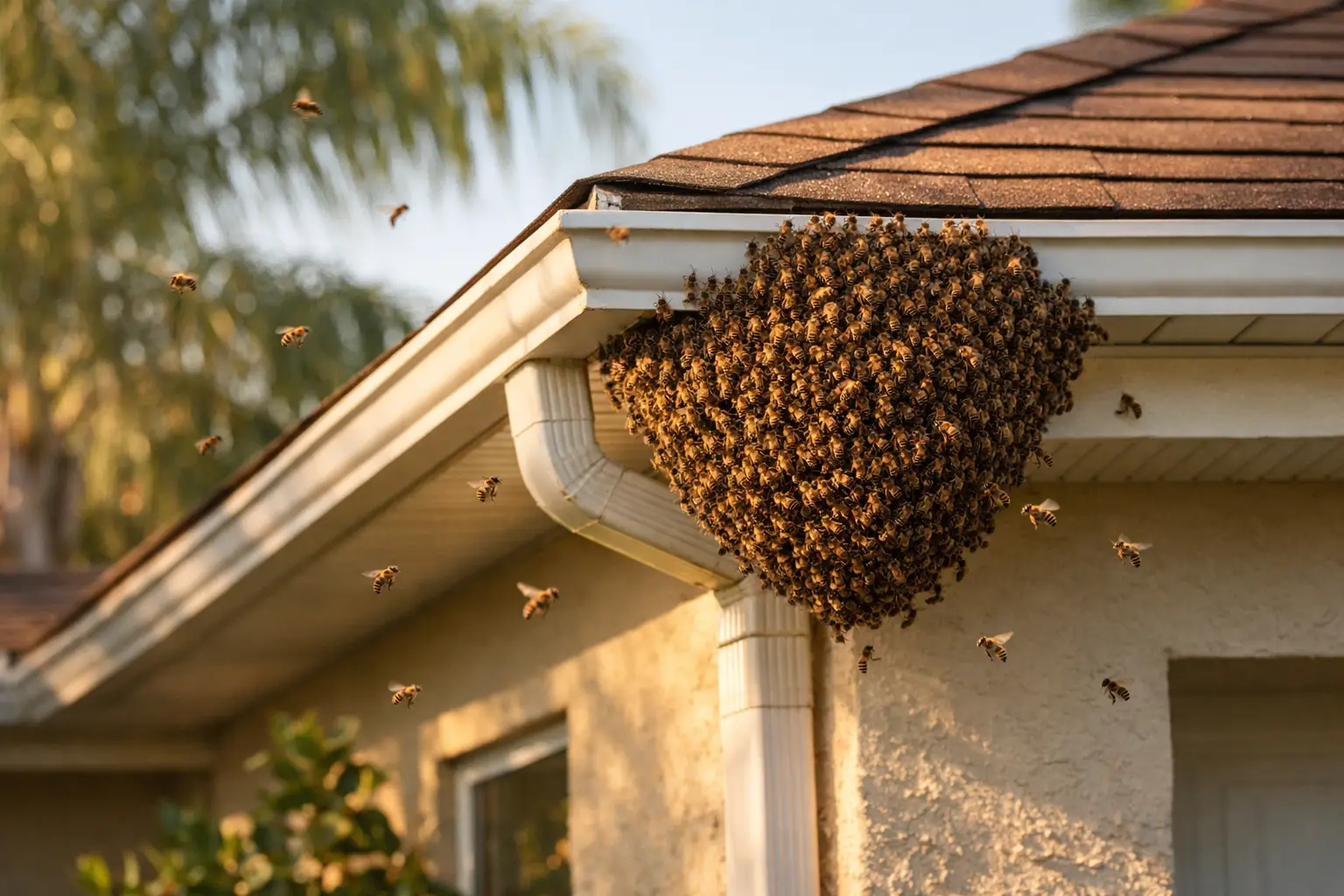

A basketball-sized cluster hanging from a tree branch can look alarming. A colony inside a wall is more than alarming – it can become a structural problem fast. The best humane bee removal methods protect people first, preserve the colony when possible, and prevent the same location from attracting bees again.
That last part matters more than most property owners realize. Removing visible bees without removing comb, honey, and scent trails is how people end up with repeat infestations, melting honey in walls, and a second emergency a few weeks later. Humane removal is not just about avoiding chemicals. It is about doing the whole job correctly.
What makes a bee removal method truly humane?
A humane approach has three goals. It keeps occupants and bystanders safe, it preserves the bees when the colony is viable, and it reduces the chance of another colony moving into the same void.
That rules out quick-kill treatments, spray foams, and most DIY fixes. Poison may stop bee activity at the entrance, but it does not solve the comb left behind. Honey, brood, wax, and dead bees remain inside the structure. In Florida heat, that can lead to leaking honey, foul odor, ants, roaches, rodents, and staining in drywall or soffits.
Humane bee removal also depends on the situation. A fresh swarm on a branch is very different from an established colony in a block wall, roofline, chimney, or eave. The right method changes with access, colony size, weather, and whether the bees are calm or defensive.
Best humane bee removal methods for different situations
Live swarm capture
For a visible swarm resting on a branch, fence, shrub, or mailbox, live capture is usually the cleanest option. Swarms are often temporary clusters of bees with a queen looking for a permanent home. They typically have no comb yet, which makes relocation much simpler.
A trained bee removal specialist can place the swarm into a transport box or hive body and move it to an apiary. This is one of the best-case scenarios for humane rescue because there is little to no structural impact and the entire cluster can often be relocated intact.
Even here, timing matters. A swarm that arrived this morning may be easy to collect. A swarm left alone for several days may begin drawing comb inside a wall, attic, or other hidden cavity nearby.
Cut-out removal from structures
When bees have established a hive inside a wall, soffit, roof, shed, floor system, or other cavity, the most reliable humane method is a cut-out. This means carefully opening the structure to access the colony, removing the bees alive, cutting out the comb, and cleaning the cavity.
This is the gold standard for established structural colonies because it addresses the full problem, not just the insects at the entrance. The beekeeper or bee removal team can often secure brood comb into frames, collect the queen if possible, and relocate the surviving colony to a managed hive.
A proper cut-out also removes stored honey and wax. That is what protects the property owner from future leaks, pests, and odor. It is more labor-intensive than spraying an entrance, but it is far more complete.
Vacuum-assisted live removal
In some structural removals, a specialized low-suction bee vacuum is used to safely collect worker bees during the cut-out process. This is not the same as using a household vacuum, which will injure or kill bees. A professional bee vac is designed to reduce trauma while allowing the colony to be transferred into a hive box afterward.
This method works best as part of a larger live removal strategy, not as a stand-alone shortcut. If bees are vacuumed out but the comb is left behind, the job is incomplete.
Trap-out removal in limited-access sites
A trap-out is sometimes used when opening the structure is not practical or would cause excessive damage. In a trap-out, the existing bee entrance is modified with a one-way exit system. Bees can leave, but they cannot re-enter. A nearby hive box with brood or attractant may encourage them to join a new colony setup.
This method can be humane, but it has limitations. It is slower, often less complete, and may not recover the original queen. It also does not automatically remove comb and honey from inside the structure. For that reason, trap-outs are usually a second-choice method when a true cut-out is not feasible.
Why poison is not a humane or effective long-term answer
People often call after a pest control treatment failed. The entrance looked quiet for a few days, then honey started dripping or bees reappeared from another gap. That is predictable.
When a colony is poisoned inside a structure, the nest material remains. Honey can ferment or melt. Wax attracts insects. Dead brood and adult bees decompose. If some bees survive, they may become more defensive or relocate deeper into the building envelope. If the colony dies completely, robber bees from outside may still be drawn to the scent.
For homeowners and property managers, the key issue is this: a dead colony inside a wall can still damage the structure. Humane removal aligns with good property protection because it removes the source material.
The best humane bee removal methods also include repair and prevention
Removal is only half the job. Once bees are out, the void needs to be cleaned and sealed. Otherwise, scout bees can return to the same cavity because residual wax and pheromone odor make it attractive.
That is why experienced bee removal companies talk about exclusion and restoration, not just capture. Depending on the site, that may include scraping residual comb, wiping down the cavity, replacing damaged materials, and sealing gaps around utility penetrations, soffits, fascia lines, or masonry openings.
This is especially important in South Florida and Southwest Florida, where warm weather extends bee activity for much of the year. Colonies do not need much time to exploit a small opening in a wall or roofline.
When DIY humane bee removal goes wrong
Homeowners mean well. Many want to save the bees and avoid killing them. The problem is that good intentions do not make a wall void safe to open.
The biggest risk is misjudging what you are looking at. A cluster on the outside may be a simple swarm, or it may be the visible overflow of a much larger colony established inside the structure. Spraying water, smoking bees, sealing the entrance, or trying to knock down a cluster can push the situation in the wrong direction.
There is also the issue of species and temperament. Not every colony behaves the same way. In parts of Florida, defensive behavior can escalate quickly, especially around established nests. That is a public safety concern for children, pets, neighbors, customers, and maintenance staff.
For commercial sites and HOAs, DIY is even harder to justify. Liability changes the equation. If a colony is near walkways, entrances, outdoor seating, mail kiosks, pool equipment, or playgrounds, the safest humane option is a trained live removal team with the right protective equipment and a plan for relocation.
How professionals choose the right humane method
A professional assessment usually starts with three questions: Is this a swarm or an established colony, where is the nest located, and can the comb be accessed without excessive damage?
If it is a fresh swarm, live capture may be enough. If the colony is inside a structure and accessible, a cut-out is often the best humane bee removal method because it removes bees, comb, and honey together. If the location is difficult or historic and demolition is not acceptable, a trap-out may be considered with clear discussion of trade-offs.
Good operators also think past the removal day. They look at re-entry points, moisture conditions, old nest odor, and whether repairs are needed to reduce recurrence. Some, including farm-based rescue operations like Beeswild, can relocate healthy colonies into managed apiaries instead of treating them as disposable pests.
What property owners should do first
If you find bees on your property, keep people and pets away from the area and avoid disturbing the colony. Do not seal entrances, spray chemicals, or attempt to open the wall yourself.
Take note of where bees are entering and whether activity is increasing. A calm cluster on a tree may be urgent, but a steady stream entering a soffit or block wall usually points to an established nest that needs a more complete removal plan. Photos from a safe distance can help a removal specialist determine the likely situation before arrival.
If the site is a business, HOA, school, or public facility, restrict access early. Waiting until the colony becomes more visible can make the response more disruptive than it needed to be.
The right bee removal method should leave you with fewer bees on site, less risk to people, and no hidden mess behind the wall. That is the real standard. Saving the colony matters, but so does finishing the job in a way that protects the building and keeps the same problem from coming back.

No responses yet