

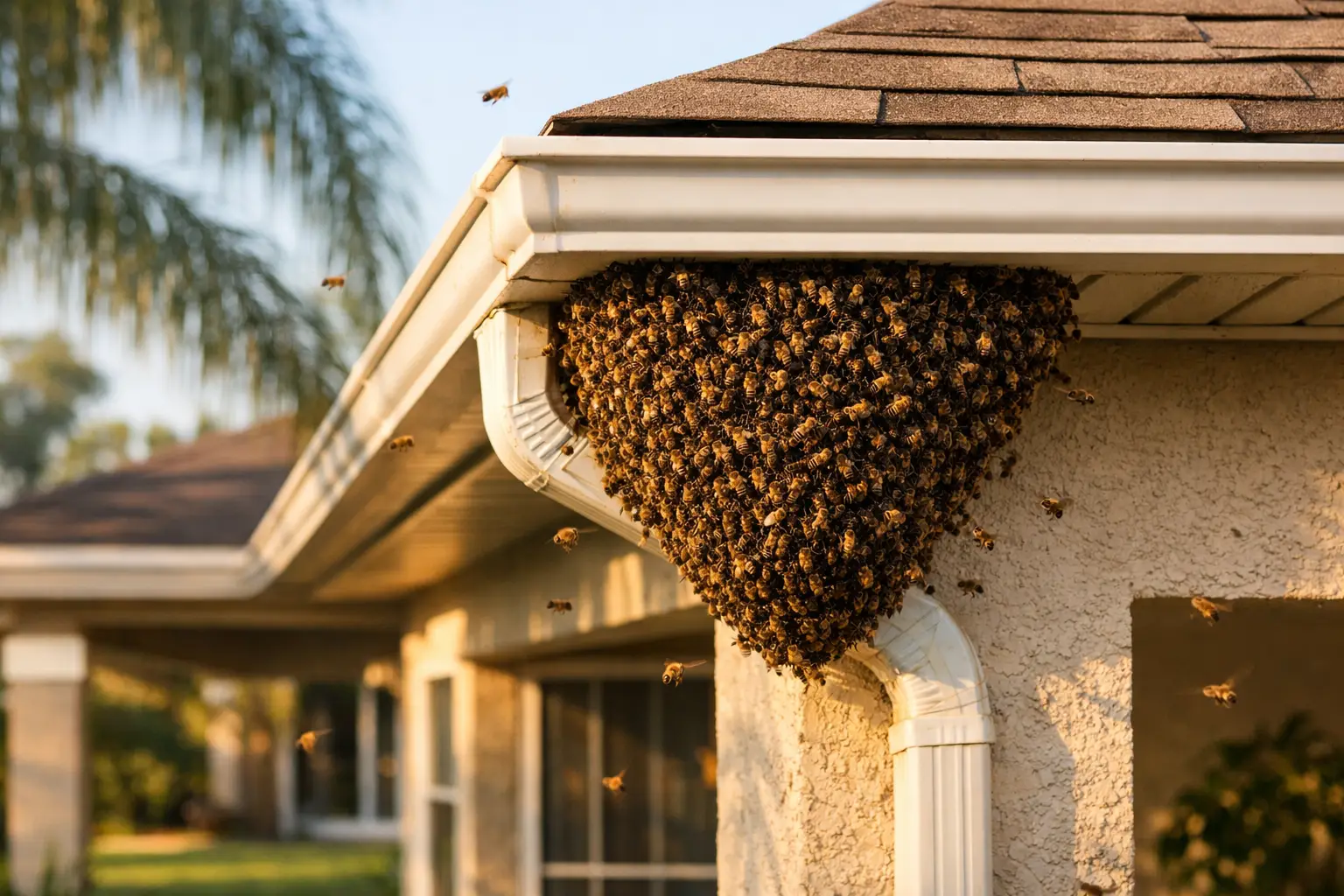

You hear buzzing in the wall, then notice a steady line of bees slipping through a gap near the soffit. At that point, most people ask the same question: what is a bee cutout, and is this about to become a bigger problem for the house?
A bee cutout is a live removal method used when honey bees have built comb inside a structure such as a wall, roof, chimney, floor, or soffit. It is called a cutout because the removal often requires opening part of the structure to reach the colony, remove the bees, take out the comb and honey, and clean the cavity so the problem does not return in the same spot. This is very different from catching a swarm hanging on a branch. A cutout deals with an established colony that has already moved in and started building.
For homeowners, that distinction matters. Once bees are living inside a structure, the issue is no longer just the insects you can see outside. It is also the brood comb, stored honey, pollen, wax, and the scent left behind. If those materials are not properly removed, the house can continue to have trouble long after the visible bees are gone.
What is a bee cutout in practical terms?
In practical terms, a bee cutout is part bee rescue and part light structural access. The removal specialist locates the colony, figures out how far the comb extends, opens the area carefully, and physically removes the bees and hive materials. The goal is to save the colony when possible while also protecting the building from lingering damage.
This is why a bee cutout takes more skill than a basic spray treatment. The person doing the work needs to understand bee behavior, queen location, comb attachment, building materials, and what happens inside a wall after honey is left behind. If a colony has been in place for months, the comb can be extensive and surprisingly heavy.
A proper cutout usually includes removing live bees, cutting out brood comb, collecting honey comb where feasible, vacuuming or brushing remaining bees, and cleaning the cavity. In many cases, the rescued colony is then transferred into a hive box and relocated to an apiary where it can continue living productively.
When a bee cutout is necessary
Not every bee situation requires a cutout. If a swarm has just landed temporarily on a tree limb, fence post, or mailbox, that is often a swarm removal, not a cutout. The bees have not built comb yet, so there is nothing hidden inside a structure.
A cutout becomes necessary when bees are established inside a man-made void. Common locations include exterior walls, attic edges, eaves, sheds, block walls, and rooflines. If you see bees entering and exiting one small opening repeatedly throughout the day, especially over several days or weeks, there is a good chance a colony is already inside.
You may also notice faint buzzing through drywall, warm honey smells, staining on ceilings or walls, or dripping during hot weather. Those signs suggest the problem has advanced beyond a simple collection job. In Florida heat, a colony inside a structure can grow quickly, and so can the amount of stored honey.
Why not just leave them alone?
People who want to protect pollinators often ask whether the bees can simply stay. That depends on where they are. Bees in a managed hive on appropriate property are valuable livestock. Bees inside a wall cavity are a structural problem waiting to get more expensive.
As the colony grows, it produces more comb and stores more nectar and honey. That added weight and moisture can affect drywall, insulation, wood, and ceiling spaces. If the colony later dies from heat, pesticides, starvation, or another stressor, the leftover honey and wax can melt, ferment, seep into finishes, and attract ants, roaches, rodents, and other pests.
There is also the human safety side. A calm colony can become defensive if disturbed by lawn equipment, vibration, pets, storms, or renovation work. Near doors, play areas, utility spaces, or business entrances, that risk matters.
Why poison usually creates a second problem
This is where many property owners get bad advice. Killing visible bees without removing the comb does not solve the underlying issue. It often turns one problem into three.
First, the dead colony still leaves behind honey, wax, brood, and odor. Second, empty comb and residual scent can attract robber bees, wax moths, ants, and even a new swarm later on. Third, if only part of the colony is affected, surviving bees may scatter deeper into the structure or reorient around a nearby opening.
A live cutout addresses the source. It removes the bees and the materials that make the cavity attractive and messy. That is why humane removal is not just better for the colony. It is usually better for the building too.
How the bee cutout process works
Every structure is different, but the general process is fairly consistent. The first step is inspection. The remover identifies entry points, listens for colony activity, and determines the likely size and position of the nest. Sometimes the bees are right behind a thin wall. Other times they extend across a long soffit or deep roof void.
Next comes access. The cut is made in the part of the structure that allows the safest and cleanest path to the colony. Good operators try to minimize unnecessary damage, but some opening is often unavoidable because the comb is attached inside the cavity.
Once exposed, the colony is removed section by section. Brood comb is especially important because it contains developing bees and helps keep the colony together after relocation. If the queen is located and transferred, the chances of successful rehoming improve significantly.
After the bees and comb are out, the cavity should be cleaned. This step matters more than many people realize. Residual wax, honey, and pheromone scent can draw future swarms back to the same void. The opening must then be repaired or properly sealed so another colony cannot move in.
What affects cost and difficulty
The short answer is access. A colony behind easy-to-remove siding is not the same as one behind stone veneer, high roof fascia, or a finished interior wall. Height, heat, electrical hazards, and the size of the colony all affect labor.
Timing matters too. A small, newly established colony is usually simpler than a mature hive that has been building for a full season. In Southwest Florida, where warm weather supports long periods of bee activity, colonies can become substantial fast.
It also depends on whether the removal includes cleanup and exclusion work. Removing bees without addressing the cavity is incomplete. A thorough job focuses on both the colony and the reason that spot was attractive in the first place.
What to do if you think you need one
If bees are entering a wall or roofline, avoid sealing the opening yourself. That can trap bees inside the structure and force them into living spaces through vents, outlets, or gaps around fixtures. Avoid spraying store-bought chemicals for the same reason. They rarely solve a structural colony correctly.
Keep people and pets away from the immediate area, especially if the bees seem agitated. Take note of where bees are entering, how long the activity has been going on, and whether you have seen staining, dripping, or interior buzzing. That information helps a removal specialist judge whether a cutout is likely.
For homes, businesses, and HOA properties, the best next step is an inspection by someone who handles live structural removals, not just general pest control. A real bee cutout requires knowing what to remove, what to preserve, and what to clean so the site does not become an open invitation for the next colony.
What happens to the bees afterward?
In a humane cutout, the bees are relocated into hive equipment and moved to a managed location whenever conditions allow. That is one reason specialized operators matter. The goal is not simply to clear the structure. It is to transfer a functioning colony out of an unsafe place and into one where it can survive.
For a company like Beeswild, that work connects directly to beekeeping and long-term stewardship. The colony is not treated as trash. It is treated as living agricultural stock that still has value once it is removed from the building.
That approach also gives property owners a more honest result. You are not just paying to make bees disappear for the afternoon. You are addressing the colony, the comb, the contamination risk, and the chance of repeat occupation in the same cavity.
A bee cutout is what you need when bees have crossed the line from temporary visitors to hidden tenants inside the structure. The sooner that is handled correctly, the better the odds of saving the colony and sparing the building from a much messier repair later.

No responses yet