
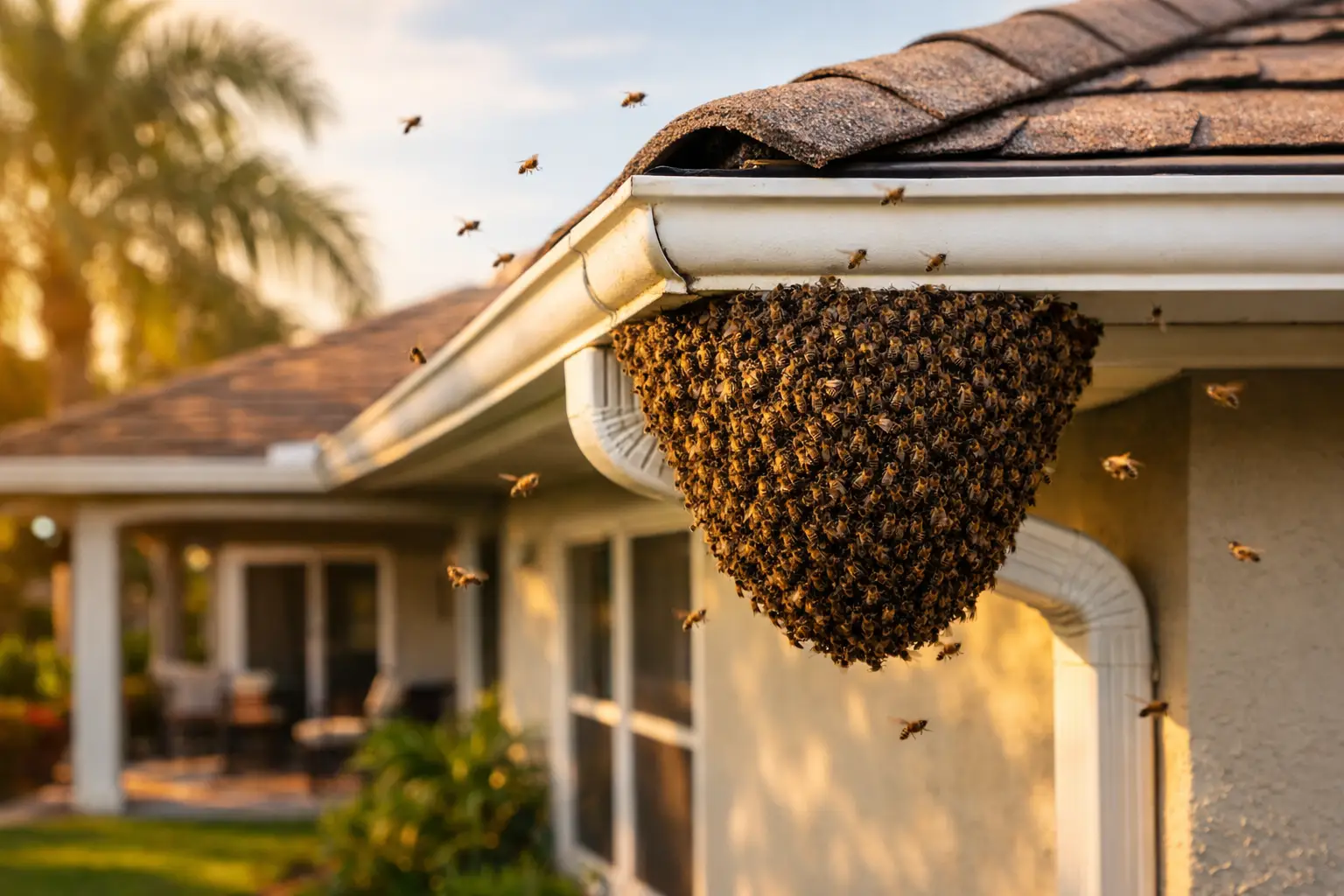

A grapefruit-sized cluster of bees hanging from a palm branch can look alarming, but it is not the same problem as bees disappearing through a crack in your soffit. In the swarm removal vs cut out decision, the location of the bees, the presence of comb, and the length of time they have occupied the space determine the right response. Choosing the wrong method can leave honey inside a wall, attract pests, and allow another colony to move in.
For Southwest Florida homeowners and property managers, the goal is twofold: protect people around the property and remove the colony in a way that does not create a larger structural problem later. Live removal and relocation can accomplish both, but only when the work matches the bees’ actual situation.
Swarm Removal vs Cut Out: The Core Difference
A swarm is a temporary cluster of honey bees searching for a permanent home. It usually forms after part of an established colony leaves with a queen. The bees may gather on a tree limb, fence, vehicle, shrub, exterior wall, or other exposed surface while scout bees search for a suitable cavity.
A cut out is a structural bee removal. It is needed when a colony has already moved into a void and built comb inside it. Common locations include walls, soffits, attic spaces, roofs, chimneys, sheds, utility boxes, and hollow columns. The removal professional must open enough of the structure to reach and remove the bees, brood comb, honeycomb, and wax.
The distinction matters because a swarm has no stored honey or established comb at its temporary resting place. A cut out involves a functioning hive with resources inside a building. Removing only the visible bees from a structural colony does not solve the underlying problem.
When Swarm Removal Is the Right Answer
Swarm removal is generally appropriate when bees are clustered in the open and have not entered a structure. The cluster may be large, but size alone does not mean the bees are established. A swarm often looks like a dense, moving ball or curtain of bees, with little visible flight activity beyond the group.
In many cases, a swarm is relatively calm because the bees are focused on protecting the queen and finding a new home, not defending honey stores or brood. That does not make it safe to approach. Honey bees can still sting when disturbed, and the risk is greater around children, pets, walkways, doors, pools, and outdoor dining areas.
A trained live-removal beekeeper can carefully collect the cluster, including the queen, and transport it to a managed apiary or other safe relocation site. The process is often less invasive than a cut out because there is no need to open a wall or roof. It is also usually faster when access is straightforward.
Timing still matters. A swarm can leave on its own within hours or a few days, but it can also find an opening and become an established colony. If the cluster is near an attic vent, soffit gap, wall penetration, or chimney, waiting may turn a simple collection into a structural removal. Keep people and animals away, avoid spraying the bees with water or chemicals, and do not try to knock the cluster down.
Signs You Are Looking at a Swarm
A swarm is more likely when the bees are visibly clustered outside, there is no regular traffic into a hole, and no wax comb is present. You may see the cluster appear suddenly after a warm day or following a period of increased bee activity in the area.
If bees are entering and exiting one spot in a wall throughout the day, particularly while carrying pollen on their legs, that is usually evidence of an established colony rather than a swarm. At that point, a cut out should be considered.
When a Cut Out Is Necessary
A cut out is the proper method when bees have built comb within a structure. Honey bees are attracted to protected cavities, and Florida’s warm climate can allow colonies to remain active for much of the year. A small gap around a pipe, roofline, vent, or siding seam can be enough for bees to enter.
The visible entrance is rarely the full story. Behind it may be thousands of bees, multiple sheets of comb, developing brood, stored pollen, and pounds of honey. The colony may occupy a small section of wall, or it may extend much farther than expected through an attic or roof cavity.
A professional cut out typically begins by identifying the colony’s location and planning the smallest practical access point. The beekeeper then removes the bees and comb, collects brood where possible, removes honey and wax residue, and places the bees for relocation. After the cavity is cleaned, the original entrance and other likely access points should be sealed once all bee activity has stopped.
This work can require opening drywall, siding, soffit material, roofing components, or another finish surface. That is the main trade-off: a cut out is more involved and can require repair afterward, but it addresses the material that causes most long-term damage. The best access method depends on the building design, the colony’s location, and what can be opened and restored safely.
Why Removing Bees Alone Is Not Enough
Spraying, sealing an entrance while bees are still inside, or removing only the adult bees may seem like a shortcut. In a structural colony, it often creates a more expensive problem.
Honey and wax left in a wall can melt or leak in Florida heat. The scent may attract ants, roaches, beetles, wax moths, rodents, and new honey bee swarms. Dead bees and abandoned comb can also create unpleasant odors and staining. If the entrance is sealed before the colony is removed, trapped bees may search for another route into the building’s interior.
A complete cut out is designed to prevent those outcomes. It removes the biological material that makes the cavity attractive and gives the property a clean starting point for exclusion work. This is why the cheapest immediate option is not always the least costly choice over time.
Safety Matters More Than Identification by Sight
Homeowners often want to know whether the bees are “good bees” or Africanized bees. That distinction cannot be reliably made by watching them from the ground. Behavior, colony history, and specialized testing matter more than appearance alone.
Treat any active bee colony with respect. Do not stand beneath a swarm, block a colony entrance, use a leaf blower, bang on the wall, or attempt a do-it-yourself treatment. Keep pets indoors and direct visitors away from the area. If bees are acting defensively, are near a public entrance, or are located where someone could accidentally disturb them, professional assessment should be prompt.
Commercial properties and HOAs have an added responsibility. A colony near a playground, pool deck, restaurant patio, mail station, or busy walkway can become a liability issue even if it has not caused an incident. Early action provides more options and can limit disruption to residents, customers, and staff.
What to Expect From a Humane Removal Visit
A reputable live bee removal provider should explain whether the situation is a swarm collection or a structural cut out before work begins. For a cut out, ask where access will be needed, what hive material will be removed, whether the cavity will be cleaned, and who is responsible for closing and repairing the access area.
It is also reasonable to ask how the bees will be handled after removal. Humane relocation means the colony is moved into a managed environment rather than treated as disposable. At Beeswild, removed colonies are rehomed in safe farm areas where they can continue their role as pollinators and productive livestock.
For structural removals, clarify the warranty terms and what conditions may affect them. Beeswild offers a three-month same-place-removal warranty, which can provide reassurance when a colony has used a difficult structural location. Exclusion remains essential, however. New bees can enter through a different unsealed gap, especially in older buildings with multiple exterior openings.
The Best Choice Depends on Where the Bees Are
The practical rule is simple: an exposed, temporary cluster usually calls for swarm removal; bees living behind a wall or roofline usually require a cut out. The earlier the issue is evaluated, the more likely it is that the solution will be straightforward.
If you notice a cluster outside, give it space and watch for signs that it is entering the structure. If you see steady bee traffic through a crack, hear activity in a wall, or notice honey staining near an exterior opening, assume the colony may already be established. A timely, humane assessment can protect your property while giving the bees a safe place to continue doing the work they were built to do.

No responses yet