
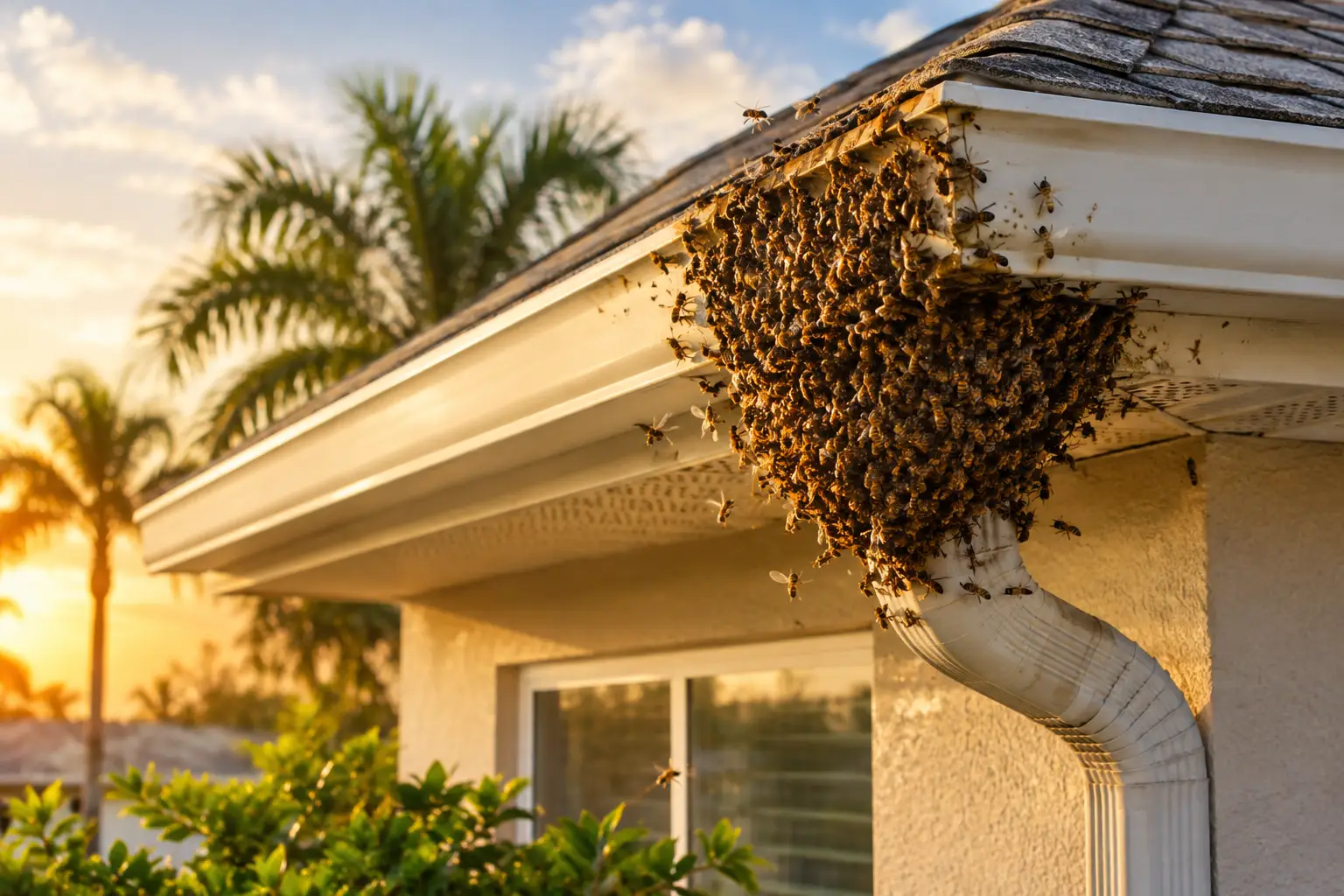

A few bees entering a crack near a soffit can look harmless. Weeks later, the same opening may lead to a colony with thousands of bees, comb packed between studs, and pounds of honey stored behind drywall. Wall colony rescue addresses both sides of that problem: protecting people and property while giving a viable colony a chance to continue living at a safe apiary.
For Southwest Florida homeowners, the decision is rarely just about bees. It is about children playing near an entrance, a dog investigating a buzzing wall, concerns about stings, and the fear that honey will eventually leak through the ceiling. A proper rescue is not simply removing visible bees. It is a careful structural process that removes the colony, comb, honey, and scent that could attract another swarm.
Why Bees Choose Wall Cavities
Honey bees look for enclosed, dry spaces that protect them from weather and predators. Wall voids, rooflines, chimneys, soffits, utility chases, and eaves can offer exactly that. In Florida’s warm climate, colonies may remain active much of the year and can grow rapidly when nectar is available.
A swarm is different from an established colony. A swarm is a temporary cluster of bees searching for a new home, often hanging from a branch, fence, or exterior wall. It may move on within a day or two. A wall colony has already moved in, built wax comb, raised brood, and stored honey. The bees may be entering through a gap no wider than a quarter-inch, while the colony itself extends several feet inside the structure.
The length of time a colony has been present matters. A newer colony may have limited comb and honey. An older colony can contain heavy sheets of comb, larvae, pollen, and a substantial honey reserve. That is why waiting for the bees to “go away” can turn a manageable removal into a larger repair issue.
What a Wall Colony Rescue Actually Involves
A professional wall colony rescue begins with locating the colony as accurately as possible. Bee flight patterns, heat, sound, and visible entrance points help identify where the colony sits inside the structure. The goal is to determine the safest access point before opening any wall, roof, or soffit material.
Accessing the Colony With Minimal Disruption
The best access route depends on the building. In some homes, a technician can reach the colony through an exterior soffit or siding section. In others, interior drywall is the safer choice. Access from the outside can reduce cleanup inside the home, but it is not automatically the right answer. The colony’s position, electrical wiring, plumbing, insulation, roof framing, and finish materials all affect the plan.
A responsible removal aims to create the smallest practical opening while still allowing the technician to remove all comb. Cutting only a small hole and vacuuming bees out may leave honey, brood, and wax behind. That can create a second problem even if the visible bee activity stops.
Removing Bees, Comb, Brood, and Honey
Once the colony is exposed, the bees are carefully collected. Comb containing brood is removed and secured so the developing bees can remain with the colony when possible. Honey comb, pollen stores, and old wax must also come out.
This is the point where a real rescue differs from a quick treatment. Honey is not harmless once it is trapped in a wall. It can melt and stain drywall, seep through ceilings, ferment, attract ants and roaches, or draw rodents looking for food. Old comb also retains a strong scent that can attract scout bees from a future swarm.
The colony is then relocated to a managed setting where it can be housed in equipment designed for beekeeping. The bees can continue their role as pollinators rather than becoming a recurring structural issue for the property owner.
Cleaning and Closing the Entry Point
After comb removal, the cavity should be cleaned of residue as thoroughly as the structure allows. The opening must then be repaired or sealed so new bees cannot use the same route. This final step is essential. A wall with an unsealed gap can become an invitation to another swarm during the next active season.
Property repairs vary by situation. Some removals require only a small panel replacement and caulking. Others involve drywall repair, siding, trim, insulation, or roofing materials. Clear communication about who handles those repairs and what the removal includes prevents surprises.
Why Poison Often Creates a Bigger Problem
Killing a colony inside a wall may stop bee traffic temporarily, but it does not remove the underlying material. Dead bees, wax, brood, and honey remain behind the wall. As temperatures rise, honey can liquefy and spread. The odor may attract insects, rodents, and even a new swarm once the old colony’s scent remains in place.
Chemical treatment can also leave homeowners with uncertainty about where bees are dying and whether activity will return. If the queen survives or a portion of the colony relocates deeper into the structure, the issue may continue. For an established honey bee colony, removal of the hive contents is generally the more complete property-protection solution.
There are situations where safety requires a more cautious approach. A colony that is highly defensive, difficult to access, or located near vulnerable residents may require additional protective measures. Southwest Florida also has Africanized honey bee genetics in the region, and behavior cannot be judged reliably from appearance alone. A trained professional should assess defensive activity and control the work area accordingly.
When a Wall Colony Becomes Urgent
Not every bee sighting is an emergency, but certain signs call for prompt professional assessment. Increased bee traffic at a wall, roofline, or vent suggests an established entrance. Bees appearing indoors near light fixtures, windows, or outlets may mean the colony has expanded into a wall void. Brown staining, sticky spots, a sweet odor, or buzzing behind drywall can indicate stored honey and comb.
Urgency also rises when the entrance is near a doorway, pool area, playground, outdoor dining space, or heavily used walkway. Commercial properties and HOAs must consider visitor safety and liability, especially when bee activity is near shared structures. Avoid blocking the entrance with foam, tape, or pesticide. Trapped bees may seek another exit and appear inside the building.
If a person has been stung repeatedly, if bees are acting unusually defensive, or if a colony is near someone with a known severe allergy, keep people and pets away from the area. Do not spray water, strike the hive, or attempt to seal the entrance. Disturbing the colony can make the response more difficult and less safe.
Choosing a Wall Colony Rescue Provider
The right provider should be able to explain the process in plain terms before work begins. Ask whether the service includes physical comb and honey removal, not just bee removal. Ask how access will be made, whether cleanup and exclusion are included, and what repair work may be needed afterward.
It is also reasonable to ask how the colony will be handled after removal. Live relocation requires suitable equipment, experience with bee behavior, and a managed destination for the colony. A company that operates apiaries has a practical way to rehome viable colonies rather than treating relocation as an afterthought.
For repeated activity at the same location, ask about a same-place warranty and what conditions apply. A warranty is most meaningful when it addresses the original entry area and when repairs or exclusions have been completed. It cannot always cover a new colony entering through a separate, previously unknown gap elsewhere on the building.
Preparing Your Property for Safe Removal
Before the appointment, keep the area around the bee entrance clear. Move vehicles, patio furniture, and children’s toys away if they are directly below the work zone. Let the removal team know about pets, gates, access restrictions, attic access, recent renovations, known electrical issues, and anyone who may be sensitive to stings.
During the work, residents may need to remain indoors or avoid a portion of the property while bees are being collected. This is usually temporary, but the exact arrangement depends on the colony’s location and behavior. A careful provider will explain the safety perimeter rather than making broad promises that every removal looks the same.
Wall colony rescue is a practical form of stewardship. It prevents hidden honey and comb from damaging a structure, reduces the chance of repeat bee activity, and preserves pollinators that can thrive somewhere better suited to them. For homeowners and property managers, the most helpful next step is simple: act before the colony grows, and choose removal that solves the wall problem rather than merely silencing the buzzing.

No responses yet