
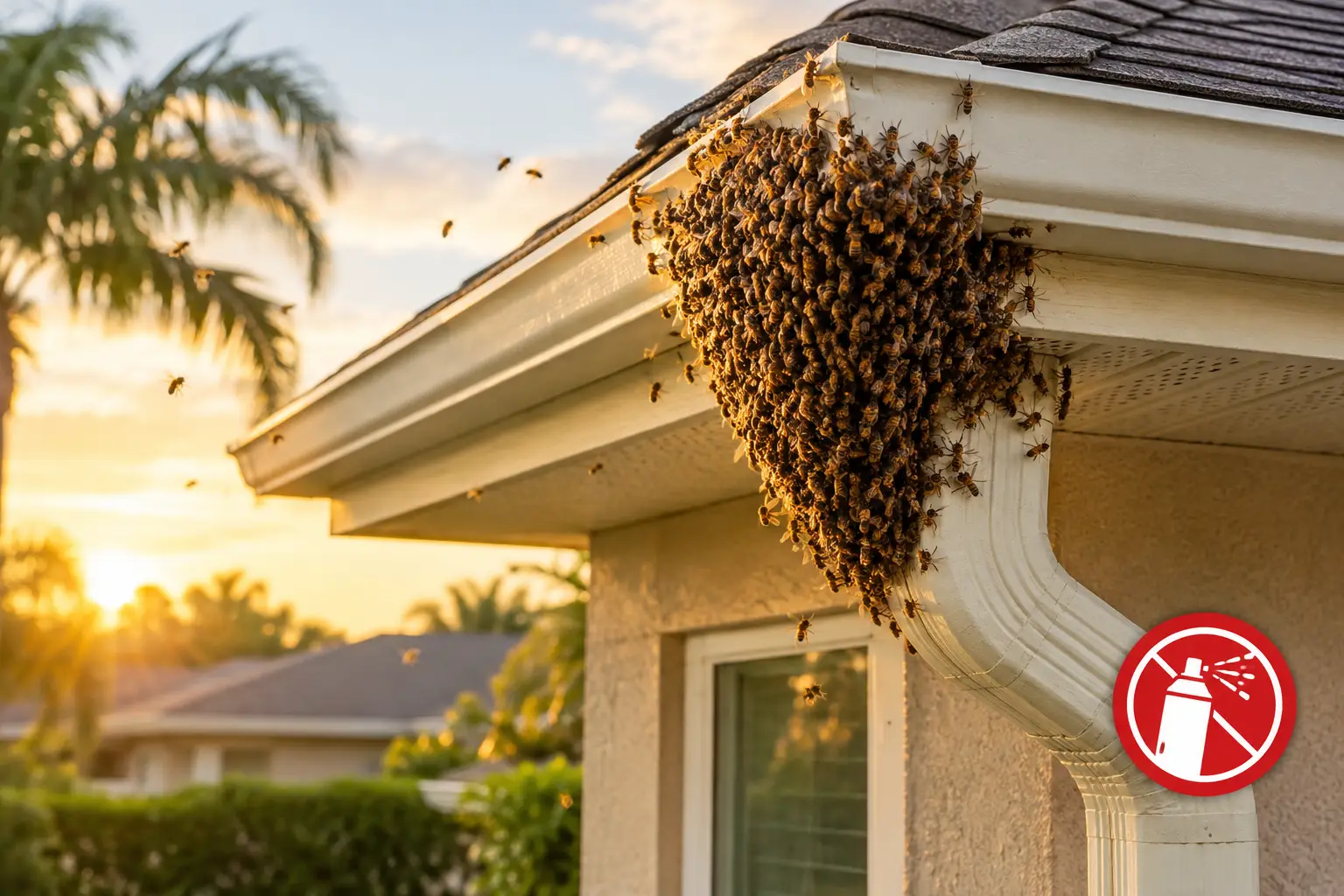

A few bees entering the same crack in a soffit every minute can signal far more than a temporary outdoor nuisance. This homeowner guide to structural bee damage explains what may be happening behind the wall, why waiting can raise repair costs, and how to protect both your property and a colony that can often be safely relocated.
Honey bees do not chew through sound wood like termites. Their damage is usually indirect, but it can become significant when a colony has occupied a wall, roofline, chimney void, shed, or utility box for months or years. Wax comb adds weight, stored honey can leak, and moisture or pests may follow after the bees leave. The goal is not simply to make bee activity disappear. It is to remove the colony, comb, and hive materials so the structure can be restored properly.
How Bees Create Structural Problems
A bee colony looks for a protected, dry cavity with a small entrance. In Southwest Florida, common entry points include gaps in soffits, roof returns, exterior block walls, siding seams, vents, and spaces around pipes or electrical penetrations. Once inside, the colony builds sheets of wax comb attached to framing, sheathing, insulation, or masonry surfaces.
The comb itself is not usually a threat to a sound building during the first weeks of occupation. The concern grows with time. A mature colony may store substantial honey and pollen, while its comb expands across a larger area of the cavity. In hot weather, honey can soften and seep. During heavy rain or humidity, an already compromised opening may also admit water.
If bees are killed or leave without the comb being removed, the building has not been cleared. Honey and wax remain in the cavity. That material can attract ants, wax moths, beetles, roaches, rodents, and sometimes another swarm looking for a ready-made nesting site. Staining, odors, and sticky residue can appear later, when the original bee activity is no longer visible.
Signs a Colony May Be Inside Your Home
A passing swarm may gather briefly on a tree branch, fence, or vehicle and move on within a day or two. Repeated traffic into one opening is different. It often means a colony has established itself inside the structure.
Watch for these signs, especially along rooflines and upper exterior walls:
- Bees consistently entering and leaving one hole, crack, or vent during daylight hours.
- A steady low buzzing from a wall, ceiling, fireplace surround, or soffit.
- Brown or amber stains spreading on drywall, paint, or exterior trim.
- A sweet, fermented, or waxy smell indoors or near a wall cavity.
- Increased ant, roach, or beetle activity near the same location.
Do not seal the entrance while bees are active. Closing the visible hole can trap bees inside and force them to find another route, sometimes into living spaces. It also leaves the comb and honey where they are. A proper repair comes after the colony and hive materials have been removed.
The Difference Between Bee Damage and Wood-Destroying Insects
Homeowners sometimes see insects around a roofline and assume the framing is being eaten. Honey bees are not wood-destroying insects. They may use an existing gap, but they do not excavate galleries through structural lumber in the way termites or carpenter ants can.
That distinction matters because the remedy is different. If the primary concern is hidden termite damage, a pest inspection may be needed in addition to bee removal. If a honey bee colony is occupying a preexisting opening, the work generally involves locating the cavity, accessing the comb with as little disruption as practical, removing bees and hive materials, then closing the entry point.
Carpenter bees are another separate issue. They bore nearly round holes into unfinished or weathered wood, usually around eaves, decks, fascia boards, and outdoor furniture. Honey bees tend to use an existing void and have many workers flying in and out of one established entrance.
Why Spraying or Sealing Rarely Solves the Problem
A can of insecticide may reduce visible bee traffic, but it does not address the structural conditions that allowed the colony to establish itself. It can also create a more complicated removal. Bees may become defensive, die within inaccessible spaces, or abandon honey-filled comb that remains behind walls.
Poisoning is particularly risky when the colony is in a shared wall, attic, or roof cavity. Dead bees and honey can attract secondary pests. If surviving bees relocate within the wall, identifying the new comb location may require more access and more repair work. There is also no benefit to killing managed pollinators when live removal and relocation are feasible.
Sealing the entrance before removal has a similar drawback. Think of the outside opening as the colony’s front door, not the full extent of the problem. The nest may extend several feet in either direction behind it. A specialist needs to assess the colony’s size, access route, building materials, and the safest way to remove it.
What Humane Structural Bee Removal Should Include
A structural removal is more involved than collecting a swarm from a branch. The best method depends on whether the bees are in stucco, block, siding, soffit, roofing, or an interior wall. Some situations allow access through a small exterior opening. Others require carefully removing a section of soffit, siding, or drywall and coordinating repairs afterward.
A thorough live removal generally has four parts: locating the colony, safely collecting the bees, removing accessible comb and honey, and closing the original and nearby entry points once activity has stopped. The comb-removal step is essential. It prevents many of the leaks, odors, pest activity, and repeat nesting problems homeowners worry about most.
There are trade-offs. The least invasive option is not always the most complete option. Leaving comb behind may avoid opening a wall today, but it can create a larger cleanup later. Conversely, a carefully planned access opening may require a visible repair but gives the best chance of removing the colony materials and protecting the cavity long term.
For colonies in difficult roof or wall locations, ask how the provider will identify the comb area, whether comb removal is included, who handles repairs, and how repeat activity is addressed. Clear answers help you compare a real structural removal with a quick treatment that only stops bees at the entrance.
Protecting Your Family While You Wait
Keep children, pets, and visitors away from the flight path. Do not bang on the wall, spray water into the entrance, mow directly beneath active bees, or try to remove a colony after dark. Disturbance can trigger defensive behavior, particularly if the colony is under stress.
If bees are entering a living area, gather people and pets away from the room and close interior doors if possible. Do not block the exterior opening yourself. For anyone with a known severe sting allergy, treat active bee activity near doors, play areas, or high-traffic spaces as a prompt safety concern rather than a project to postpone.
In Cape Coral and throughout Southwest Florida, warm conditions can allow colonies to remain active for much of the year. A small issue in spring can become a more established colony by summer, so early assessment is usually easier on the home and the bees.
Preventing Another Colony After Removal
Prevention is mostly about closing access to attractive cavities. Once the area is cleaned and dry, inspect roofline gaps, loose soffit panels, damaged screens, open utility penetrations, and cracks around trim. Repairing these areas with durable materials reduces opportunities for future colonies, as well as other pests.
Do not assume one closed hole solves every vulnerability. Bees can enter through surprisingly narrow openings, and older homes may have several connected voids along a roofline. A good repair focuses on the original entry point and nearby gaps that could allow another swarm to settle.
Beeswild approaches structural bee issues as both a home-protection and bee-preservation problem, relocating viable colonies to managed farm areas rather than treating them as disposable pests. The most helpful next step is simple: address steady bee traffic early, before hidden comb, honey, and moisture turn a manageable removal into a larger building repair.

No responses yet