
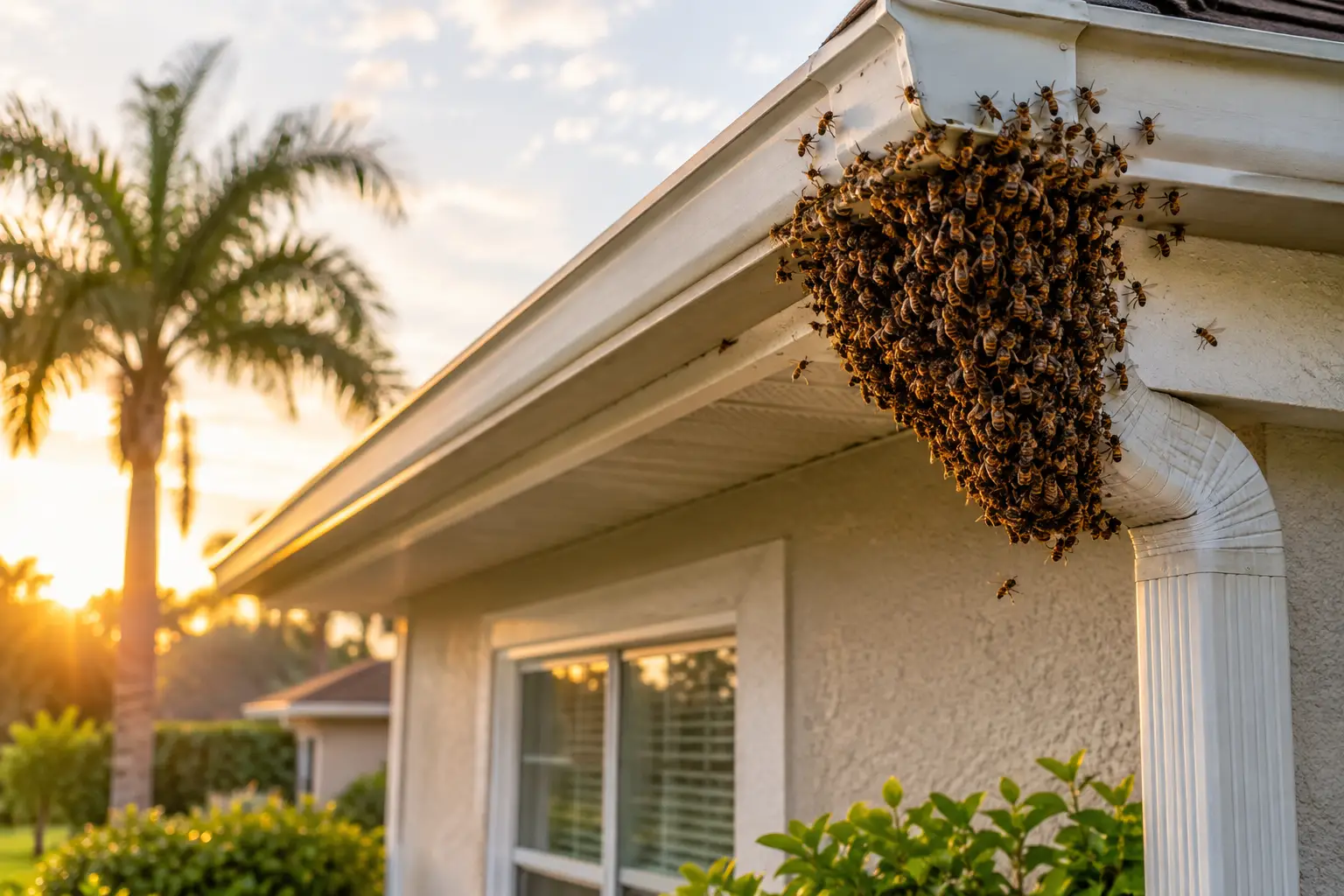

A few bees entering the same gap in a soffit may look minor from the ground. But the top signs of hidden honeycomb often appear only after a colony has been established for weeks or months. By then, bees may have built wax comb, stored honey, raised brood, and created an opening that connects the outdoors to a wall, roofline, chimney, or utility space.
For Southwest Florida homeowners, the concern is not simply whether bees are present. It is whether a living colony – or an abandoned comb full of honey – is inside the structure. Knowing the difference helps you act early, protect people and pets, and avoid the costly damage that can follow a quick-fix extermination.
Why hidden honeycomb creates a property problem
Honey bees are highly capable of using small cavities. A gap around a roof vent, a loose fascia board, an uncapped pipe opening, or a crack behind siding can lead into a dry, protected void. Once scouts find a suitable space, a swarm can move in and begin building comb surprisingly quickly.
A mature colony may contain many pounds of wax and stored honey. While the bees are active, they regulate the hive and protect their stores. If the colony is killed without removing the comb, that material remains inside the building. Honey can soften and leak during Florida heat, while wax, pollen, and brood residue can attract ants, beetles, roaches, rodents, and another swarm of bees.
That is why a proper structural bee removal addresses both parts of the issue: carefully relocating the bees and removing the comb, honey, and attractants from the cavity. It takes more work than spraying an entry point, but it solves the condition that brought the colony there.
Top signs of hidden honeycomb behind walls and roofs
One sighting does not always mean a colony has moved in. Bees may be visiting nearby flowers, water sources, or a temporary swarm cluster. The following patterns are stronger evidence that honeycomb may be concealed inside the structure.
1. Regular bee traffic at one precise opening
Watch from a safe distance during daylight. Bees entering and exiting one crack, vent edge, soffit gap, or hole in masonry with purpose are usually not wandering. Flight traffic tends to increase on warm, clear days, especially from late morning through afternoon.
A temporary swarm often forms a visible cluster on a branch, fence, or exterior wall and may leave within a day or two. A colony inside a structure uses a consistent entrance day after day. Do not stand in the flight path or try to block the opening to test your theory.
2. A low hum or buzzing inside a wall or ceiling
A soft, steady buzzing behind drywall, near a fireplace, or above a ceiling can indicate a colony in a void. It may be most noticeable at night, early in the morning, or when the house is otherwise quiet.
Sound alone is not proof. HVAC equipment, plumbing, and some pests can make noise in walls. But buzzing combined with exterior bee traffic is a strong reason to request an inspection from a qualified live bee removal professional.
3. Dark stains, sticky spots, or dripping near the colony area
Honey does not always leak immediately. The risk rises when comb gets large, temperatures climb, or a colony dies and can no longer manage its stores. Yellow-brown staining on a ceiling, wall, or soffit, a sticky residue, or an unusual drip near a known bee entrance should be treated as urgent.
Homeowners sometimes assume the moisture is a roof leak. It could be, and roof leaks deserve prompt attention too. But if bees have been active nearby, honeycomb must be considered. Opening a stained area without a plan can disturb the colony and spread honey further into insulation or finishes.
4. Bees appearing indoors near windows or light fixtures
Bees inside a room may have entered through a small gap from the colony cavity. They are commonly drawn toward windows because of the light. Several bees appearing repeatedly around one window, recessed light, bathroom vent, or ceiling fixture suggests the colony may be close to that interior surface.
Keep children and pets away from the area. Close interior doors if possible, but do not tape over exterior entrances or spray household insecticide into a wall. Agitated bees may find a different route into the home, making the situation harder to manage safely.
5. A growing cluster at an exterior seam
Sometimes bees build visible comb beneath an eave, behind a shutter, inside a decorative column, or under a loose section of siding before expanding deeper into a void. You may notice bees gathering in a thick cluster at the same seam, particularly in the evening when foragers return.
Visible bees are only part of the picture. The comb may extend well beyond what can be seen from outside. An inspection can help determine whether the colony is exposed, newly established, or established inside the building envelope.
6. Ants, roaches, or wax moth activity around a former bee entrance
This sign matters most after bees suddenly disappear. A quiet entrance is not necessarily good news. If a colony was poisoned, starved, absconded, or otherwise died, the remaining honey and wax become food for other insects and animals.
Ant trails near a soffit, roaches around a wall void, or moth larvae near old comb are warning signs that material remains inside. The absence of live bees does not remove the need for cleanup. In fact, abandoned honeycomb can create its most visible damage after the bees are gone.
7. A sweet, fermented, or waxy odor
A healthy colony can have a mild warm-wax or honey scent, though it is often too faint to notice through building materials. A stronger sweet smell, a fermented odor, or an odor paired with staining may point to honey leakage or deteriorating comb.
Odor is not a diagnosis by itself. Dead animals, moisture damage, and plumbing issues can also smell unpleasant. Still, when it occurs near a site with bee activity, it is useful evidence to share during an inspection.
What not to do when you suspect comb
The instinct to close the hole is understandable. Unfortunately, sealing an active colony inside can force bees into the living space or cause them to chew a new exit through another weak point. Sealing is a final repair step, performed after the colony and comb have been removed.
Poison has similar drawbacks. It may reduce visible bee activity quickly, but it does not remove wax, honey, pollen, or brood. It can also leave a dying colony stressed and defensive. In an area where Africanized honey bee traits may be present, disturbing a colony without the right protective equipment and removal plan is a serious safety risk.
Avoid knocking down exterior clusters, spraying foam into the opening, cutting drywall blindly, or using a shop vacuum. These actions can injure bees, increase stinging risk, and make it more difficult to relocate the colony. If someone has been stung repeatedly or bees are actively threatening people, pets, or public access, move away from the area and seek immediate professional help.
How humane structural removal works
A responsible removal begins by locating the colony and tracing its likely boundaries. Depending on the structure, this may involve a careful exterior assessment, thermal imaging, or limited access to the affected cavity. The goal is to use the smallest practical opening while still removing the entire colony and its comb.
The beekeeper then transfers bees, brood comb, and usable resources into a hive box for relocation. Honeycomb and contaminated material are removed from the structure, and the cavity is cleaned as needed. Only after that work is complete should the original entry points be repaired and sealed.
There are trade-offs. Accessing comb can require opening part of a soffit, siding section, roof area, or interior wall, and repair costs vary by construction. Yet leaving the comb hidden usually carries greater long-term uncertainty. A clear removal plan should explain where access is needed, what cleanup is included, and who is responsible for final repairs.
For property managers and HOAs, early documentation is especially useful. Record the location of activity, dates, photos taken from a safe distance, and whether bees are affecting walkways, entrances, or outdoor seating. This supports a faster decision while reducing liability exposure for residents, visitors, and staff.
When bees choose a building, they are following their natural need for shelter. The right response protects the people using that building without treating a valuable pollinator colony as disposable. If repeated traffic, wall buzzing, stains, or indoor bees suggest hidden comb, act before the cavity becomes a larger repair project – and choose removal that gives both the structure and the colony a safer next home.

No responses yet