
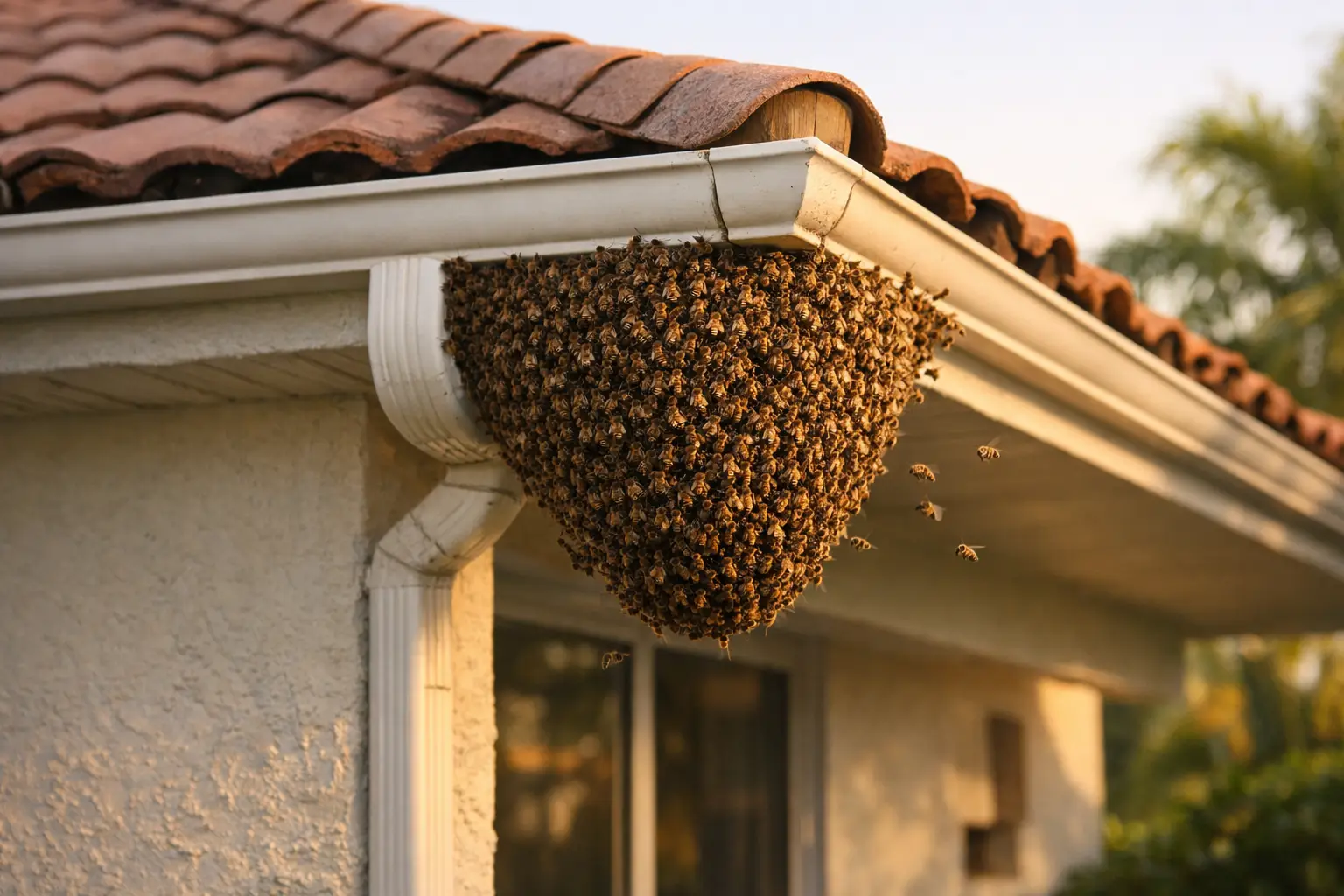

A ball of bees hanging from a palm tree can look alarming. A colony humming inside a wall is worse, especially when you have kids, pets, tenants, or customers walking past it every day. In those moments, relocation versus pesticide treatment becomes more than a philosophical question. It is a practical decision about safety, structural damage, long-term cost, and what happens to the bees after the job is done.
For honey bees, those two options are not equal. They solve different problems, carry different risks, and leave behind very different outcomes for the property owner.
Relocation versus pesticide treatment: what is the real difference?
Relocation means the colony is physically removed alive. That usually includes the bees, the comb, the brood, stored honey, and the queen if she is present and viable. The goal is not just to make the visible bees disappear. The goal is to remove the biological engine of the colony so it can be re-established somewhere safe.
Pesticide treatment works differently. A chemical is used to kill the bees in place or reduce activity enough that the site appears inactive. In some cases, it may stop immediate flight traffic. What it does not automatically do is remove the comb, wax, honey, dead bees, or the scent that attracted bees to the cavity in the first place.
That distinction matters. A dead colony left inside a wall or soffit can create a second problem after the first one seems gone. Honey can melt and leak. Wax and brood can attract ants, roaches, moths, and rodents. The remaining odor can attract a new swarm looking for an established nesting site.
Why pesticide can look faster but create more work later
When people panic, speed is usually the first concern. They want the entrance quiet, the flying bees gone, and the risk reduced right away. That is understandable. But a fast-looking fix and a complete fix are not always the same thing.
If a colony is established inside a structure, killing the bees does not remove the nest materials. In Florida heat, that matters even more. Stored honey and softened wax inside walls, roofs, and block cavities can become a sanitation issue. Once there is fermentation, seepage, or pest activity, the repair bill can rise well beyond the original removal cost.
There is also the issue of incomplete kill. If the queen survives or if foragers return after treatment, activity may continue in a reduced but confusing pattern. Homeowners often describe this stage as the worst kind of uncertainty. The bees seem gone, then not gone, then active again near another crack in the same wall.
For commercial properties and HOAs, pesticide can also create a documentation problem. If the colony is poisoned but not properly removed and sealed out, recurring activity may expose the property to repeat complaints and repeat service calls.
When relocation is usually the better answer
Relocation is often the best option when the insects are honey bees and the colony is accessible enough to remove properly. That includes swarms on branches, colonies in soffits, sheds, block walls, rooflines, or other structural voids where a trained bee removal team can open the area, remove comb, and clean the cavity.
The biggest advantage is completeness. A proper live removal addresses both the bees and the nest materials. It gives the property owner a real reset instead of a temporary drop in activity.
It also preserves a valuable pollinator species. Honey bees are not just random insects in the yard. They are managed livestock in agriculture and a working part of food production. Treating every colony like disposable nuisance wildlife ignores that reality.
That does not mean relocation is always simple. It can involve opening parts of a wall or roof section to reach the comb. It takes labor, skill, protective equipment, and knowledge of how bees behave under stress. But when done correctly, it solves the root issue instead of only the visible symptom.
Relocation versus pesticide treatment for safety
Safety is where the conversation gets more nuanced. People sometimes assume live removal is inherently riskier because the bees remain alive during the process. In truth, the risk depends on the species, temperament, location of the colony, foot traffic, and who is performing the work.
A professional live removal plan is built around controlling bee behavior, securing the site, and removing the colony with intention. A pesticide approach can reduce bee activity, but it can also agitate a colony if the treatment is poorly applied, incomplete, or used in the wrong setting.
This is especially important in public-facing areas. Near entrances, sidewalks, playgrounds, utility areas, or restaurant patios, the job is not simply to kill insects. The job is to reduce danger and prevent recurrence. A dead colony left behind in a hidden cavity does not meet that standard very well.
Aggressive colonies are a separate category. In parts of the South, including Southwest Florida, some removals require stronger containment and emergency-level response because defensive behavior can escalate quickly. In those cases, the method must match the threat. Humane goals still matter, but public safety comes first. The right professional will tell you plainly when a straightforward relocation is possible and when the situation requires a more controlled strategy.
Cost is not just the invoice
Pesticide treatment is often presented as the cheaper route. Sometimes the initial invoice is lower. That can be true if the only goal is to stop visible bee traffic in the moment.
But total cost includes what happens next. If the comb remains, cleanup remains. If honey leaks, repair remains. If new bees move into the same cavity months later, the problem remains. Property owners frequently compare prices without comparing scope.
Relocation can cost more upfront because it is actual removal work rather than a surface-level knockdown. Yet that higher initial cost often includes the part that matters most – taking out the colony materials and reducing the chance of repeat occupancy.
For homeowners, that can mean avoiding drywall, insulation, paint, and pest remediation later. For HOAs and commercial managers, it can mean fewer callbacks, fewer liability concerns, and a cleaner maintenance record.
The ecological side is not separate from the practical side
Some people hear “save the bees” and assume it is purely sentimental. It is not. Preserving viable honey bee colonies has agricultural value, and relocation reflects that reality.
A professional bee relocation service that maintains apiaries or farm placement can give removed colonies a productive future. That is very different from a pest control model where the colony is treated as waste. Beeswild operates from that rescue-and-rehome mindset, which matters because the removal process is built around preserving the colony when conditions allow.
Still, ecological concern should not override honesty. Not every colony can be saved in every situation. Colony health, accessibility, structural conditions, and defensiveness all affect the outcome. The ethical approach is transparency, not promises that every removal will end perfectly.
How to know which option you actually need
Start by identifying whether the insects are honey bees at all. Wasps, hornets, and some native bees require different handling. Then ask whether what you are seeing is a temporary swarm or an established colony.
A swarm is usually a cluster of bees gathered outside while scouting for a home. These are often the best candidates for live capture and relocation because they have not built comb into your structure yet. An established colony shows repeat traffic in and out of a crack, vent, soffit, or wall void over days or weeks. Once comb is inside the structure, removal gets more technical.
The next question is access. Can the colony be reached without major demolition? Is it in a spot with heavy public exposure? Is there evidence of honey leaking, staining, or heat buildup inside the wall? These details help determine whether live removal is straightforward, complex, or no longer realistic.
A trustworthy provider should explain the method, what will be removed, what may need repair, and whether the cavity will need exclusion work afterward. If someone proposes pesticide alone for a structural honey bee colony without discussing comb removal, that is a sign to ask harder questions.
What property owners should prioritize
The right decision usually comes down to this: do you want the bees out of sight today, or do you want the colony actually dealt with?
For honey bees in structures, relocation is typically the more complete and responsible option. It protects the property better because it addresses the nest itself. It protects pollinators when the colony can be preserved. And it reduces the chance that today’s bee problem turns into tomorrow’s wall repair, odor issue, or reinfestation.
Pesticide treatment has a narrower role. It may be used in certain high-risk or non-salvageable situations, but it should not be mistaken for full removal where full removal is what the structure really needs.
If you are staring at a cluster of bees or hearing them in the wall, the best next move is not guessing. It is getting a professional assessment from someone who understands both bee biology and building cavities. A calm, informed decision made early usually protects both your property and the outcome far better than the fastest-sounding fix.

One response
[…] chemical treatment might kill bees at the entrance, but it does not remove the comb or honey. In fact, that choice can […]