
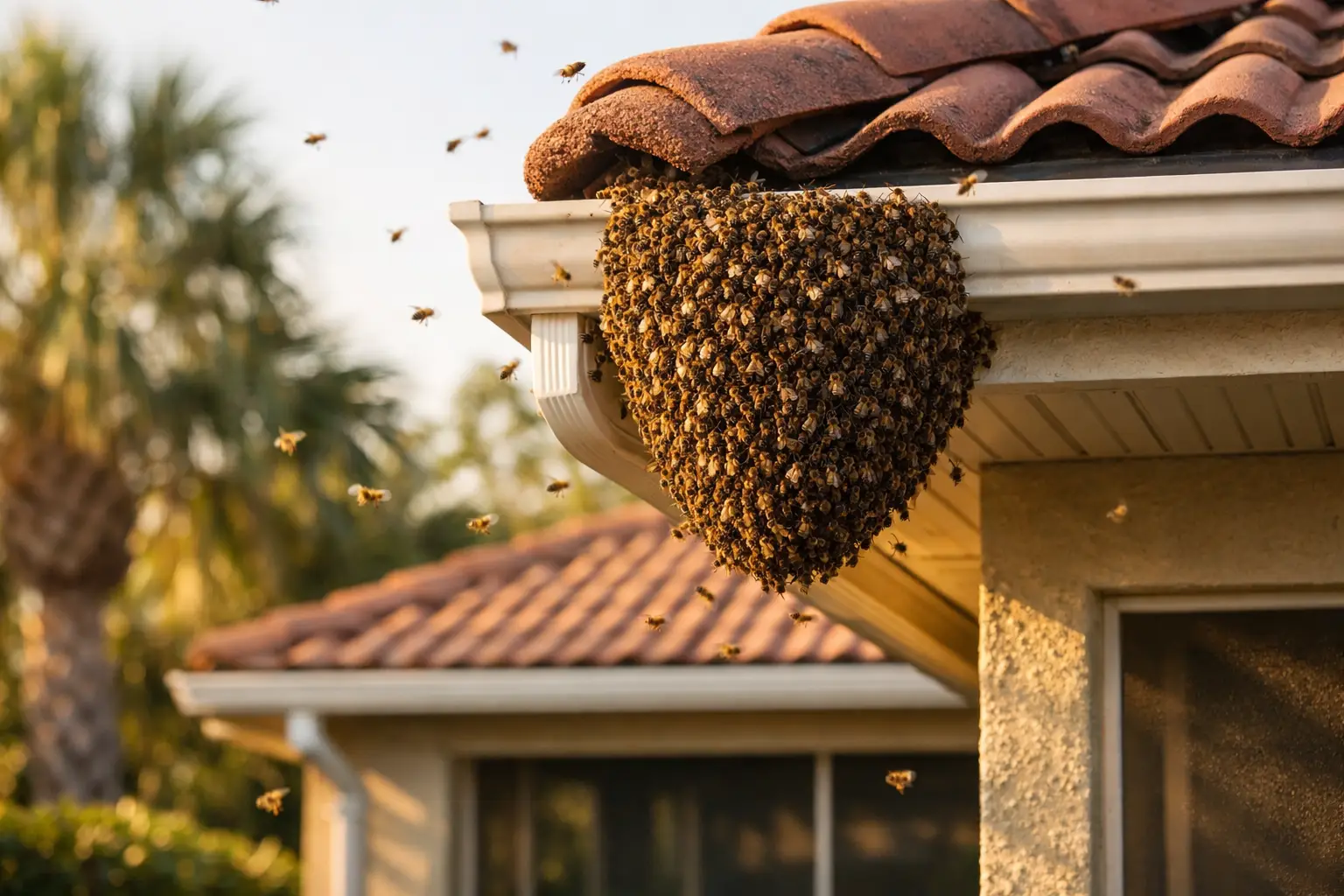

You usually do not find a hidden colony all at once. You notice one bee at the soffit every few minutes. Then a faint buzzing in a wall on a hot afternoon. Then a small stain that was not there last week. The top signs of hidden hive activity are often subtle at first, but waiting too long can turn a manageable live removal into a larger structural repair.
For homeowners, property managers, and HOA boards, the challenge is not just identifying bees. It is recognizing when bees are living inside the structure instead of simply passing through the yard. A colony tucked into a wall, roofline, chimney chase, meter box, or block wall behaves differently from a swarm resting on a branch. Knowing that difference matters because a hidden hive keeps growing, stores honey, and can damage the building even if the bees later die or leave.
Why hidden hives get missed
Bees are efficient. If they can enter through a gap the width of a pencil, they may set up inside a protected void where people rarely look. In Southwest Florida, common trouble spots include soffits, fascia gaps, roof returns, cinder block voids, sheds, irrigation boxes, and the spaces around utility penetrations. Warm weather extends bee activity, so colonies can build quickly.
Many people assume that if they only see a few bees, the problem must be small. That is not always true. Foragers may use a single entrance and come and go in a neat pattern, which can make a large colony look minor from the outside. The real hive, with brood comb, stored pollen, and honey, may be several feet inside the wall cavity.
Top signs of hidden hive activity
Steady bee traffic to one exact spot
One of the clearest signs is consistent bee movement to and from the same crack, vent, soffit seam, or wall opening. Not random flying around flowers, but a repeating flight path. Bees leave, circle, and return to one point with purpose.
This is especially telling in the middle of the day when foragers are active. If you watch for five to ten minutes and see a regular pattern, there is a good chance the colony is established inside. A swarm resting temporarily on a tree limb does not show that same organized traffic into a building void.
Buzzing or vibration inside a wall or ceiling
A hidden hive can sometimes be heard before it is seen. People describe it as a low electrical hum, a faint vibration, or a soft buzzing that becomes more noticeable during warm hours. In quiet rooms, near fireplaces, or along bedroom walls, that sound may travel farther than expected.
The sound alone is not proof. HVAC equipment, plumbing, and even insects other than bees can create similar noise. But if buzzing lines up with visible bee traffic at an exterior entry point, the odds increase significantly that there is a colony behind the surface.
Dark stains on drywall, stucco, or soffits
Honey and brood generate heat and moisture. Over time, that can show up as yellow, brown, or amber staining on ceilings, walls, or exterior surfaces near the hive area. In advanced cases, you may notice sticky residue or a glossy patch where honey has begun to seep.
This is one of the signs that the issue has been there for a while. Once comb fills with nectar and honey, weight and heat become a structural concern. If a colony is killed with poison but the comb is left inside, those stains can worsen as honey melts, ferments, or leaks.
Increased bee activity during certain times of day
A hidden colony often follows a daily rhythm. You may see heavier traffic in late morning and afternoon, especially on sunny walls. On cooler mornings, the entrance can appear almost inactive, which leads some people to think the bees have gone away.
That change in activity can be misleading. It does not usually mean the hive is gone. It often means the colony is regulating its work around temperature and foraging conditions. Watching the area at more than one time of day gives a more accurate picture.
Bees showing up indoors
If bees are appearing inside a room, garage, attic, or near a window and you cannot figure out how they entered, pay attention. A colony in a wall void may push individual bees through light fixtures, vents, baseboard gaps, attic access panels, or tiny cracks around trim.
This is more than an inconvenience. Indoor bee sightings can indicate the colony is expanding or that heat and pressure inside the structure are changing their movement. In homes with children, pets, or anyone with sting sensitivity, this is a situation to address quickly.
A sweet odor, especially in hot weather
Large colonies can produce a noticeable smell. Sometimes it is sweet like warm honey or wax. Sometimes it is more earthy, humid, or slightly fermented if comb has been damaged. That scent tends to become stronger in attics, enclosed garages, or sun-exposed walls.
Odor is not the first sign most people notice, but when paired with staining or bee traffic, it becomes a strong clue. Smell usually suggests that the hive is established, not new.
Sudden defensiveness near one part of the property
Bees visiting flowers or water sources are usually focused on their task. A hidden colony, however, may react when people, pets, lawn equipment, or vibrations get too close to the nest area. If mowing near one wall triggers bee attention every time, that pattern matters.
This does not automatically mean the bees are aggressive by nature. Even relatively calm honey bees defend brood and stores. The problem is location. A colony in a wall near a walkway, pool equipment pad, mailbox, playground, or outdoor seating area creates a higher safety risk because routine activity can set off defensive behavior.
What people often mistake for a hidden hive
Not every bee sighting means there is a colony inside the building. During swarm season, a cluster hanging from a tree branch or fence may be temporary. Scout bees also inspect cavities before a colony moves in, so a few bees around a vent for a day or two is worth watching but not panicking over.
Wasps are another common source of confusion. Their flight pattern, body shape, and nest structure are different, but to a worried property owner, all stinging insects can look the same from a distance. Carpenter bees can also drill into wood and create localized activity that is not a honey bee colony. Correct identification matters because the removal method should match the insect and the structure involved.
Why waiting gets expensive
The biggest mistake is assuming the problem will stay small. A hidden hive is not just a cluster of insects. It is a living system that expands with brood comb, pollen stores, and honey. The longer it stays in place, the more cleanup and repair may be needed.
There is also a second layer of risk that many people do not expect. If someone sprays or poisons the entrance without removing the comb, the bees may die, but the structure still contains wax, honey, brood residue, and scent. That leftover material can attract robber bees, ants, roaches, beetles, rodents, and future swarms looking for a proven nest site. This is one reason repeat infestations happen in the same wall or soffit.
What to do if you notice the top signs of hidden hive
Start by keeping people and pets away from the suspected entry point, especially if the colony is near a door, play area, or utility equipment. Do not plug the hole, spray foam into it, or apply store-bought insecticide. Blocking the entrance can force bees deeper into the structure or send them searching for another path, sometimes into the interior.
If possible, observe from a safe distance and note where the bees are entering, how long activity lasts, and whether you hear buzzing or see staining. Those details help determine whether the issue is a new swarm, an established colony, or another insect entirely.
The right next step is a professional inspection by a live removal specialist who understands both bee behavior and building structure. Humane removal is not only about saving bees. It is about removing the colony, recovering the comb, cleaning the cavity properly, and reducing the chance of the same location being reused. In a place like Southwest Florida, where year-round warmth supports colony growth, that thoroughness matters.
A hidden hive rarely announces itself with one obvious sign. More often, it leaves a trail of small clues that add up. When you catch those clues early, you protect the people on the property, the structure itself, and the bees that can be safely relocated instead of destroyed. If something on your home sounds, smells, or flies like a colony, trust that instinct and have it checked before a quiet problem becomes a messy one.

No responses yet