

A dog snapping at a buzzing insect can turn a normal afternoon into a rushed trip to the vet. That is why homeowners often ask how to protect pets from bees, especially in Florida where pets spend so much time outdoors and bee activity can stay high for long stretches of the year.
The good news is that protecting pets does not mean treating every bee like a threat. Bees are essential pollinators, and most are not looking for a fight. Problems usually start when a curious dog paws at a ground nest, a cat corners a bee on a patio, or a colony settles too close to a high-traffic area. The goal is to reduce those encounters before they become dangerous.
How to protect pets from bees around the home
The fastest way to lower risk is to think like both a pet owner and a beekeeper. Pets explore with their noses, paws, and mouths. Bees react when they feel trapped, stepped on, or threatened. If you remove the common points of conflict, you cut down the odds of a sting.
Start with supervision. Many stings happen in the exact moment a pet is left alone in the yard and decides to investigate movement or sound. Puppies and high-prey-drive dogs are especially likely to chase flying insects. Cats that spend time on screened lanais, porches, or garden edges can do the same. If your pet has a habit of lunging at anything that flies, outdoor time needs more structure, not less.
Yard maintenance matters too. Bees are often drawn to flowering plants, standing water, and protected voids where a colony can establish itself. Flower beds are not the enemy, but placement matters. If your dog tears through the same side yard every day, that is not the best place for dense pollinator-friendly plantings. Keep the highest-pet-traffic zones simple, visible, and easy to inspect.
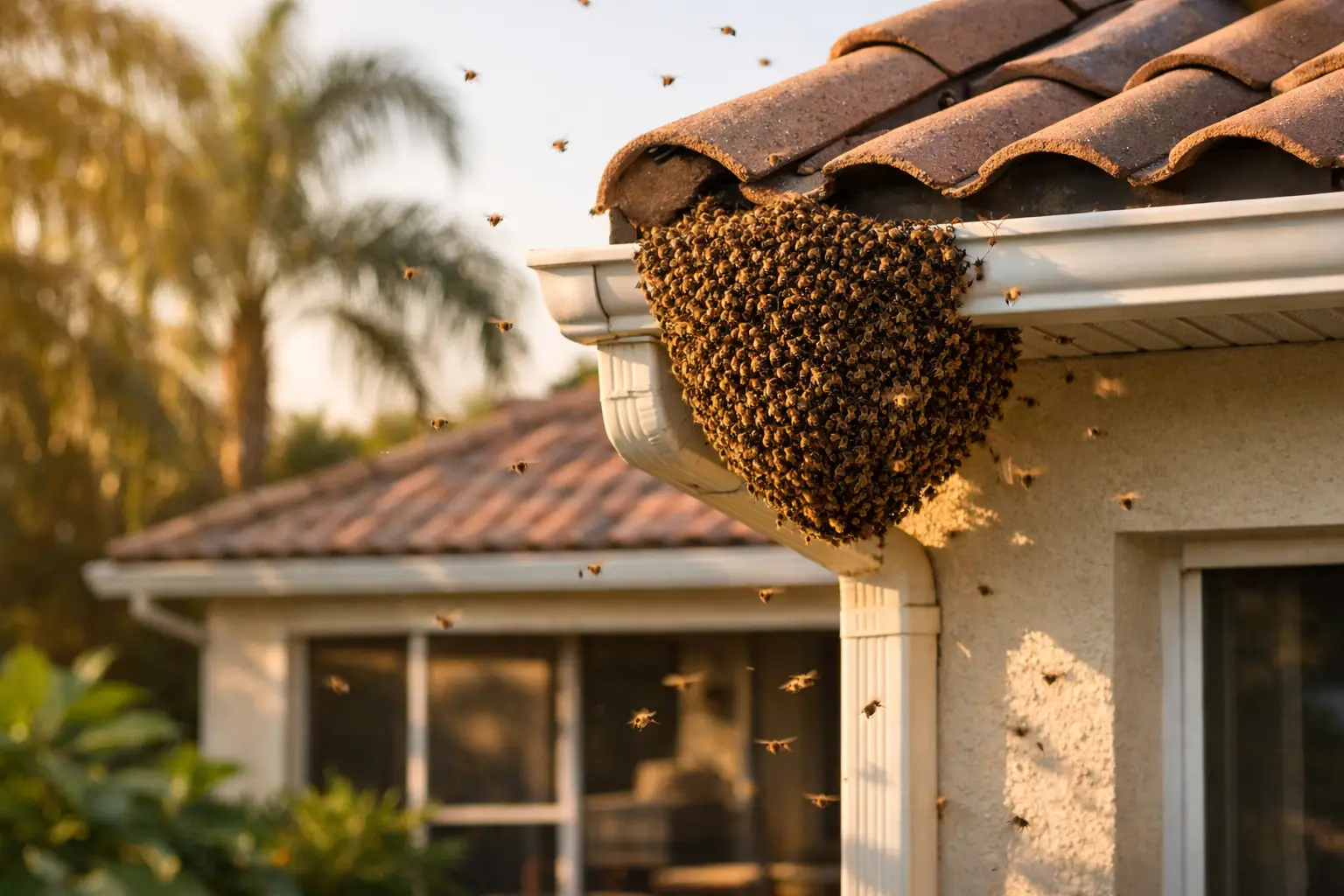
It also helps to check the property regularly for bee activity that seems concentrated or unusual. A few bees visiting blooms is normal. A steady stream entering a soffit, wall void, shed, irrigation box, or underground opening is different. That can signal an active colony close to where pets walk or rest. In that case, prevention shifts from general caution to a real safety issue.
What attracts bees into pet spaces
Bees are not attracted to pets the way mosquitoes are, but pets can accidentally draw attention to the places bees already like. Water bowls left out all day can become a stopping point during hot weather. Sweet residue from spilled juice, fallen fruit, hummingbird feeders, or sticky barbecue areas can also increase insect traffic.
Scented products can play a smaller role than people think, but they are not irrelevant. Strong floral shampoos, grooming sprays, and even heavily scented yard products may make an area more interesting to foraging insects. This does not mean you need unscented everything. It means if your dog just had a strongly perfumed bath and now wants to roll through a flower bed, use some common sense.
Hidden shelter is often the bigger issue. Colonies prefer spaces that feel protected from weather and disturbance. That includes rooflines, eaves, block walls, attics, hollow trees, and utility areas. Ground-nesting stinging insects can create a different kind of risk because pets stumble into them with no warning. Not every hole in the yard belongs to bees, but any location with repeated insect movement deserves a closer look from a safe distance.
Signs your pet may be at higher risk
Some pets are simply more likely to get stung. Young dogs, hunting breeds, highly reactive dogs, and outdoor cats tend to investigate first and think later. A pet with vision or hearing loss may also startle bees by getting too close without noticing them.
Previous reactions matter as well. One sting does not guarantee the next one will be worse, but a pet with a history of swelling, hives, vomiting, weakness, or breathing trouble should be treated as higher risk. For those animals, prevention should be tighter and your emergency plan should be clearer.
Yard changes that actually help
If you want practical protection, focus on layout and routines. Create a pet-safe zone where your dog or cat spends most of its outdoor time. That area should be free of dense flowering growth, fallen fruit, clutter, and hidden cavities. Keep grass and weeds trimmed so you can spot unusual insect movement before a pet does.
Move water bowls away from flower beds and entry points where bees may already be active. Refresh them often so they stay clean and less attractive to insects. If you maintain pollinator plants, place them farther from dog runs, play areas, and doors used for frequent pet traffic.
Inspect structures after storms, repairs, or long vacant periods. In Southwest Florida, warm weather and building gaps can create ideal conditions for colonies to move in quickly. A new buzz near the roofline or a cluster near an exterior wall should not be ignored just because your pet has not been stung yet.
Avoid DIY spraying if bees have established themselves in or on a structure. Poison can increase defensive behavior before it kills anything, and dead colonies left inside walls often create bigger problems with honey, odor, and secondary pests. More importantly for pet owners, a disturbed colony near the home is not a safe experiment.
Training and daily habits for curious pets
Training can reduce risk more than people expect. A strong leave it command is useful for dogs that chase insects, dig in landscaping, or investigate buzzing sounds. Recall matters too. If you notice a patch of unusual bee traffic, you need your dog coming back immediately, not after one more sniff.
For cats, management usually works better than training. Limiting access to active bee areas, using enclosed outdoor spaces carefully, and checking those areas before letting a cat out are the more reliable choices.
Timing also matters. Bees are often more active during warm, bright parts of the day when flowers are open and water demand is high. If your pet is reckless outdoors, early morning or later evening potty breaks may reduce encounters. That is not foolproof, but it can help in high-activity seasons.
How to protect pets from bees on walks and outings
The same rules apply away from home, but with less control. Keep dogs leashed around flowering shrubs, trash areas, fallen fruit, and water features. Watch for sudden interest in tree hollows, landscape timbers, or ground holes. If you hear a concentrated buzzing sound, change direction first and figure it out later.
Do not let pets investigate swarms. A swarm can look dramatic, but it is usually a colony in transition, temporarily clustered while scouts search for a new home. Even so, it is not something a dog should approach. Give it distance and keep others away until a professional can assess it.
If your pet gets stung
A single sting is often painful but manageable. Pets may yelp, paw at the face, limp, drool, or swell around the sting site. The mouth and nose are especially concerning because swelling there can affect breathing faster than a sting on a leg.
If you can see a stinger, remove it gently by scraping sideways with a flat edge rather than squeezing it. Then call your veterinarian for guidance, even if symptoms seem mild. Do not give human medications unless your vet tells you to. The right dose depends on the animal, its size, its health history, and the severity of the reaction.
Emergency care is needed right away if your pet has repeated stings, facial swelling, vomiting, collapse, trouble breathing, or sudden weakness. Some reactions are allergic. Others are toxic simply because of the number of stings involved. Either way, time matters.
When the real problem is a colony nearby
If you keep seeing bees entering a wall, roofline, shed, or ground opening near areas your pet uses, this is no longer just a pet behavior issue. It is a property safety issue. Humane live removal is usually the best path when bees have established a colony where people and animals pass close by. That approach protects the structure better than quick-kill methods and preserves valuable pollinators when relocation is possible.
For homeowners in Southwest Florida, local response time matters because waiting can increase both pet risk and structural complications. A professional who understands colony behavior, building access points, and live relocation will usually give you a safer outcome than a general spray approach. Beeswild handles this type of work with a rescue-first mindset because bee safety and family safety do not have to be in conflict.
Protecting pets from bees is mostly about reducing surprise. Fewer hidden nests, better supervision, smarter yard layout, and faster action when you notice concentrated bee activity can make outdoor time safer for everyone. Your pet does not need a sterile yard. It just needs a yard where curiosity is less likely to meet a colony at the wrong moment.

No responses yet