
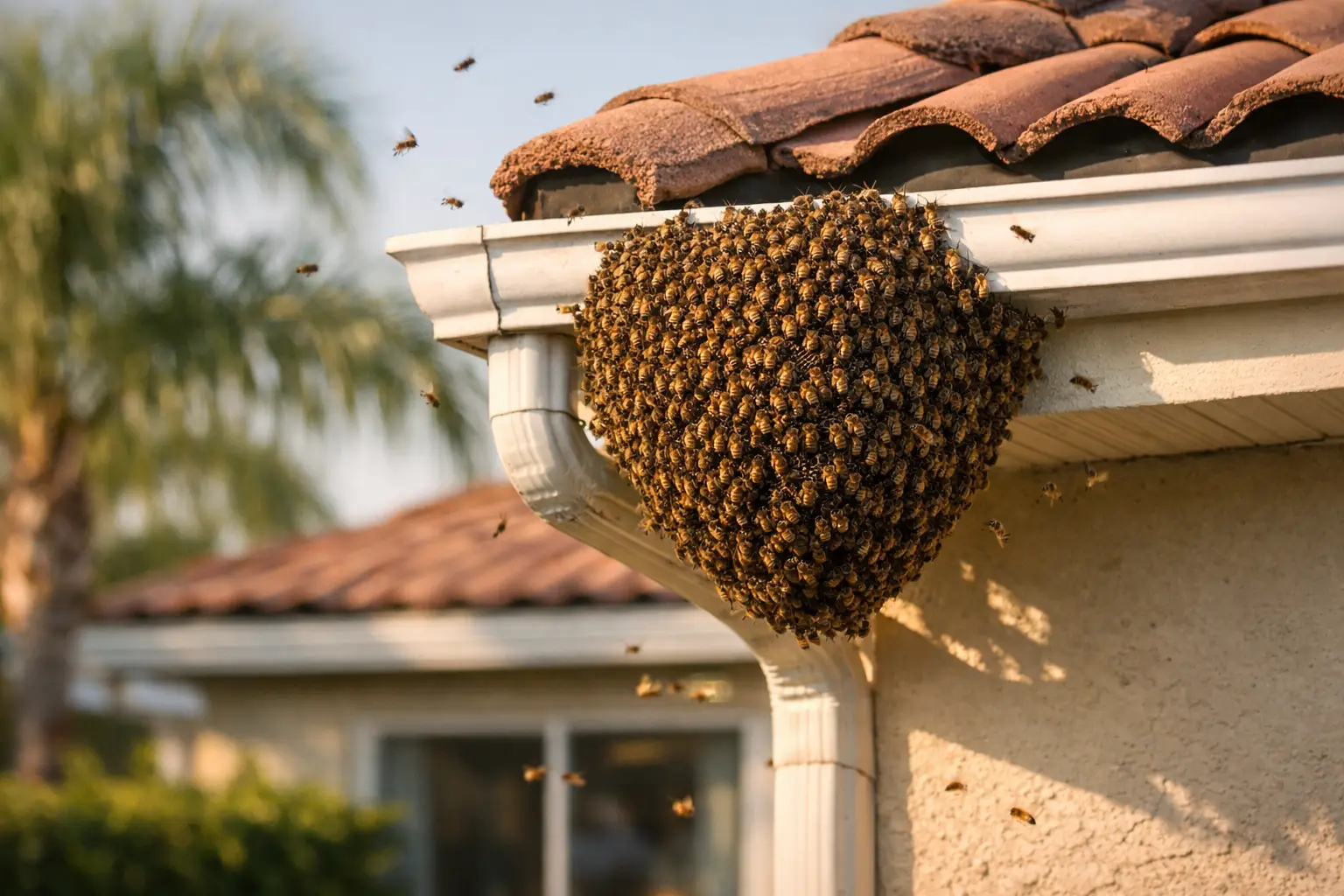

A grapefruit-sized cluster hanging from a palm branch can look like an emergency. Sometimes it is. Sometimes it is simply a resting swarm deciding where to move next. This southwest florida bee swarm guide is here to help you tell the difference, act safely, and avoid the kind of mistakes that turn a manageable situation into a structural problem.
In Southwest Florida, bee activity stays high for much of the year because warm weather, flowering plants, irrigation, and dense neighborhoods create steady opportunities for colonies to reproduce. That means homeowners, HOAs, restaurants, schools, and commercial properties are more likely to see swarms than people in cooler parts of the country. The sight can be alarming, but a swarm and an established colony are not the same thing.
A swarm is usually a temporary mass of bees that has left an existing hive with a queen. They often stop on a tree limb, fence, mailbox, soffit edge, or shrub while scout bees search for a permanent home. During that temporary stage, they are often less defensive than bees protecting brood and stored honey. That does not make them safe to disturb. It only means their behavior has a different purpose.
What a bee swarm means in Southwest Florida
When a colony becomes crowded or conditions favor reproduction, part of that colony may split off and leave with a queen. The bees then gather in a visible cluster while they wait for a final move. In a place like Cape Coral and the surrounding region, that move can happen fast. An exposed swarm in the morning may be gone by afternoon, or it may decide that a wall void, roofline, water meter box, or soffit is the perfect cavity to occupy.
That is where delay becomes expensive. If bees move from a branch into a structure, the job changes from watching a temporary event to dealing with an active colony inside a building component. Once comb is built and honey is stored, the risks shift. You are no longer just concerned about stings. You are also looking at possible staining, melting comb, ants, roaches, rodents, and repeated bee activity in the same void.
This is why the first question is not, “Are these bees dangerous?” The better question is, “Are they resting in the open, or are they trying to move into my property?”
Southwest Florida bee swarm guide for quick identification
A true swarm usually looks like a hanging cluster or ball of bees on an exposed surface. You may see a steady but not frantic flow of bees around it. They are concentrated in one obvious mass. There is no visible wax comb yet, and there should not be heavy traffic disappearing into a crack in the building.
An established colony behaves differently. Bees fly in and out of one specific entrance point, often with purpose and repetition. You may notice this at a soffit gap, cinder block void, roof tile edge, water box, shed wall, or under a mobile home. Traffic often increases during warm daylight hours. If you see bees carrying pollen on their legs, that is a strong sign of an active colony with brood rather than a temporary swarm.
There is also the matter of temperament. People often assume calm bees are harmless and active bees are aggressive. That is not reliable. Bee behavior depends on weather, location, disturbance, and whether they are defending brood. Any cluster or nest should be treated with caution, especially around children, pets, lawn crews, pool areas, or pedestrian walkways.
What not to do when you find a swarm
The worst first response is usually a can of spray. Poison may kill some bees on contact, but it does not solve what happens next if the bees have already entered a cavity. Dead bees, brood, wax, and honey left behind can create odor, staining, pests, and future infestations. Even with an exposed swarm, spraying often agitates the cluster and scatters bees unpredictably.
Water hoses are another common mistake. So are rocks, sticks, ladders, leaf blowers, and pressure washing. Disturbing bees from below or at close range is how people get stung. For commercial properties and HOA settings, this also creates a liability issue fast.
If you find a swarm, keep your distance and limit activity around it. Bring pets inside. Keep children away. If it is near an entry, pool gate, sidewalk, school pickup line, or restaurant seating area, treat it as a public safety concern rather than a curiosity.
When a swarm is low-risk and when it is urgent
It depends on location more than size. A swarm high in a tree away from people may be monitored briefly while you arrange professional help. A smaller cluster on a front-door light fixture is more urgent because normal movement can trigger disturbance. A swarm near a dog run, mailbox, playground, or community walkway deserves immediate attention because predictable traffic increases the chance of contact.
Urgency also rises when bees start investigating structural voids. In Southwest Florida, common trouble spots include soffits, block walls, roof returns, utility boxes, and places where warm, dry cavities are easy to access. Once scout bees decide on a cavity and the swarm moves in, time matters. Early live removal is usually simpler than removal after comb is established.
If the bees are chasing people, head-butting, or responding aggressively without obvious disturbance, treat the situation seriously and keep everyone clear. Public-facing sites should be restricted until a trained remover evaluates the behavior and location.
Why live removal matters more than a quick kill
Honey bees are not disposable pests. They are managed agricultural livestock and essential pollinators. In the wrong place, they can still create danger and property damage. The right solution is not pretending the problem does not exist. The right solution is removing the bees safely, addressing the structure properly, and relocating viable colonies when possible.
That is where live removal is different from generic pest control. The goal is not just to stop visible activity for a day or two. It is to remove bees, comb, honey, and attractants so the same cavity does not keep calling bees back. In structural cases, this matters a great deal. A wall full of poisoned bees and melting honey is not a clean fix.
Professional live removal also accounts for bee biology. A swarm on a branch can often be collected and relocated. A colony inside a wall may require opening the affected area, removing comb, and securing entry points after the work is complete. Those are different jobs, and treating them as the same usually leads to trouble.
What to expect from a professional response
A good response starts with identifying whether you are seeing a swarm, a newly moved-in colony, or long-term structural nesting. Photos can help with the first assessment, but on-site inspection often reveals details that matter, such as bee flight paths, heat exposure, cavity size, and whether comb is already present.
From there, the method depends on access and timing. Exposed swarms are often the most straightforward. Structural removals are more technical and may involve cutting into a soffit, wall, or other void to fully remove comb and bees. The best providers explain the process clearly, including what is being removed, what repair issues may remain, and why partial work can fail.
For homeowners, this transparency reduces panic. For property managers and HOAs, it reduces surprises and documents that the issue was handled in a way that protects occupants and the structure. Beeswild, based in Cape Coral, works from this live-removal-and-relocation model because saving the colony and protecting the building are both part of the job.
Seasonal patterns and repeat swarm sites
Swarms are more common during active brood and bloom periods, but in Southwest Florida there is no hard winter shutdown like northern states experience. Bees may stay active across much of the calendar. That means swarm calls can come in early, late, or repeatedly in neighborhoods with abundant forage and lots of cavity-rich construction.
Some properties become repeat locations. That usually happens because they offer sheltered voids, previous wax scent, or unsealed access points. If bees showed up in the same soffit or block wall before, assume the site is attractive and needs more than surface treatment. This is one reason a same-place removal warranty matters. It reflects confidence that the cavity issue was actually addressed.
A practical rule for homeowners and managers
If the bees are outside and clustered, do not test them. If they are entering a structure, do not wait. Those two rules solve most bad outcomes.
You do not need to identify subspecies, judge temperament from a distance, or gamble on whether they will leave by sunset. You need a safe perimeter, a realistic read on whether the location threatens people or the building, and a removal plan that does not leave honey and comb behind.
The most helpful mindset is calm urgency. Not panic. Not procrastination. A swarm is often a short window where the right action can prevent a bigger structural problem. And if the bees have already chosen your wall or roofline, dealing with it properly now is almost always easier than dealing with damage later.
If you spot a cluster of bees on your property this season, give it space and treat it like a real situation, not a weekend experiment. The best outcomes usually come from acting early, keeping people clear, and choosing a solution that protects both the structure and the bees.

No responses yet