

A dog snaps at a buzzing insect, yelps, and suddenly starts pawing at its face. That moment is why so many pet owners ask, are bees dangerous for dogs? The honest answer is that most bee stings are painful but manageable, yet some can become a real emergency depending on where the dog was stung, how many times, and how their body reacts.
For homeowners, especially in warm parts of Florida where bees stay active much of the year, the concern is not just one curious dog in the yard. It is also whether a swarm or hidden colony near the home creates a bigger risk for pets, children, and anyone using the property. Understanding the difference between a routine sting and a dangerous situation helps you respond faster and make better decisions about bee activity around your home.
Are Bees Dangerous for Dogs in Every Case?
Not in every case. A single sting on a healthy dog often causes localized pain, swelling, and irritation. Many dogs recover with basic veterinary guidance and close observation. The problem is that dogs do not always get stung in low-risk areas. They tend to investigate with their noses and mouths, which means swelling can happen around sensitive tissues very quickly.
A sting on the paw is one thing. A sting on the tongue, lips, inside the mouth, or near the throat is another. Those areas can swell enough to affect breathing, which changes the situation from painful to urgent. The same is true if a dog disturbs a colony and receives multiple stings at once.
Breed size matters too. A large dog may tolerate one sting better than a very small dog simply because of body mass, but size does not protect against allergic reactions or airway swelling. Age and medical history also matter. Puppies, senior dogs, and dogs with prior allergic reactions should be watched especially closely.
What a Bee Sting Usually Looks Like on a Dog
Most dogs show immediate discomfort. You may see sudden yelping, limping, pawing at the face, rubbing the muzzle on the grass, or licking one spot repeatedly. Mild swelling and redness are common. Some dogs act startled for a few minutes and then settle down, while others stay restless because the sting site keeps throbbing.
If the stinger is left behind, that can keep irritating the area. Honey bees leave a barbed stinger, while wasps and hornets usually do not. Many people use the word bee to describe any stinging insect, but from a safety standpoint that distinction matters less than the dog’s symptoms. Your first concern is not insect identification. It is whether your dog is stable.
A normal local reaction should stay limited to the sting area. The dog may be uncomfortable, but they should still be breathing normally and able to settle. Once the reaction starts spreading or affecting breathing, vomiting, or overall behavior, it is no longer a wait-and-see problem.
When Bee Stings Become Dangerous
The biggest risks come from three situations: airway swelling, allergic reaction, and multiple stings.
Stings to the face and mouth
Dogs chase movement. Bees fly erratically. That combination leads to many facial stings. A dog stung on the muzzle may develop swelling that looks dramatic but remains manageable. A dog stung inside the mouth or throat is in a more serious category because even moderate swelling can narrow the airway.
If your dog is gagging, drooling excessively, struggling to swallow, or making noisy breathing sounds after trying to catch a bee, seek veterinary help right away. Do not wait for the swelling to get worse.
Allergic reactions
Some dogs have a hypersensitivity reaction to venom. Signs can include widespread facial swelling, hives, weakness, vomiting, diarrhea, pale gums, collapse, or trouble breathing. This kind of reaction can escalate fast.
A dog does not need to have had a previous obvious reaction for this to happen. If symptoms go beyond the sting site or your dog seems faint, shaky, or disoriented, it should be treated as an emergency.
Multiple stings
One sting is very different from ten or fifty. A dog that disturbs a ground nest or hidden colony can be attacked repeatedly in seconds. Venom load increases with each sting, and the body may not be able to handle it well even without a classic allergy.
Multiple stings can lead to severe pain, swelling, weakness, vomiting, and systemic illness. In aggressive bee events, immediate veterinary attention is the safest response.
What You Should Do Right After a Sting
Start by moving your dog away from the area. If bees are still active, do not stand there trying to inspect the sting while more insects are circling. Get indoors or into a car first.
Then check the sting site if your dog will let you. If you can see a honey bee stinger, remove it promptly by scraping it sideways with a fingernail or a flat object. The old advice about never using tweezers is a little overstated, but the priority is speed and minimizing extra venom release.
Apply a cool compress if your dog tolerates it. Keep them calm and monitor for swelling, vomiting, breathing changes, or unusual lethargy. If the sting is on the face, in the mouth, or if your dog seems worse instead of better, call a veterinarian immediately.
Do not give over-the-counter medication unless your veterinarian specifically tells you what to use and how much. Dogs vary too much by size, age, and medical history for guesswork to be safe.
Bees Around the Yard: When the Bigger Risk Is the Colony
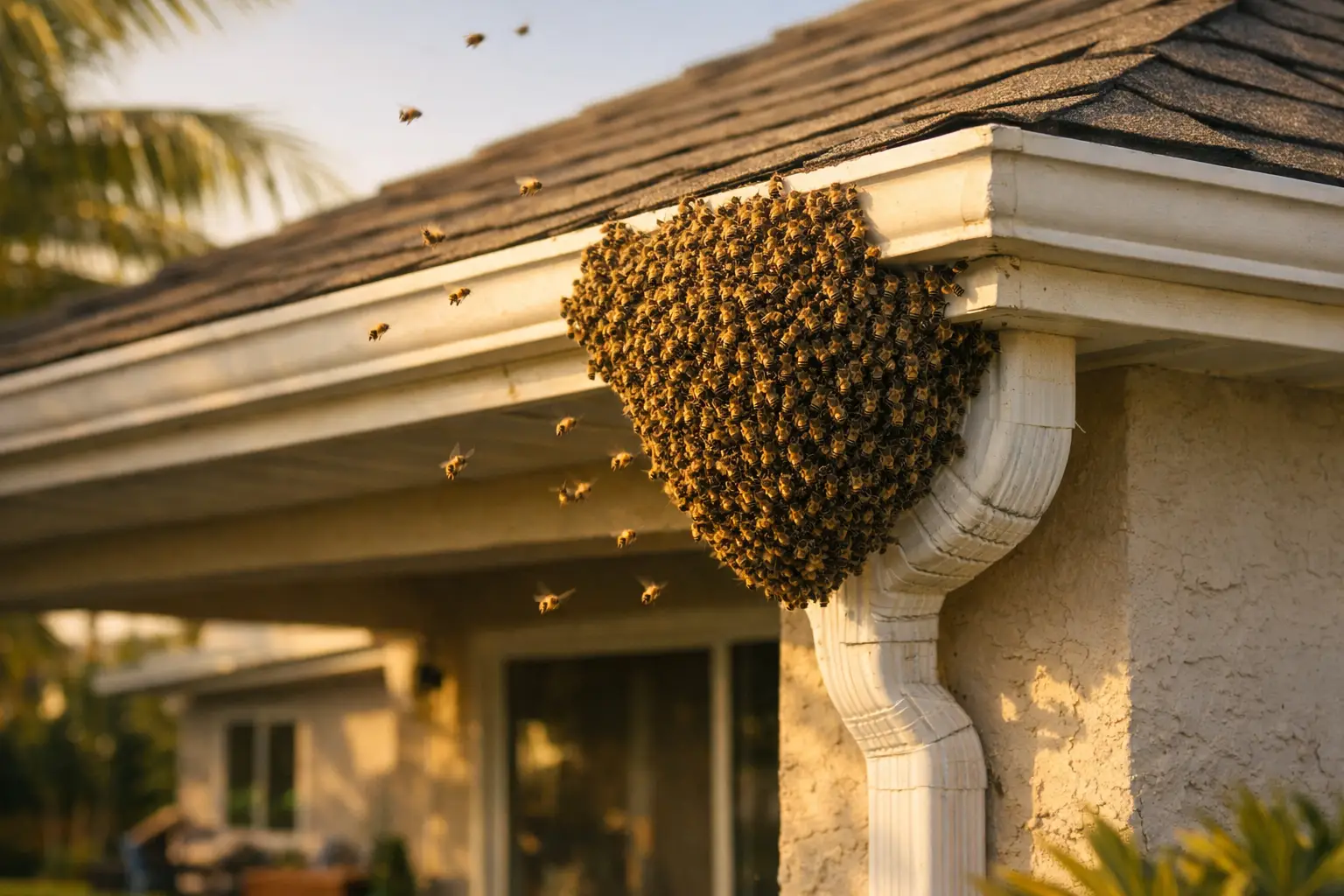
Sometimes the question is not really about a single bee. It is about repeated activity around a soffit, shed, hedge, water meter box, or wall void. In those cases, the danger to dogs comes from proximity to an established colony, not random foraging bees passing through flowers.
A healthy yard can have pollinators without being dangerous. Bees visiting blooms are usually focused on nectar and pollen, not looking for trouble. Problems start when a dog gets too close to a defended nest or when a colony has settled inside a structure and traffic increases around an entry point.
That is why behavior matters. If you notice a steady stream of bees using the same crack or opening, or a cluster forming on a branch or wall, keep pets away from the area until it is assessed. Curious dogs are exactly the kind of accidental trigger that can turn a quiet colony into a defensive one.
In Southwest Florida, where bee activity can stay high, humane live removal is often the safest option when bees are established close to daily foot traffic or pet areas. The goal should be to protect your household without destroying pollinators that can be relocated.
How to Reduce the Risk for Dogs
You do not need a bee-free planet to keep your dog safer. You need awareness and a little yard management.
If your dog likes snapping at insects, supervise them more closely during high bee activity, especially around flowering plants, clover, fallen fruit, and shallow water sources. Check the property for repeated bee traffic near roofs, fences, utility boxes, and eaves. If your dog has already been stung once, take that as a signal to inspect the area more carefully rather than assuming it was bad luck.
Training helps too. A reliable leave-it cue can prevent some stings, although no command beats physical distance from a nest. For dogs with a strong prey drive, fencing off a problem zone until removal is completed is often the most practical move.
It also helps to know your own dog. Some recover from a sting with little more than indignation. Others panic, paw their faces, and make the irritation worse. A calm response from you can keep the situation from snowballing.
When to Call a Vet and When to Call a Bee Professional
Call a veterinarian if your dog was stung in or near the mouth, has more than mild swelling, was stung multiple times, vomits, seems weak, develops hives, or has any trouble breathing. If your instinct says your dog is not acting right, trust that. Bee sting reactions can shift quickly.
Call a bee removal professional if you see ongoing bee activity around your home, a visible cluster, or signs of a colony in a wall, roofline, or other structure. That step matters because the risk to your dog does not end with one sting if the source remains in place. Companies such as Beeswild handle live removal and relocation so the hazard is addressed without treating bees as disposable.
Bees are not automatically dangerous to dogs, but they are never something to dismiss when a sting happens or a colony settles near your living space. A little caution goes a long way, and fast action matters when swelling or multiple stings enter the picture. If your dog and bees keep crossing paths, the safest outcome usually starts with distance, observation, and getting the right help before curiosity turns into an emergency.

No responses yet