

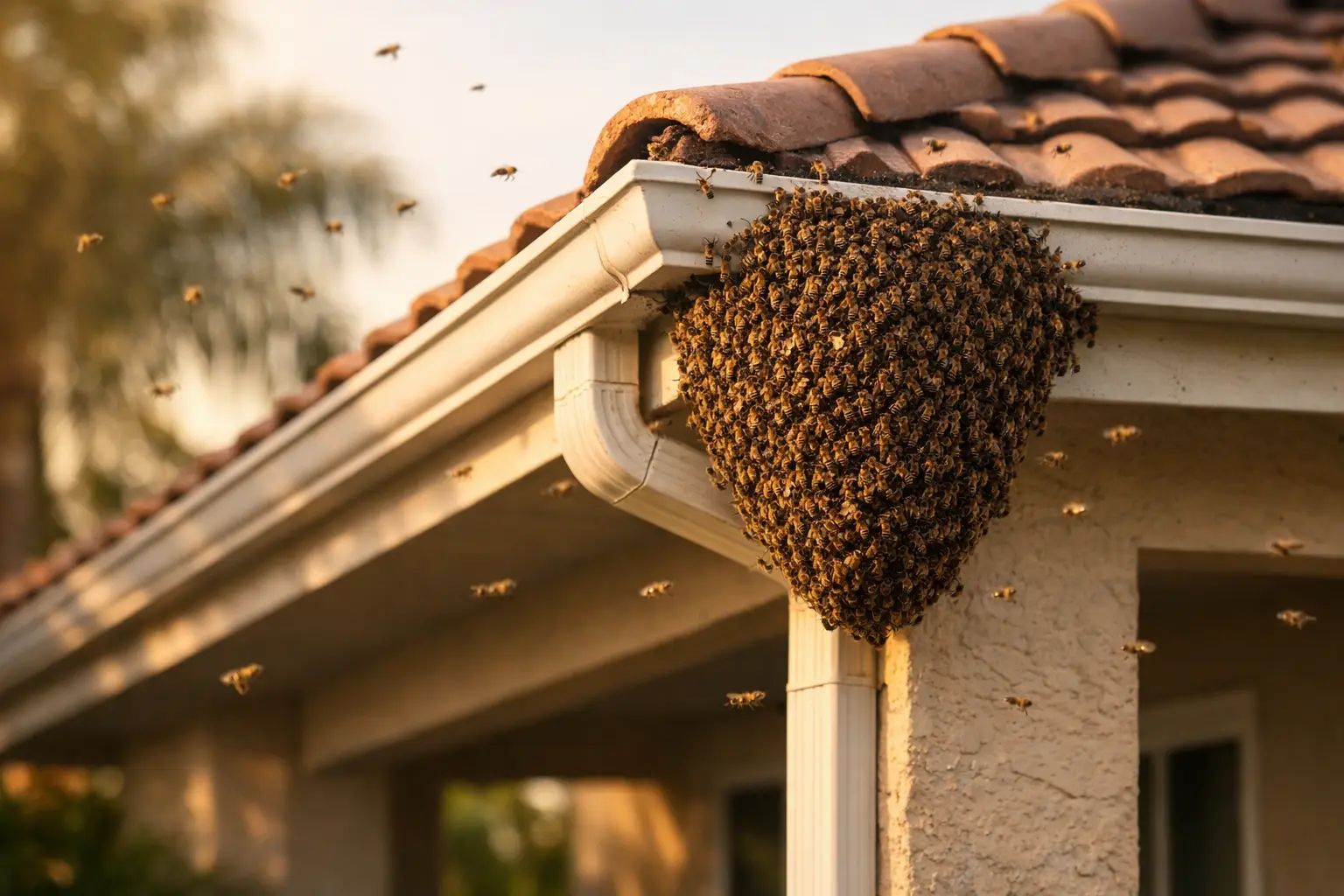

A cluster of bees under an eave can turn a normal afternoon into a rush of worry. If you are searching for bee removal Charlotte County residents can rely on, the first thing to know is that not every bee situation is the same – and the wrong response can make it worse for both your property and the colony.
Some calls are simple swarms resting temporarily on a branch. Others involve an established hive inside a wall, soffit, roofline, shed, meter box, or block structure. That difference matters because a visible patch of bees is only part of the problem. Once a colony starts building comb inside a structure, honey, brood, wax, and heat become part of the job too. Removing the bees without dealing with the nest often leads to stains, odors, ants, roaches, rodents, and repeat activity.
What bee removal in Charlotte County really involves
People often use one phrase for several very different situations. A swarm is usually a temporary mass of bees clustered around a queen while they search for a new home. Swarms can look dramatic, but many are relatively calm if left undisturbed. A structural colony is different. That means bees have moved into a cavity and started living there. At that point, the issue is not just insect presence. It is active livestock building comb inside your property.
Proper bee removal in Charlotte County starts with identifying which situation you have. A humane, technically sound approach looks at entry points, comb location, accessibility, colony size, and how long the bees have been there. It also considers who uses the area. A hive near a front door, pool equipment, restaurant patio, playground, or HOA mail kiosk carries different urgency than a swarm high in a remote tree.
This is where experience matters. Bee work is part animal handling and part structure work. It requires knowing how bees behave in Florida heat, how colonies expand in enclosed spaces, and how buildings are put together so the removal solves the problem instead of just chasing bees around the same wall.
Why poison is usually the expensive shortcut
When people panic, they often ask the fastest question first: can someone just spray them? That sounds easy, but it creates a second problem inside the structure. Dead bees do not remove comb. Poison does not remove honey. It does not remove brood. And it does not remove the scent that tells future scout bees this cavity once housed a colony.
In many structural cases, killing the colony leaves pounds of comb and honey behind. In hot weather, that material can melt into drywall or block voids. It can ferment, leak, and attract other pests. Even if the bee activity stops for a while, the property damage risk can continue.
That is why live removal and relocation is often the more responsible route. The goal is to remove the colony, remove the nest material that causes future trouble, and reduce the chance of bees returning to the same location. For homeowners, that protects the building. For commercial sites and HOAs, it also reduces liability and repeat service calls.
Signs you may have a colony, not a passing swarm
A few bees around flowers are normal. A steady flight line to one crack or gap is not. If bees are entering and exiting the same spot all day, especially near soffits, fascia, roof tiles, cinder block voids, or utility boxes, you may have an established nest.
Other signs include a low buzzing in a wall, warm spots around an active cavity, staining near an entry point, or increased activity during the middle of the day. In some cases, people first notice bees after lawn work, pressure washing, or nearby vibration disturbs the colony.
It depends on season, weather, and available forage, but colonies in Southwest Florida can build quickly. Waiting a week to “see if they leave” may be reasonable for a clearly temporary swarm in a tree. It is usually not wise when bees are actively working in and out of a structure.
How humane bee removal works
The best live removals are methodical, not rushed. First comes assessment. The remover identifies the species behavior, estimates whether the bees are established, and locates the nest as precisely as possible. Then the colony is physically removed, including comb where accessible. The queen, workers, brood, and usable comb are handled in a way that allows relocation to an apiary or safe bee yard.
That relocation piece matters. Saving bees only works if they are moved somewhere they can survive. A company that also operates as a honey farm has an advantage here because it is not just taking bees away. It is rehoming them into managed agricultural settings where the colony can continue functioning.
After removal, the structure itself needs attention. Depending on the location, this may include cleaning residual wax and honey, addressing scent trails, and recommending closure of entry gaps once the cavity is clear. If that step is skipped, new bees may investigate the same space later.
A solid service should also be honest about limits. Not every removal can be done with zero opening of the structure. If the colony is deep in a wall or roofline, access may be necessary to do the job correctly. The trade-off is straightforward: a controlled opening now is often better than hidden comb damage, honey leakage, and recurring infestations later.
Bee removal Charlotte County property owners should expect
Good communication is part of good removal. If you call for bee removal Charlotte County professionals should explain whether you are dealing with a swarm pickup, a cut-out from a structure, or a more complex extraction. They should tell you what is visible, what may be hidden, and what steps are needed to keep the problem from returning.
Homeowners usually want three answers right away: Is it dangerous? Will you save the bees? Will this damage my house? The honest answer is that risk depends on bee temperament, colony location, and human activity around it. Many colonies can be removed safely, but nobody should promise a no-risk interaction with defensive insects. Humane removal is realistic, not casual.
Commercial managers and HOAs tend to ask different questions. They need response time, site safety, documentation, and confidence that the issue will not reappear next month in the same clubhouse wall or signage column. A same-place removal warranty can be meaningful here because it addresses the practical concern behind the panic – not just getting bees out today, but reducing repeat occupation in that specific spot.
What to do while waiting for help
Keep people and pets away from the area. Do not spray water, foam, insect killer, or household chemicals at the bees. Do not seal the hole while bees are still active inside. Trapping bees in a wall usually pushes them deeper into the structure or forces them to find a second exit into another part of the property.
If possible, observe from a safe distance. Note where bees are entering, how long you have seen activity, and whether anyone has disturbed them recently. That information can help the remover plan the safest approach.
If anyone has been stung multiple times, or if there is a known allergy, treat it as a medical issue first. Bee removal is urgent when public safety is involved, but medical emergencies come before property concerns.
When fast action matters most
Some situations should not wait. Aggressive behavior near doors, sidewalks, utility equipment, schools, parks, pool areas, or outdoor dining spaces needs prompt attention. The same goes for colonies in walls where visible honey staining or indoor seepage has started.
Charlotte County properties also face unique pressure from climate and construction style. Warm conditions support active colonies for much of the year, and common building voids can make ideal nesting spaces. Block walls, soffits, roof transitions, and decorative facades often give bees exactly what they want – shelter, warmth, and a protected cavity.
That is why local knowledge matters. Effective live removal in this region is not just about catching bees. It is about understanding how bees select structures in coastal Florida and how to remove them without leaving the real problem behind.
One company serving Southwest Florida, Beeswild.com LLC, is built around that exact model: live removal paired with relocation to managed farm spaces. That approach reflects a simple truth. Bees are valuable pollinators, but they do not belong inside your walls.
The right response is calm, technical, and humane. If bees have chosen your property, act early, ask how the nest material will be handled, and choose a removal plan that protects both the structure and the colony whenever possible. That is how a stressful discovery turns into a problem that is actually solved.

No responses yet