
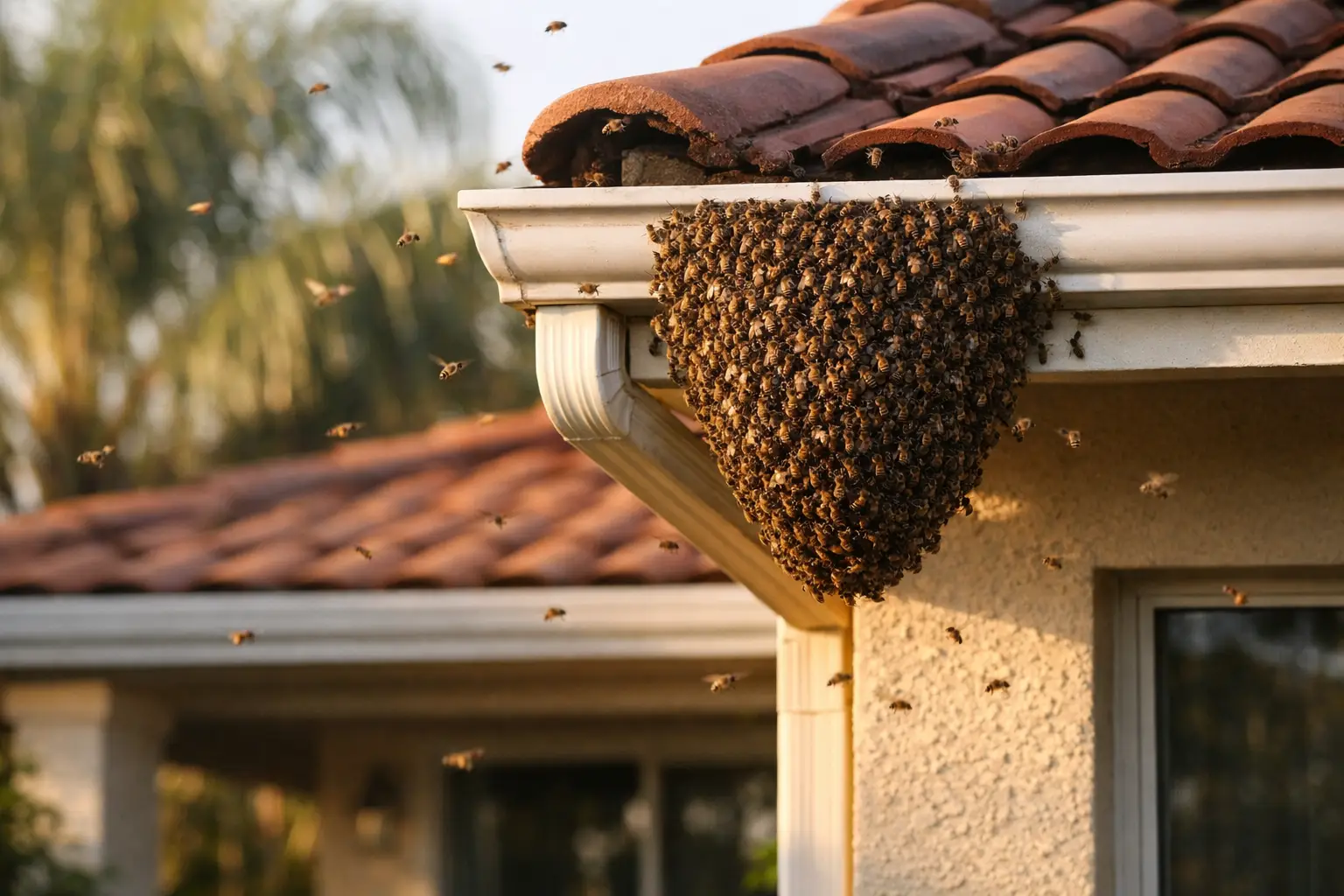

A basketball-sized cluster of bees hanging from a tree branch can look like an emergency. Sometimes it is not. If you need to identify swarm versus hive, the difference usually comes down to one question: are these bees just stopping for a short rest, or have they already moved in?
That distinction matters for safety, property damage, and the right response. A swarm is often temporary and less defensive than an established colony. A hive inside a wall, roofline, soffit, or utility box is a settled colony that can grow fast, store honey, and create structural problems if it is ignored. For homeowners, HOAs, and property managers in Southwest Florida, knowing which one you are seeing can save time, reduce risk, and help protect the bees as well.
Why identify swarm versus hive correctly
People often use the words interchangeably, but they are not the same thing. A swarm is a group of bees in transition. They have left an existing colony with a queen and are pausing while scout bees search for a permanent home. During that stage, the cluster may hang from a branch, fence, mailbox, shrub, or eave for a few hours to a few days.
A hive is an established nest. Bees in a hive are actively building comb, raising brood, storing pollen, and producing honey. Once they settle into a wall cavity or another enclosed space, the problem changes. At that point, the issue is not just bee presence. It is also wax, honey, heat, moisture, stains, odor, and the chance of bees returning to the same void if it is not handled correctly.
Misreading a hive as a harmless swarm can delay action until damage gets expensive. Misreading a swarm as an aggressive infestation can lead people to spray chemicals at a group that may have moved on naturally or could have been safely relocated.
What a swarm looks like
The easiest way to identify a swarm is by its shape and behavior. Swarming bees usually form a visible cluster on the outside of something. It often looks like a dense, hanging mass with thousands of bees packed together around the queen. From a distance, it can resemble a dark pinecone, football, or dripping clump.
You will usually not see comb exposed in a fresh swarm. You may also notice more bees flying in circles around the cluster. Those are often scout bees leaving and returning as they evaluate new nesting sites.
Common signs of a swarm
A swarm is usually out in the open, not hidden deep inside a structure. It appears suddenly. One day there is nothing there, and the next day there is a large clump of bees attached to a surface. The cluster tends to stay compact and stationary, even though some bees are flying around it.
In many cases, swarms are quieter than people expect. Because they are between homes and focused on protecting the queen, they are often less defensive than bees guarding an established nest. Less defensive does not mean safe to approach. It means the behavior pattern is different.
How long a swarm stays in one place
This is one of the biggest clues. A swarm is temporary by nature. It may remain for a few hours, overnight, or sometimes several days while scouts search for a cavity. If the cluster disappears as suddenly as it arrived, it was almost certainly a swarm.
If bees remain in the same spot for more than a few days and traffic increases at a crack, vent, soffit, or wall gap, the situation may be shifting from swarm to active colony establishment.
What a hive looks like
A hive is more organized and less obvious at first. Instead of a hanging cluster in the open, you may see a steady line of bees flying to and from one entry point. That point might be a hole in siding, a roof edge, a gap around a pipe, a block wall void, or a junction in masonry.
When bees establish a hive, they choose a protected cavity. Once inside, they begin building comb. As the colony expands, traffic usually becomes more consistent. You may notice bees arriving with pollen on their legs, especially during daylight hours.
Common signs of an established hive
The strongest sign is repeated bee traffic at the same opening. Not random flying nearby, but purposeful movement in and out. You may also hear faint buzzing in a wall or ceiling, especially on warm days when the colony is active.
In more advanced cases, you may notice staining, sticky residue, or a sweet smell. These are warning signs that honeycomb and honey stores may already be inside the structure. That is the stage where waiting gets expensive.
Identify swarm versus hive by location
Location tells you a lot. Swarms commonly hang in exposed places like tree limbs, fence posts, playground equipment, or gutters. They are visible because the bees are clustered together while they wait.
Hives are usually hidden. Bees prefer cavities that are dark, dry, and protected from weather. In residential and commercial properties, common hive sites include walls, attic edges, soffits, chimneys, water meter boxes, sheds, and hollow columns.
If the bees are fully exposed and clumped on the outside, think swarm first. If they are entering and exiting a void, think hive.
Behavior differences that matter
A swarm acts like a group in transit. A hive acts like a permanent address.
With a swarm, the bees gather around the queen and wait. With a hive, workers are on regular duty cycles – foraging, guarding, ventilating, feeding brood, and defending the nest. That means an established colony often has guard behavior near the entrance, especially if the nest has been disturbed.
This is where caution matters. In Florida, bee behavior can vary widely. Some colonies are relatively calm. Others can become highly defensive, particularly if they are established in a structure and feel threatened. You cannot confirm temperament by looking from a distance, and you should never rely on internet myths like “gentle bees mean safe bees.”
When a swarm becomes a hive
This part trips people up. A swarm is not harmless just because it is temporary. If scout bees find a wall void or roof cavity, the swarm can turn into an established hive quickly. Once comb is built and brood rearing starts, relocation becomes more complex.
That is why timing matters. A visible swarm outside is usually simpler to remove and relocate than a colony that has already disappeared into a structure. If you saw a swarm enter a wall or soffit, do not assume the problem solved itself. It may have just become harder to see.
What not to do while you are figuring it out
Do not spray the bees with water, foam, household insecticide, or wasp killer. Poison rarely solves the structural issue. If bees have entered a wall, dead bees, comb, and honey can remain behind and attract ants, roaches, rodents, and future swarms.
Do not seal the entry hole while bees are active. That can trap bees inside living spaces or force them to find another exit into the building. It also does nothing to remove comb and honey already inside.
Do not tap the wall, trim the branch, or try a DIY relocation. Even a calm-looking cluster can react fast if it is jarred, smoked incorrectly, or physically disturbed.
When to call a professional right away
If bees are entering a structure, call right away. If the cluster is near a doorway, school area, pool equipment, pet area, or business entrance, call right away. If anyone on the property has a sting allergy, the threshold for waiting should be very low.
A professional live bee removal specialist can determine whether you are dealing with a transient swarm or an established hive, and whether structural removal is needed. That matters because the correct fix is not only about getting bees out. It is also about removing comb when necessary, reducing the chance of reinfestation, and protecting both people and pollinators.
For property managers and HOAs, there is another layer: liability. Repeated bee traffic around common areas should never be dismissed as a seasonal nuisance. If the bees have settled into a shared structure, delaying action increases risk for residents, vendors, and visitors.
A practical rule of thumb
If the bees are hanging in a visible cluster on the outside and appeared recently, you are probably seeing a swarm. If the bees are using a crack or hole as a doorway and returning there steadily, you are probably seeing a hive.
That rule is not perfect, but it is useful. The gray area is when a fresh swarm has just begun moving into a cavity. In that case, the outside cluster may shrink while traffic at the entry point increases. That is the moment to act before full comb build-out begins.
At Beeswild, this is the kind of distinction we help property owners make every day. The right response starts with a clear diagnosis, not panic.
If you are unsure, keep your distance and watch the bees for a few minutes from a safe location. Are they resting in a cluster, or working an entrance? That small observation often tells the whole story – and helps you choose the safest next step for your family, your property, and the bees.

No responses yet