

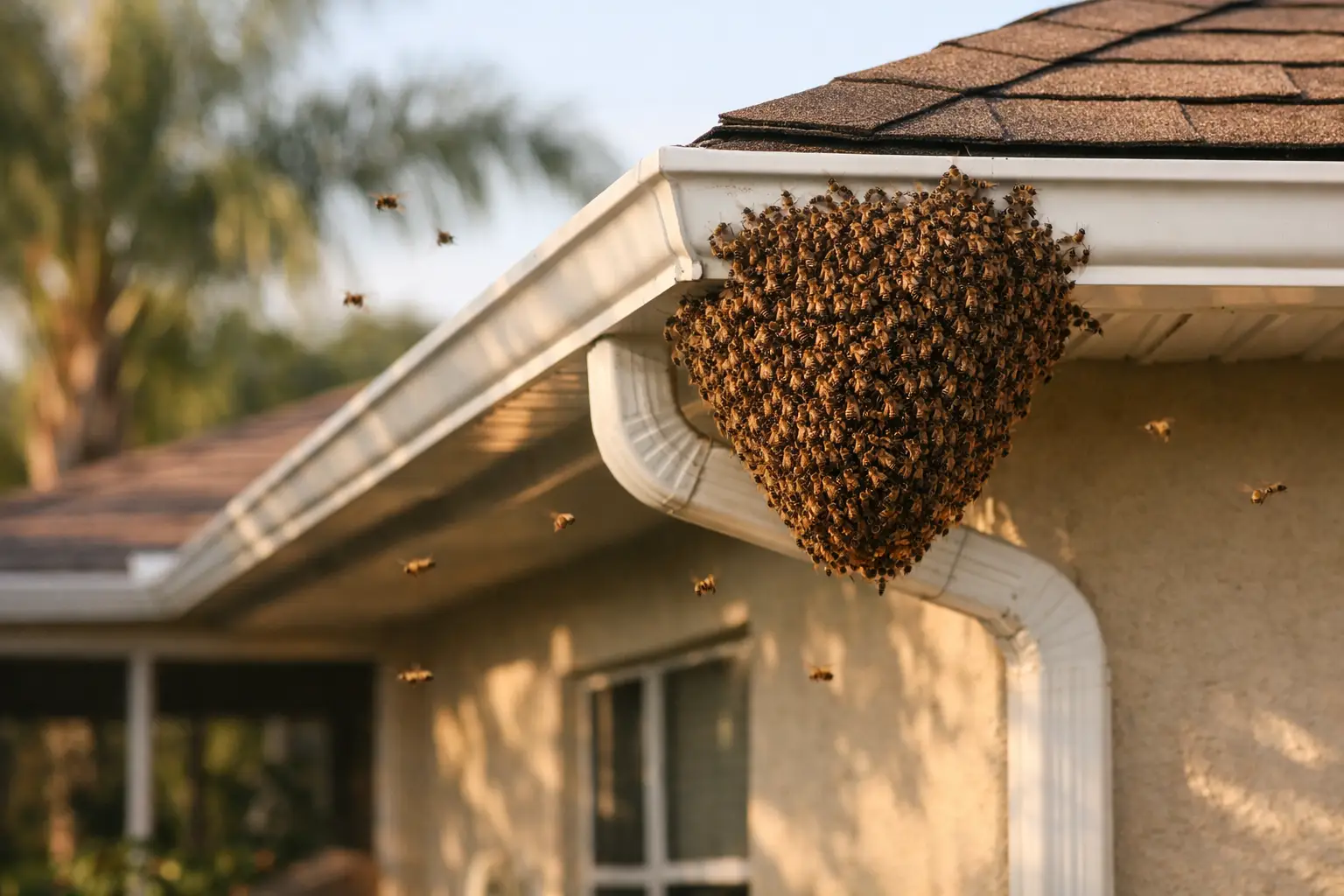

A loud cluster under the eaves is one thing. Bees pouring out of a wall, chasing people across a yard, or attacking a mower is something else entirely. If you are asking who handles aggressive honey bees, the short answer is this: trained live bee removal specialists, experienced beekeepers who do structural removals, and in true public-safety emergencies, local authorities who can secure the area and coordinate response.
The important part is knowing who does what. Not every beekeeper removes bees from buildings. Not every pest control company is equipped to deal with a defensive honey bee colony. And not every swarm is actually aggressive. The right response depends on bee behavior, where the colony is located, and whether people or animals are in immediate danger.
Who handles aggressive honey bees in real life?
Aggressive honey bee calls usually go to one of three places. The best fit is often a professional bee removal company that specializes in live removal and relocation. These are the crews that open soffits, cut into walls when needed, remove comb and brood, collect the bees, and reduce the chance of the colony returning.
A hobby beekeeper may be able to capture a calm swarm from a tree branch, but that is very different from dealing with defensive bees established inside a structure. Structural removals require ladders, protective equipment, containment planning, repair awareness, and a working understanding of how comb, heat, and honey affect the building after removal.
If the bees are attacking people in a public space, the first call may need to be 911 or the local fire department so the area can be secured. Emergency responders are there to protect the public, not necessarily to perform a full live removal. Once the immediate danger is controlled, a bee removal specialist is often the one who resolves the colony itself.
Not every “aggressive” bee situation is the same
Honey bees can act defensive for reasons that have nothing to do with their genetics. Weather matters. So does vibration from lawn equipment, pool pumps, pressure washers, and trimmers. A colony that ignores people all week may erupt when someone bumps the wall cavity it lives in.
Swarms are often misunderstood. A swarm hanging from a tree or fence is usually between homes and often less defensive than an established colony because it has no brood or honey stores to protect. That does not mean it is safe to touch or spray. It means the response may be simpler if a qualified person gets there quickly.
Established colonies inside walls, roofs, sheds, meter boxes, or soffits are a different case. Those bees have resources to defend. If they have already stung a person or pet without direct provocation, or if they react strongly at a distance, the job should be treated as a high-risk removal.
Signs the situation needs a specialist fast
A few clues tell you this is beyond a casual beekeeper pickup. The bees are entering and exiting a crack in the structure all day. People are getting stung 10, 20, or 30 feet away from the nest entrance. Pets are being targeted. The colony reacts to vibration from mowing or footsteps. Or the bees have occupied a wall, chimney, soffit, roofline, or utility box.
Those are situations where delay can make things worse. Colonies grow. Comb expands. Honey accumulates. And if someone sprays the entrance with store-bought chemicals, the bees may go deeper into the structure or scatter without solving the root problem.
Why aggressive honey bee removal is not a standard pest job
Many people assume this is just another insect service call. It is not. Honey bees build wax comb, raise brood, store pollen, and pack large amounts of honey into cavities. If the colony is killed but the comb is left behind, the structure can still suffer.
Leftover honey can melt and seep into drywall or ceilings. Wax and brood attract ants, roaches, rodents, and beetles. The odor of old comb can also attract new swarms to the same location. That is why complete removal matters more than a quick knockdown.
With aggressive colonies, the method matters even more. The technician needs to control flight paths, protect bystanders, remove all comb possible, and lower the chance of a repeat infestation. A company that understands both bee biology and building cavities has a major advantage.
Who should you call first?
If the bees are actively attacking and someone is injured, call emergency services first. Move indoors or into a vehicle. Close doors. Do not jump into a pool, and do not stand outside swatting. Bees may continue to sting around the head and face, and splashing or panic can make rescue harder.
If there is no active attack but the colony is established on your home, business, HOA structure, or public property, call a live bee removal specialist. Ask whether they handle structural removals, not just swarm catches. Ask whether they remove comb and nesting material, and whether they relocate live colonies when possible.
For commercial properties and HOAs, this distinction matters. Liability does not end when the visible bees disappear. If the colony remains inside the structure, the risk can return. The right contractor should be able to explain the removal plan clearly, including access, safety perimeter, comb removal, cleanup, and what conditions could affect cost or timing.
What to ask before hiring
A good company should be able to tell you whether the job sounds like a swarm capture, an established colony removal, or an emergency defensive-bee response. They should also explain whether the bees can be live removed, whether the comb will be removed, and what happens if the colony is inside a difficult cavity.
It also helps to ask about insurance, experience with aggressive colonies, and whether they offer any warranty on same-location recurrence. In Southwest Florida, where bee pressure can stay high for much of the year, that kind of follow-through matters.
What not to do with aggressive honey bees
Do not spray them yourself. Poison sounds fast, but it often creates a bigger mess in walls and roofs. It can also make a defensive colony more erratic before it dies. If the queen survives or part of the colony moves deeper into the structure, the problem can persist in a harder-to-reach location.
Do not seal the entrance. Trapping bees inside a wall can force them into living spaces, and dead bees plus unretrieved comb create long-term sanitation and odor issues. Sealing should happen after proper removal, not before.
Do not rely on internet identification from a distance. Yellow jackets, bumble bees, honey bees, and wasps all get mislabeled by frightened property owners. Behavior, flight pattern, nesting site, and time of day all matter. A specialist can sort that out quickly.
Why live removal often makes more sense
For a honey-producing colony, live removal is not just about being kind to bees. It is often the cleaner structural solution. Removing the bees, brood, comb, and attractants lowers the chance of stains, pests, and future occupation. When the colony can be relocated to a managed apiary, it keeps valuable pollinators in circulation instead of wasting them.
That said, not every situation is neat or easy. Some colonies are located in hazardous places, behind fragile finishes, near electrical components, or high above safe ladder access. In those cases, the safest option may depend on access, building design, and immediate threat level. A trustworthy company will tell you where the trade-offs are instead of pretending every removal is simple.
For Southwest Florida property owners
In this region, warmth, long flowering seasons, and abundant structure gaps make bee calls common. Aggressive behavior also tends to become urgent fast because outdoor living is constant – kids, dogs, landscapers, pool crews, customers, and neighbors share the same spaces. That is why local experience matters.
A company like Beeswild, which combines live removal with active beekeeping and relocation, approaches the problem differently from a kill-first service. The goal is to protect people and property while preserving a livestock species that still has value once it is safely removed.
The real answer to who handles aggressive honey bees
The right person is not just “a beekeeper” or “an exterminator.” It is a trained bee removal specialist with experience in defensive colonies, structural access, comb removal, and safe relocation when possible. If there is immediate danger, emergency services may secure the scene first. After that, the colony still needs a proper resolution.
If you are dealing with bees that are chasing, stinging, or nesting in a structure, trust the situation for what it is. Fast, informed action protects your family, your building, and the bees that can still be moved to a safer home.

No responses yet