
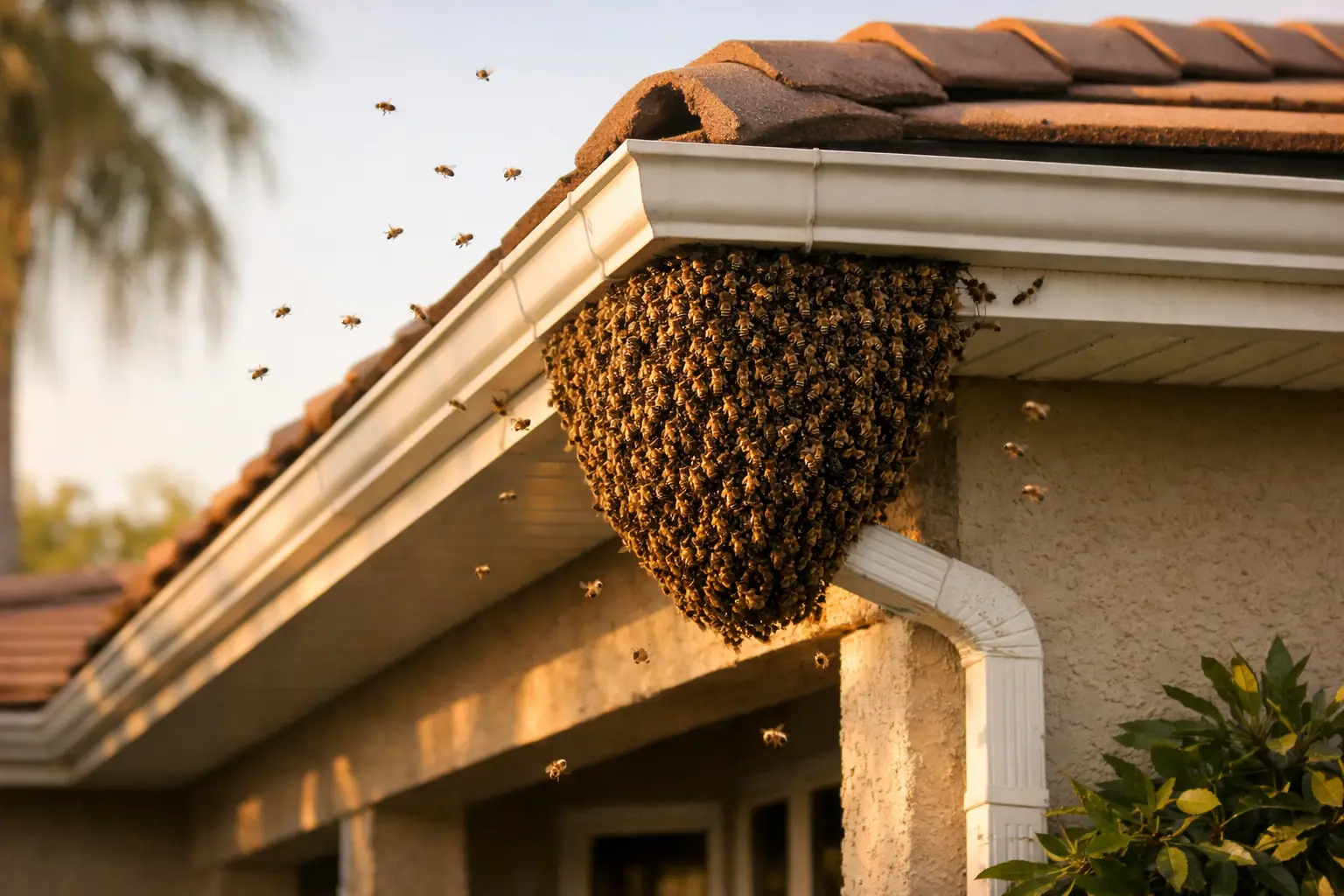

A cluster of bees under an eave can turn a normal afternoon into a panic fast. For most property owners, the first question is simple: how do I make this safe right now? The better question is bee removal vs extermination – because the method you choose affects stinging risk, structural damage, cleanup, and whether the problem actually stays solved.
In real-world situations, these are not equal options. One approach aims to preserve and relocate a living colony. The other aims to kill it. That difference sounds obvious, but the consequences are bigger than most people expect, especially when bees are inside a wall, soffit, roofline, or block structure.
Bee removal vs extermination: what is the actual difference?
Live bee removal means the colony is physically taken out, including the bees, comb, brood, and stored honey when possible. In structural cases, that usually requires opening the area where the colony is nesting, removing the hive material, and then sealing or repairing the access point. The goal is to stop the immediate risk and prevent the same cavity from becoming a problem again.
Extermination means applying chemicals or other lethal methods to kill the bees. In some pest control situations, that may sound faster or cheaper. But with honey bees, killing the insects often leaves the colony material behind. That means wax comb, honey, dead bees, and pheromones can remain inside the structure.
That leftover material is where many property problems begin. Honey can melt and leak through drywall. Dead bees can attract ants, roaches, rodents, and other scavengers. Old comb can pull in robber bees or even a new swarm looking for an established cavity.
Why extermination often fails in structural bee jobs
When homeowners hear the word extermination, they usually assume the problem disappears the same day. With bees inside a building, that is often not true.
A colony living in a wall is not just a cloud of flying insects. It is a biological structure. There may be pounds of comb attached between studs, inside soffits, under roof tiles, or in cinder block voids. Even if the adult bees die, the hive remains. In Florida heat, that can become a mess quickly.
This is why poison-only solutions are risky for bee infestations in homes and commercial buildings. They can turn an active bee problem into a hidden sanitation and repair problem. The stinging risk may drop for the moment, but the long-term damage can increase.
There is also a practical issue. If all entry points are not identified and the cavity is not properly addressed, surviving or returning bees may reoccupy the same space. Property owners then pay twice – once for the kill treatment and again for proper removal and repair.
When live bee removal makes more sense
Live removal is generally the better choice when a colony can be accessed and relocated safely. That includes many swarms, exposed colonies, and a large number of structural removals where the nest can be opened and cleaned out correctly.
For homeowners, the biggest advantage is that removal deals with the cause, not just the symptom. The bees are taken away, the comb is removed, and the cavity can be cleaned and closed. That lowers the chance of honey leaks, odors, pests, and repeat infestations.
For commercial property managers and HOAs, live removal also reduces liability in a more complete way. A poisoned colony hidden in a wall may still leave a building vulnerable to follow-up issues that become tenant complaints, repair invoices, or safety concerns. A proper removal is more disruptive on the front end, but it usually creates a cleaner finish.
There is also the ecological side. Honey bees are not disposable nuisances. They are managed livestock and critical pollinators. In many cases, they can be rescued and rehomed rather than destroyed. That matters to many property owners who want the danger handled without unnecessary killing.
Bee removal vs extermination for swarms and established colonies
Not every bee situation is the same, and the right response depends on what you are actually looking at.
A swarm is usually a temporary cluster of bees resting while scout bees search for a new home. Swarms often hang from branches, fences, mailboxes, or building edges. They can still sting, especially if disturbed, but they do not always require the same structural work as an established colony. Swarm removal is often more straightforward because there may be little or no comb yet.
An established colony is different. If bees have moved into a wall, roofline, shed, irrigation box, or similar cavity, they are building comb and storing brood and honey. At that point, simple spraying is much more likely to create hidden damage. Removal becomes a construction and sanitation job as much as a bee job.
This is one reason accurate identification matters. People often say they have a hive when they actually have a swarm, or assume they have a temporary cluster when bees have already entered a structure. A professional inspection changes the outcome because the treatment plan depends on the colony stage and location.
Cost is not just the invoice
Extermination sometimes appears cheaper at first glance. But first-price thinking can be expensive when the colony is inside a building.
A lower upfront charge can be followed by stained ceilings, dripping honey, dead insect odor, pest activity, and reopening the same area later to remove comb that should have been taken out from the start. By then, you are paying for both failed treatment and repair.
Live removal can cost more initially because it involves labor, access work, and cleanup. But it is often the more complete service. The fair comparison is not removal cost versus spray cost. It is removal cost versus spray cost plus cleanup, restoration, and repeat service.
That trade-off is especially important for property managers. The cheapest line item is not always the lowest liability option.
Safety depends on speed and method
People call in a panic because they are worried about children, pets, customers, tenants, or workers getting stung. That urgency is valid. But urgency should not push the decision toward the wrong method.
Aggressive bee behavior, high-traffic public areas, and colonies near entrances may require immediate containment and a fast on-site response. In some emergency cases, lethal control may be considered if there is an immediate public safety threat and live rescue is not feasible. That is the exception, not the standard.
Most of the time, the safest path is a trained bee removal specialist who can identify access points, assess colony behavior, use protective equipment, and remove the hive material properly. The question is not only how to stop the bees today. It is how to stop the bees without creating a second problem inside the structure.
What to ask before hiring anyone
If you are comparing bee removal vs extermination services, ask direct questions. Will they remove the comb and honey, or only kill the bees? Will they open the affected area if the colony is inside a wall or soffit? How will they prevent reentry? What happens if bees return to the same location?
Those questions matter more than marketing language. A real bee removal service should be able to explain the biology of the colony and the building implications in plain English. If the answer is basically just spray and leave, that is a warning sign for structural infestations.
It also helps to ask about follow-up protection. Beeswild, for example, offers a 3-month same-place-removal warranty, which speaks to the real concern many owners have: not just getting bees out, but keeping the same spot from becoming active again.
The better choice depends on the location, not just the bees
There are moments when people talk about bees as if every case should be handled the same way. That is rarely true. A visible swarm on a tree branch, a colony in a church wall, and aggressive bees at a public park are three different jobs with three different risk profiles.
Still, one principle holds up in most cases: if bees are established inside a structure, complete removal is usually the smarter path than extermination alone. It addresses the insects, the hive materials, and the building cavity together. That is what protects both the property and the people using it.
If you find bees on your property, resist the urge to spray first and ask questions later. The fastest reaction is not always the safest fix. A careful assessment now can spare you from damaged walls, recurring infestations, and a much larger repair bill later.

No responses yet