
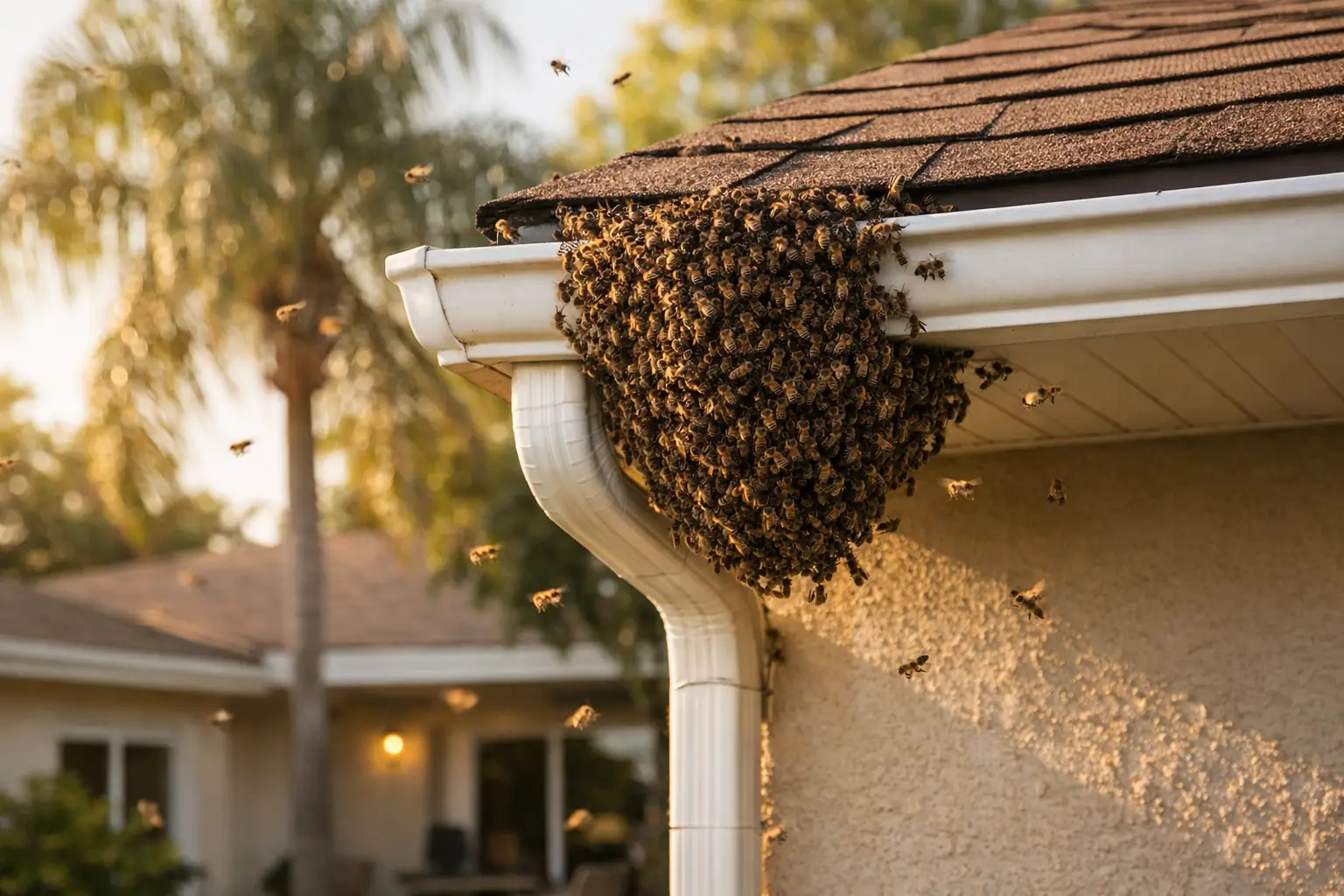

You usually find out you need a bee proofing product when the problem is already uncomfortable. There is a steady line of bees near the soffit, a few keep showing up by the pool cage, or a wall void suddenly sounds alive by late afternoon. That is why a good bee proofing product review needs to do more than praise materials. It needs to answer a harder question: will this actually keep bees out without creating a bigger problem inside the structure?
For homes and commercial buildings in warm climates, especially in places like Southwest Florida, bee proofing is not just about blocking an opening. It is about understanding how bees scout, what attracts them, and how building materials hold up under heat, rain, and UV exposure. Some products work beautifully for temporary exclusion. Some are excellent for permanent repairs. Others look useful on the shelf and fail fast in the field.
What a bee proofing product really has to do
A bee-proofing material has one job on paper and three jobs in practice. On paper, it closes access points. In practice, it needs to resist weather, survive building movement, and stay secure against persistent scouting bees looking for a cavity.
That distinction matters. Honey bees do not need a large opening to investigate a wall, roofline, meter box, shed, or block wall. If warm air, wax odor, old comb scent, or sheltered void space is present, scouts can keep returning to surprisingly small gaps. A product that seals today but shrinks, loosens, or cracks next month is not really bee proofing. It is a delay.
The best products also need to fit the structure. A brick weep hole, a fascia seam, and the top edge of a utility box do not call for the same solution. That is where many DIY attempts go sideways. People buy one foam, one caulk, or one screen material and try to use it everywhere.
Bee proofing product review: what works best
The strongest category overall is not spray, powder, or repellent. It is exclusion hardware paired with the right sealant. If the goal is prevention, physical denial of access beats odor-based products almost every time.
Stainless steel mesh and hardware cloth
For recurring entry points, stainless steel mesh is one of the most dependable options. It resists rust better than cheaper metal screening, holds its shape, and can be cut to fit vents, larger gaps, and irregular openings. In a humid coastal environment, that corrosion resistance matters.
The trade-off is appearance and installation skill. If mesh is attached poorly, it can leave edges that trap debris or create an unfinished look on visible parts of the home. It also needs proper fastening. Glue alone is rarely enough for long-term exterior use.
For hidden or utility-side applications, this is one of the better investments. For front-facing trim details, it may need a cleaner finish method.
Exterior polyurethane or high-grade construction sealants
A quality exterior sealant performs well on narrow cracks, joints, and small structural seams. The better products stay flexible and tolerate expansion and contraction much more effectively than bargain acrylic caulks. That flexibility is the difference between a repair that lasts through one storm season and one that opens again under heat.
Still, sealant is only as good as the surface prep and the gap size. Large voids should not be filled with caulk alone. If bees have already occupied the area, sealing over an active colony is a serious mistake. You can trap bees inside a wall, force them deeper into the structure, or leave behind honey and brood that attract ants, roaches, rodents, and future swarms.
As a prevention product after proper removal and cleanup, sealant earns high marks. As a quick fix over active bee traffic, it is a bad idea.
Expanding spray foam
This is probably the most misunderstood product in any bee proofing product review. Spray foam is popular because it is fast, easy to find, and visually satisfying. People see a gap disappear and assume the problem is solved.
In reality, foam is a mixed performer. It can help fill inaccessible cavities as part of a broader repair, but exposed foam often degrades in sunlight, becomes brittle, and can be chewed or broken down over time. More importantly, foam alone rarely provides the durable finished barrier needed on exterior openings.
The bigger concern is misuse. If bees are active in a wall or soffit, foaming shut the entrance can push the colony into another part of the building. It can also complicate professional removal later. Foam has a place, but usually behind a finished repair, not as the repair itself.
Copper mesh and gap fillers
Copper mesh can work well for small openings where a rigid screen is impractical. It is useful as a backing material before sealant is applied, especially around penetrations and odd-shaped gaps. It conforms better than stiff mesh and helps prevent sealant from sinking too deep into a void.
Its weakness is that it is not a standalone finish for most exterior bee entry points. Left exposed, it can loosen or look rough. Used correctly, though, it is an excellent support material rather than a complete solution.
Repellent sprays and ultrasonic devices
These products tend to promise more than they deliver. Repellent sprays may temporarily discourage activity on a surface, but they do not reliably stop scouts from investigating viable nesting cavities. Ultrasonic devices are even less convincing in real-world bee work. Bees are driven by shelter, colony behavior, pheromones, and environmental conditions – not by marketing claims on a plug-in gadget.
For people trying to prevent structural nesting, these are low-value purchases. They may give a sense of action, but they do not solve the underlying access issue.
What fails most often in the field
The most common failures are not always product failures. They are application failures. Low-grade caulk shrinks. Tape products peel. Vent screens are installed with gaps around the frame. Foam is left exposed to weather. A repair is made before the old comb and honey odor are fully addressed.
That last point deserves attention. Bees do not just find openings. They respond to favorable cavities, and old colony scent can make a site attractive again. If a previous hive was poisoned, abandoned, or partially removed, simply sealing the visible entrance may not stop reinfestation pressure around the same area.
For property managers, this is where repeat callbacks happen. The building looked closed, but the repair was cosmetic instead of structural.
How to choose the right product for your building
A smart choice starts with the type of opening. For long linear gaps around trim or fascia, flexible exterior sealant over sound backing is often the right answer. For vents and larger holes, metal screening is stronger. For odd gaps around utility penetrations, a combination of mesh and sealant usually outperforms either material alone.
Then consider sun, salt air, and water exposure. A product that performs well in a mild climate may break down fast on a Florida exterior wall. UV resistance, corrosion resistance, and flexibility matter more than low upfront cost.
Also ask whether the site is truly empty. If there is active bee traffic, audible buzzing inside a wall, staining, or a warm entry point with regular movement, this is no longer a simple proofing job. It is a removal and repair job. That distinction protects both the building and the bees.
The biggest mistake: proofing before removal
This is where fear leads people into expensive damage. If a colony is already established, sealing it in does not remove it. It changes its behavior. Bees may search for another exit into living space, or they may die inside and leave honeycomb behind. In hot weather, that can become a serious structural and sanitation problem.
Humane live removal followed by cleanup and permanent exclusion is the cleaner long-term path. It addresses the livestock, the comb, and the entry conditions together. That is especially important for schools, HOAs, restaurants, and homes with children or pets nearby.
A professional team that understands both bee biology and building conditions will usually pair product selection with inspection. That means looking beyond the obvious gap and checking for secondary access points, scent residue, and construction details that invite future swarms. In that setting, bee proofing is not a tube of caulk. It is part of a system.
Our verdict on bee proofing products
If you want the short version, physical exclusion products deserve the highest confidence. Stainless mesh, proper backing materials, and durable exterior sealants are the category winners because they solve access, not just symptoms. Spray foam has limited value when used carefully and finished correctly, but it is overused and often misapplied. Repellents and ultrasonic products are the weakest performers for structural prevention.
For a homeowner, the right product depends on whether you are preventing a problem or reacting to one. For a property manager, it depends on durability, appearance, and liability. In both cases, the best result comes from matching the material to the opening and never sealing over active bees.
If there is one useful rule to keep in mind, it is this: when bees are scouting, exclusion works; when bees are established, removal comes first. That one decision will save more money, stress, and structural damage than any product label ever will.

No responses yet