
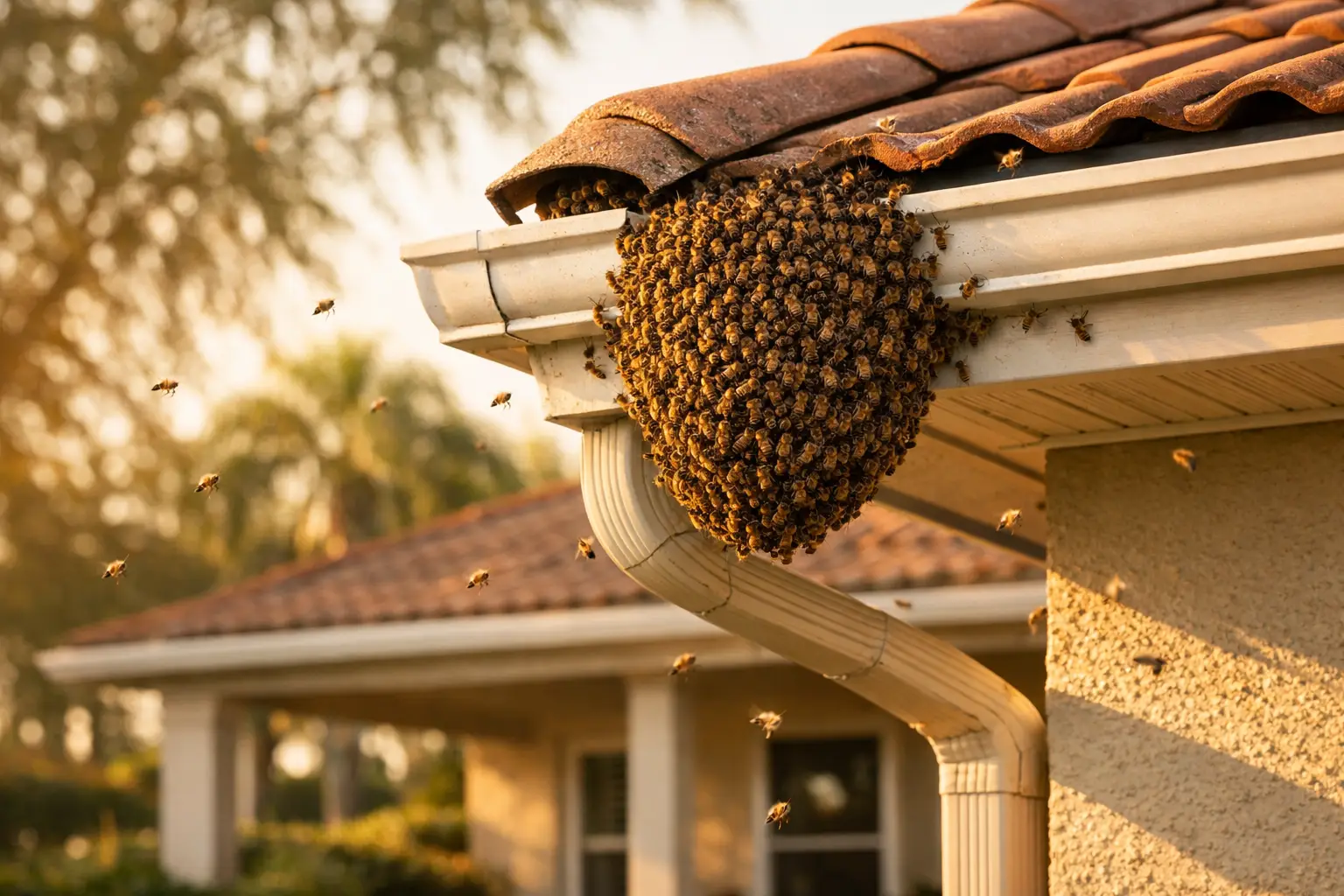

Finding a cluster of bees in or around your mailbox changes a normal day fast. One minute you are grabbing bills, the next you are backing away, wondering if the mailbox is safe to use at all. Bees in mailbox removal needs a careful approach because the box is small, enclosed, and often sits right beside a sidewalk or street where kids, pets, carriers, and neighbors pass by.
A mailbox can attract bees for two very different reasons. Sometimes it is a temporary swarm. That usually looks like a hanging mass of bees that arrived suddenly and may leave within a day or two if left undisturbed. Other times, the bees have moved inside the mailbox cavity and started building comb. Once wax, brood, pollen, and honey are inside, the issue is no longer just where the bees are standing. It becomes a structural removal on a very small scale.
Why bees choose a mailbox
From a bee’s point of view, a mailbox makes sense. It is sheltered from rain, shaded at least part of the day, and enclosed enough to feel like a cavity. If the flag opening, door gaps, or mounting points give them a route in, scout bees may decide it is good real estate.
In Southwest Florida and other warm regions, this can happen quickly. Swarming season increases the odds, but established colonies can also move into man-made voids whenever conditions are right. A mailbox post, decorative brick surround, or multi-unit neighborhood mail kiosk can all offer attractive spaces.
That is why bees in mailbox removal is not always a simple shake-and-go job. The right method depends on whether the colony is resting temporarily or has already invested in comb inside the structure.
What not to do first
The biggest mistake is treating bees like a general nuisance pest. Sprays, foams, gasoline, fire, and hose water all create bigger problems. They can agitate the colony, increase sting risk, and leave dead bees, honey, and wax behind.
That leftover material matters. Even if poison kills the visible bees, the comb remains. In a mailbox, old wax and honey can melt, leak, attract ants, roaches, and rodents, and invite a new swarm to move back into the same cavity. Killing bees rarely solves the full problem.
It is also wise not to slam the door, tape the box shut with bees inside, or try a late-night DIY removal with household gloves. A mailbox puts your hands close to the colony entrance. Small space means little margin for error.
How professional bees in mailbox removal works
A proper live removal starts with identifying what is actually there. If it is a swarm resting on the outside of the box, removal may be fairly direct. If the bees are established inside, the box usually needs to be opened, detached, or partially dismantled so the colony can be fully removed.
The goal is not just taking away adult bees. It is removing the queen, brood comb, honey comb, and scent trail that tells future bees this is a good place to live. That is the difference between a temporary fix and a complete one.
Step 1: Assess the colony and the risk
A trained bee removal specialist looks at bee traffic, entry points, activity level, and whether comb is likely inside the mailbox or supporting structure. They also consider who uses the area and how urgent the hazard is. A roadside mailbox at a busy family home needs different site control than a decorative box at the end of a private drive.
If the bees are defensive, if there are pets or children nearby, or if access is tight, the removal plan needs to account for safety first.
Step 2: Remove the bees and the comb
For an exposed swarm, bees may be collected directly into a transport container. For a colony inside a mailbox, the specialist often has to remove panels or detach the box to access the comb. The bees are then carefully gathered, and the comb is taken out by hand.
This step is where experience matters. Crushing comb, leaving brood behind, or missing part of the colony can lead to reoccupation, odor, melting honey, or scavenger pests.
Step 3: Clean and reset the site
After the bees are out, the cavity should be cleaned of wax and residue as much as the structure allows. Then the entrance points need to be corrected. If the mailbox still has inviting gaps, another swarm may inspect it later.
A quality provider should explain whether your box can be reused, whether it needs replacement, and how to discourage repeat nesting. Beeswild, for example, backs same-place removals with a 3-month warranty, which tells you they are thinking beyond the moment of extraction.
When a mailbox problem is more serious than it looks
A standard rural mailbox is one thing. A masonry mailbox column or a neighborhood cluster box is another. Bees may be nesting not just in the box itself, but in the hollow post, decorative stone cavity, wall chase, or adjacent utility space.
That is why a quick visual check from the outside can be misleading. If you see steady traffic in and out of a crack near the mailbox, the main colony may be deeper than expected. In those cases, bees in mailbox removal becomes part of a broader structural removal.
There is also the behavior question. Not every colony acts the same. Some bees remain relatively calm during light foot traffic. Others react strongly to vibration, lawn equipment, or someone reaching for the mailbox door. In Florida, where aggressive genetics can be a public safety concern, that distinction matters.
Is it safe to wait?
It depends on what you are seeing.
If a swarm has just landed on the outside of the mailbox and is not entering the cavity, there is a chance it will move on. But that wait-and-see approach only makes sense if the area can be avoided safely and the bees are not creating a hazard for residents, delivery workers, or the public.
If bees are actively entering and exiting the mailbox, carrying pollen, or defending the area, assume they are establishing a colony. At that point, waiting usually makes the job bigger. More time means more comb, more brood, more honey, and a more rooted colony.
For HOA properties, commercial sites, and shared mail areas, waiting is usually the wrong call. Liability changes the equation. The safer move is prompt inspection and professional live removal.
Prevention after mailbox bee removal
Once the bees are relocated, prevention is mostly about eliminating the invitation. A mailbox should not have easy internal void access. Repair loose seams, replace damaged boxes, and close unnecessary gaps around mounting hardware or decorative surrounds.
If the mailbox structure is old or oversized, replacement may be cheaper than repeated removals. That is especially true when wax and honey have already soaked into porous materials.
It also helps to keep nearby attractants under control. Old comb scent is the main issue, but cluttered hollow features around the mailbox area can give future swarms more options. Fence posts, irrigation boxes, fake rocks, and decorative columns sometimes become the next stop.
What homeowners and property managers should expect
A good bee removal company should tell you plainly whether the bees can be saved, whether the mailbox must be opened or replaced, and what follow-up repairs are needed. They should also be honest about uncertainty. Until the structure is opened, the full size of the colony is sometimes hard to confirm.
You should expect a plan that protects people first and avoids chemical shortcuts that create lingering mess. Humane relocation is not just better for the bees. In many cases, it is the cleaner long-term outcome for the property.
If you are in Southwest Florida, fast response matters because heat accelerates what happens to any comb left behind. Warm weather can turn a small mailbox colony into a sticky cleanup issue faster than many people expect.
A mailbox full of bees feels alarming because it interrupts a routine space you use without thinking. The good news is that with the right removal, the bees can be relocated, the mailbox can be made safe again, and the site can be corrected so the problem is less likely to repeat. The best first move is simple: step back, keep others clear, and let a trained live bee removal specialist handle the rest.

No responses yet