
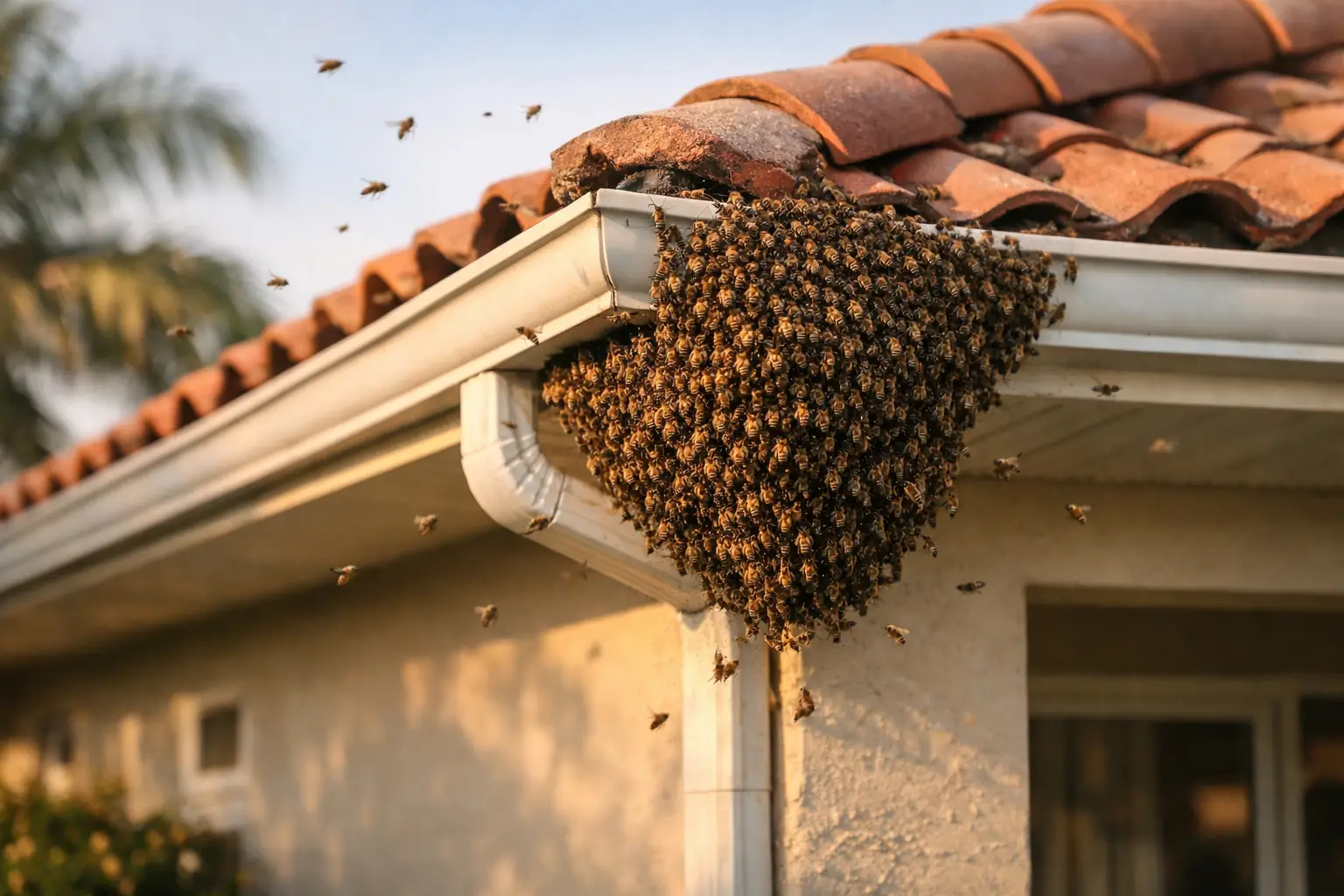

A colony that was calm last spring can feel very different after a wet summer, a nectar gap, or a disturbance inside a wall. That is why florida africanized bee activity trends matter to homeowners, property managers, and public agencies in a very practical way. This is not just a wildlife topic. It affects sting risk, removal urgency, property damage, and how safely a colony can be relocated.
In Florida, the conversation around Africanized honey bees often gets flattened into one idea: aggressive bees are spreading everywhere. The real picture is more specific. Africanized genetics can show up in managed and feral populations, but behavior depends on season, food availability, colony condition, queen lineage, and how the bees are housed. A swarm hanging on a branch may be temporary and relatively easy to manage. A stressed colony established in a soffit, block wall, water meter box, or roofline is a different situation.
What Florida Africanized Bee Activity Trends Actually Mean
When people hear the term Africanized bee, they usually picture a distinct type of bee that can be identified on sight. In the field, that is not how it works. Africanized and European honey bees look extremely similar. What changes is behavioral tendency, especially defensiveness, swarm frequency, and how quickly the colony escalates when disturbed.
So when we talk about florida africanized bee activity trends, we are usually talking about patterns in behavior and encounters, not just map expansion. Those patterns include where colonies are being found, how often removals involve highly defensive bees, what times of year swarm calls increase, and which environmental conditions seem to trigger more problem incidents.
In South Florida and Southwest Florida, warmer conditions allow bee activity for much of the year. That means there is less of a true offseason than in colder states. Colonies can swarm, abscond, split, and re-establish over a long calendar window. For property owners, that creates the impression that bee issues appear suddenly. In reality, many structural colonies have been building quietly for weeks or months before anyone notices traffic.
Why Activity Changes From Season to Season
Seasonality matters, but not in a simple way. Spring typically brings strong brood growth and more swarming because colonies are expanding. More flowers and warmer weather support colony buildup, so reports of visible swarms often rise. That does not always mean more dangerous bees. It often means more bees are on the move.
Summer can become more complicated. In some parts of Florida, high heat, heavy rain, and interruptions in forage can stress colonies. A stressed colony may become more defensive, especially if resources are tight or the hive is under pressure from pests, predators, or repeated disturbance. If a colony is established inside a structure where sound, vibration, lawn equipment, or foot traffic are common, defensive responses can become a public safety issue fast.
Fall can also be active. Colonies may still relocate, and some sites that seemed quiet through part of the year suddenly become problem locations as bees seek protected cavities. Winter in Florida is milder than in most states, so bee activity does not stop. It may slow, but colonies remain viable and can still pose risk when disturbed.
Where Problem Colonies Are Showing Up
One of the clearest trends is not just bee presence, but bee placement. Africanized or highly defensive colonies often become major problems when they occupy man-made voids. Wall cavities, eaves, sheds, irrigation boxes, old equipment, utility enclosures, and masonry gaps give bees shelter and make colonies harder to detect until they are well established.
This matters because the structure changes the hazard. Bees in an exposed swarm cluster are usually easier to assess. Bees deep inside a wall are harder to inspect, harder to remove completely, and more likely to leave behind comb, honey, brood, and odor if the job is done improperly. Poison-only approaches may kill bees at the entrance while leaving the interior nest behind. That can lead to melting honey, staining, pests, and future re-infestation.
For HOAs, shopping centers, schools, and municipalities, the trend to watch is repeated colonization of the same type of cavities. If one mailbox kiosk, monument sign, or roof edge has hosted bees before, it is likely to attract them again unless exclusion work is done correctly.
Aggression Is Real, but It Depends
The most misunderstood part of this topic is aggression. Africanized honey bees are known for heightened defensiveness, but not every colony with Africanized genetics behaves the same way every day. A calm-looking colony can become highly defensive under the wrong conditions. A defensive colony may seem manageable from a distance and then erupt when vibrations, noise, or opening attempts occur.
That is why casual testing is a bad idea. Spraying water, poking an entry point, sealing holes while bees are active, or using store-bought pesticides can push a borderline situation into a dangerous one. For families with kids, pets, elderly relatives, or anyone with sting sensitivity, waiting to see what happens is not a sound plan.
There is also a trade-off that honest bee professionals should acknowledge. Humane relocation is the goal whenever possible, but not every colony presents the same safety margin. The more defensive the colony and the more difficult the structural access, the more planning, containment, and experience the removal requires. Good decisions start with a proper site assessment, not a guess.
Florida Africanized Bee Activity Trends and Public Safety
Public safety trends usually show up before the headlines do. More calls from parks, utility areas, sidewalks, school properties, and multifamily housing often indicate a broader increase in colony movement or pressure in the local environment. Municipal clients and property managers should pay attention to repeated reports in shared-use spaces because those locations combine human traffic with hidden cavities.
A key reality in Florida is that many sting incidents happen after accidental disturbance. Landscaping crews hit a wall void with a mower. A resident opens an irrigation box. A contractor works near a soffit entrance without realizing there is a colony behind it. Africanized behavior increases the consequences of those routine disturbances.
This is where response speed matters. A suspicious bee issue near public foot traffic should be treated as a site safety concern first and a wildlife question second. Restricting access, avoiding vibration, and bringing in a qualified live removal specialist can prevent a manageable situation from becoming an emergency.
What Homeowners and Property Managers Should Watch For
The trend signals are often small at first. A few bees entering the same gap every minute. Increased activity around a roofline in mid-morning. Bees clustering near a water source or utility box. A faint humming in a wall. Dark staining near an entry point can also suggest a longer-term colony.
The mistake is assuming that a small entrance means a small problem. Honey bee colonies use narrow access points all the time. Once they are inside, the nest can expand significantly out of view. If you are seeing regular flight traffic, especially over multiple days, there is enough activity to justify professional evaluation.
For commercial sites and HOAs, staff should know the difference between a passing swarm and a structural colony. A swarm cluster on a branch or fence may move on its own, but it still needs to be managed carefully if it is near people. Repeated bee traffic into a fixed cavity is more likely to mean an established colony.
Why Removal Data Matters More Than Rumors
A lot of fear around Africanized bees is fueled by secondhand stories. Useful trend analysis comes from actual field observations: defensive response during removals, colony location, season, re-colonization patterns, and whether the site had prior poison treatment or structural damage. Those details help explain what is happening locally.
For a company working in Southwest Florida, those patterns become very practical. You start to see which property features attract repeat nesting, when swarm calls surge, and where public risk is highest. You also see that proper removal is not just about taking bees away. It includes removing comb, cleaning the cavity when needed, and addressing the access point so the same space does not keep calling in new colonies.
That is one reason humane bee rescue companies like Beeswild approach removals as both a safety service and a livestock preservation issue. The best outcome is not just getting bees out of a building. It is protecting people while giving viable colonies a chance to continue doing useful work in a managed setting.
The Smart Response as Trends Continue
Florida will likely continue to experience periods of elevated bee movement, defensive colony encounters, and repeat nesting in developed areas. That does not mean every bee sighting is an emergency, and it does not mean every colony should be feared. It does mean property owners should treat bee activity with more respect than guesswork.
If the colony is exposed, accessible, and far from people, the situation may allow for calmer scheduling. If bees are entering a structure, reacting strongly to normal activity, or occupying a high-traffic area, urgency goes up. The best response is to stop disturbing the site and have it assessed by someone who understands both bee behavior and structural removal.
A helpful rule is simple: when bees choose a building, time rarely improves the problem. Early action usually means safer removal, less structural mess, and a better chance to protect both people and the colony.

No responses yet