
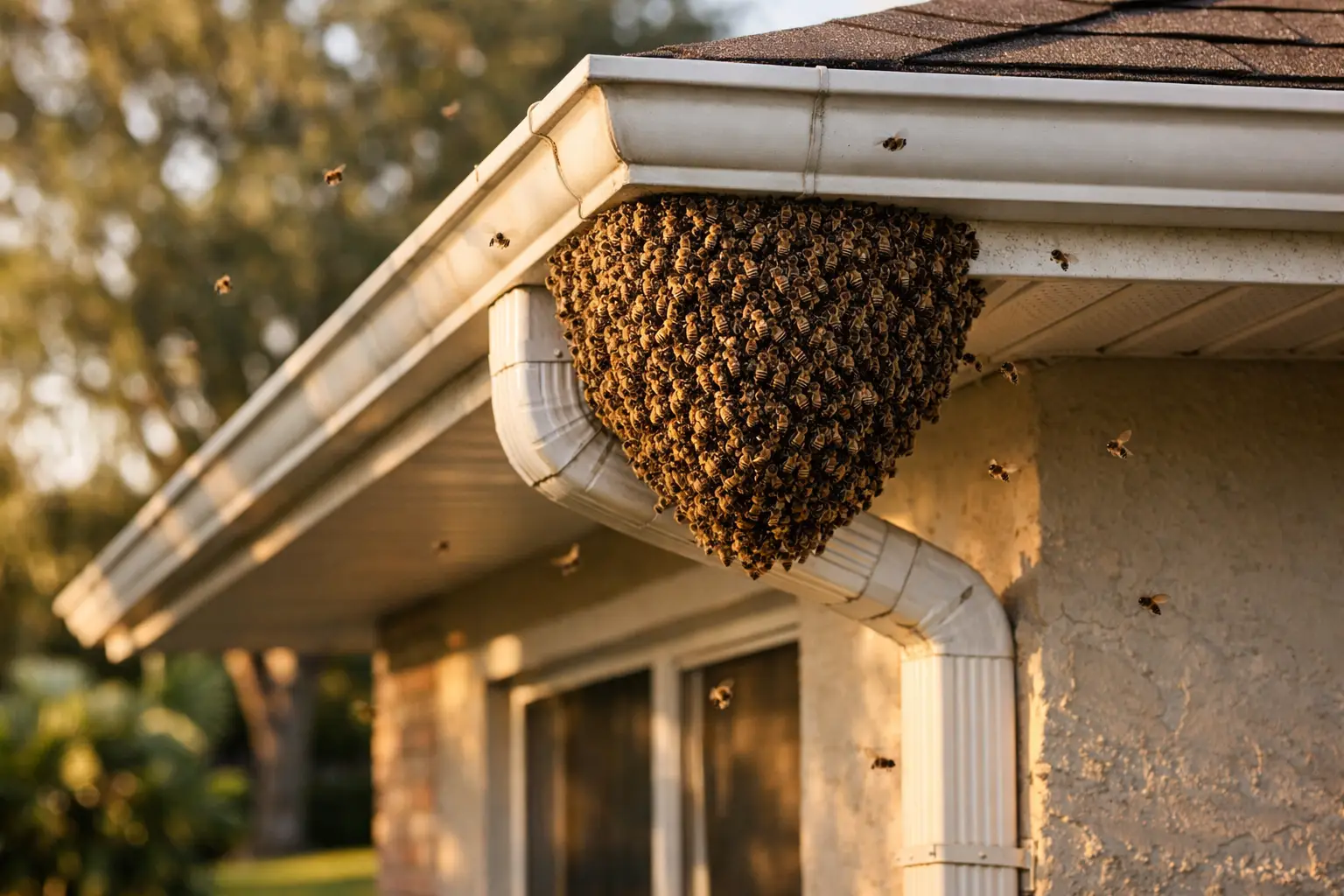

When bees come out of a wall, soffit, roofline, or meter box, the job is not finished when the insects are gone. If you do not clean bee residue after removal, leftover wax, honey, propolis, brood residue, and scent trails can keep causing problems inside the structure. That is the part many property owners do not see until the smell starts, the stain spreads, or a new swarm moves in.
For homeowners and property managers, this cleanup step matters just as much as the live removal itself. Bee colonies leave behind more than comb. They leave moisture, sugars, pheromones, and organic material that can soak into wood, drywall, insulation, and masonry. In Southwest Florida heat, that residue can turn into a bigger repair issue faster than most people expect.
Why bee residue must be cleaned after removal
A former hive site is attractive to other bees for a reason. Scout bees are designed to locate suitable cavity spaces, and old colony scent tells them a location has worked before. If comb and odor remain in place, the same void can be chosen again, even after a successful removal.
There is also the structural side of the problem. Honey absorbs moisture and can seep into surrounding materials. Wax softens under heat. Organic residue can draw ants, roaches, flies, beetles, and even rodents. If brood was present, there may be additional decomposition odor for a period after the colony is removed. That is why a removal that looks complete from the outside can still create trouble behind the wall.
The exact cleanup needed depends on where the colony was built and how long it was there. A small swarm that briefly attached to a tree branch is very different from a large established colony inside a building cavity. The second situation usually requires real sanitation work, not just surface wiping.
What counts as bee residue after removal?
When people hear residue, they often picture a little wax. In reality, a structural hive can leave several kinds of material behind.
Honey is the most obvious one. It can drip, ferment, stain finishes, and soak insulation or drywall. Beeswax is another major issue because it clings to framing and cavity surfaces. Propolis, which bees use as a glue and sealant, is sticky, resinous, and harder to remove than honey. There may also be dead bees, brood remnants, pollen stores, and scent-marked surfaces that continue to smell like a suitable hive site.
Each material behaves differently. Honey dissolves with the right cleaning approach but can spread if handled carelessly. Wax often has to be physically scraped off. Propolis may require more labor because it bonds tightly to porous surfaces. That is why cleanup is usually a combination of removal, washing, and sanitation, not one quick spray-and-go fix.
How to clean bee residue after removal the right way
The first rule is simple: remove as much material as possible before trying to wash the area. Physical removal comes first. Remaining comb, wax sheets, and contaminated insulation need to be taken out completely. If cleanup starts with liquid cleaners before solids are removed, honey and residue can smear deeper into the structure.
Once the bulk material is gone, surfaces should be scraped and wiped to remove wax smears, propolis, and visible organic matter. The goal is not cosmetic perfection inside the cavity. The goal is to eliminate food sources, odor sources, and scent signals that can attract pests or future swarms.
After that, the cavity should be cleaned with products that are appropriate for the surface and safe for the area being treated. This is where judgment matters. Wood framing, stucco-backed voids, masonry, soffits, and utility enclosures all respond differently. Overwetting can create its own damage, especially around drywall ceilings, insulation, and electrical penetrations.
A proper cleanup also includes drying. This step gets overlooked often. Any washed area needs time and airflow to dry before the space is sealed up. If moisture remains trapped, mold risk goes up, particularly in humid climates.
Finally, the space has to be repaired and sealed so bees cannot re-enter. Cleaning without exclusion is incomplete. Exclusion without cleaning is also incomplete. You need both.
Surfaces that need extra attention
Walls and drywall cavities
Wall colonies are some of the messiest because honey can travel downward and spread beyond the visible hive area. If drywall is stained, softened, or saturated, replacement is often more practical than trying to save it. The same goes for insulation that has absorbed honey or odor.
Framing behind the drywall should be scraped and cleaned thoroughly. Even if the cavity looks empty, residual scent on studs and sheathing can remain strong enough to interest scout bees.
Soffits and rooflines
These spaces are common colony locations because they offer heat, shelter, and easy access points. Cleanup here often involves awkward angles and porous materials. Wax and honey can hide in seams and corners, and summer heat can reactivate odors if residue is left behind.
In roof-adjacent areas, there is also a trade-off between aggressive cleaning and avoiding water intrusion. The job has to be done carefully so sanitation does not create a second problem.
Masonry, block, and utility boxes
Concrete block and utility enclosures can hold odor longer than people expect, especially when residues settle into cracks or rough surfaces. These locations may need repeated wiping and targeted cleaning rather than one pass. They also need careful sealing afterward, because even a small opening can invite another colony.
Common mistakes when people try to clean bee residue themselves
The biggest mistake is leaving comb behind because it seems harmless once the bees are gone. Comb is not harmless. It holds scent, absorbs heat, and often contains traces of honey, pollen, or brood material.
Another mistake is painting or patching over residue without actually removing it. This can trap odor in the wall while doing nothing to stop insects or future bees from being attracted. The stain may also bleed back through over time.
People also underestimate how far honey can spread. What looks like a small hive opening outside can connect to a much larger interior cavity. Cleaning only the visible entrance rarely solves the issue.
Then there is the poison problem. If a colony was killed instead of live removed, cleanup usually becomes harder, not easier. Dead bees, abandoned comb, melting honey, and trapped organic matter can create stronger odor and higher pest pressure. Humane live removal followed by proper residue cleanup is usually the cleaner long-term path for both the property and the bees.
When cleanup is a structural issue, not a housekeeping task
If the hive was established inside a building cavity for any length of time, residue cleanup should be treated as part of structural remediation. This is especially true when there is honey saturation, visible staining, softened materials, insect activity, or repeated bee return.
For HOAs, retail sites, restaurants, and public-facing buildings, that matters even more. A poorly cleaned hive site can become a liability issue if bees reoccupy the area or if leaks and odors affect tenants or guests. It is not just about making the spot look clean. It is about restoring the cavity so it no longer functions like a hive site.
That is one reason professional live removal companies that understand both bee behavior and building cavities have an advantage here. The cleanup plan is based on what bees left behind, how the structure is built, and how to keep the same location from turning into another colony site. In areas like Cape Coral and the wider Southwest Florida region, heat and humidity make that precision even more important.
How to know the cleanup was done well
A properly cleaned hive site should have no remaining comb, no obvious sticky residue, no active dripping, and no open access for bees to re-enter. There should also be a plan for replacing damaged materials and sealing entry points.
Some odor may linger briefly in heavy hive sites, especially if the colony was large or the space is warm, but it should steadily improve rather than intensify. If you keep seeing scout bees circling the same opening, notice fresh staining, or smell warm honey days after the work, the site may need more attention.
Good cleanup is not glamorous, but it is what separates a real solution from a temporary interruption. At Beeswild, that is why removal is approached as more than getting bees out. The residue they leave behind has to be addressed with the same care as the colony itself.
If you are dealing with a former hive site, think beyond the moment the bees are gone. The cleanest outcome comes from removing the scent, the food source, and the access point together, so the structure can stop advertising itself as a good place for bees to come back.

No responses yet