

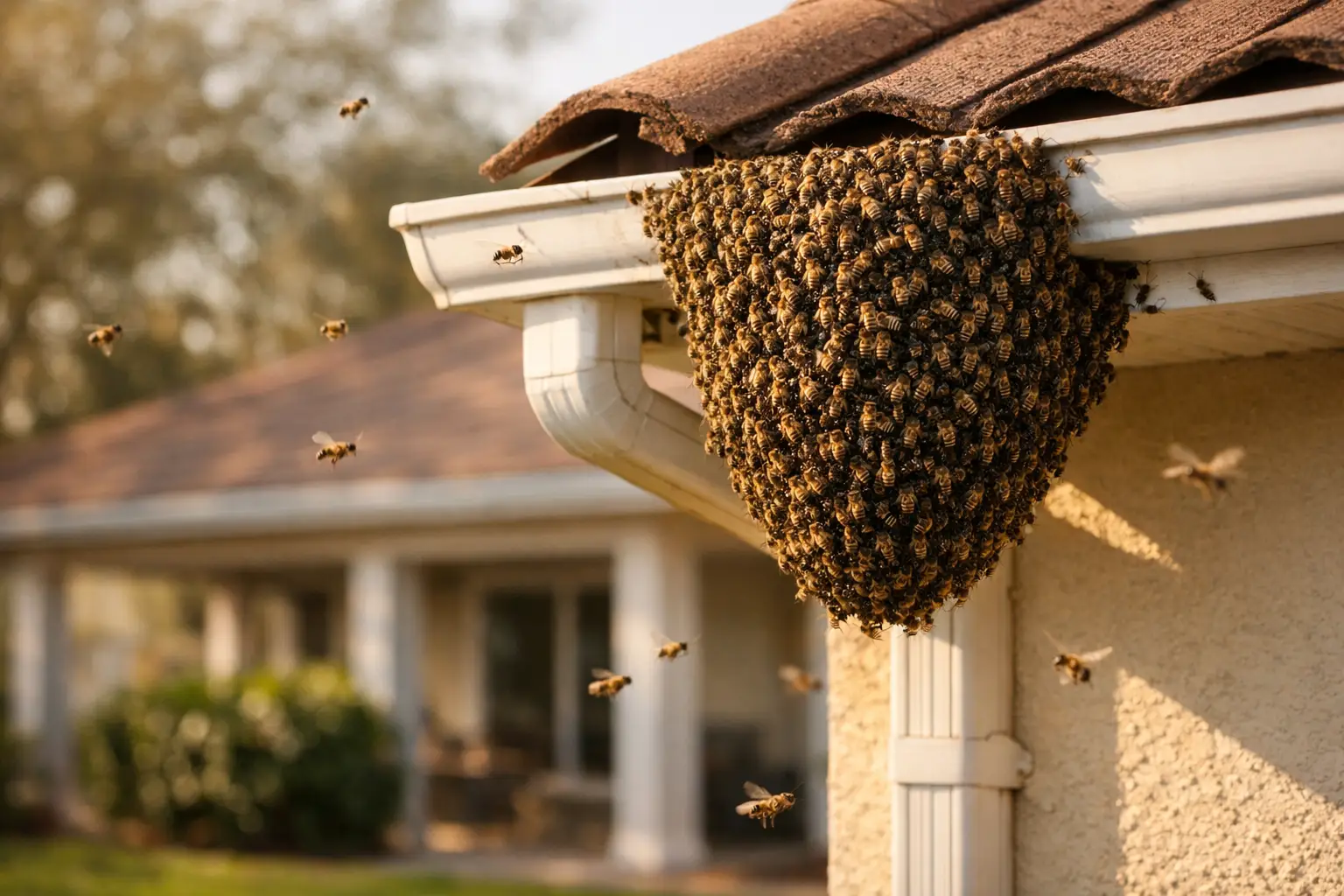

A softball-sized cluster of bees hanging from a tree branch can look alarming, especially when it appears overnight near your front door, mailbox, or pool cage. If you are wondering how to handle bee swarm safely, the first thing to know is that a swarm is often less interested in attacking you than in finding a new home. That does not make it harmless. It means your best move is calm distance, not quick action.
In Southwest Florida, swarms are common during active bee seasons, and people often make the same mistake – they treat a swarm like a wasp nest or try to knock it down before calling for help. That can turn a manageable situation into a dangerous one. A bee swarm needs to be assessed carefully because what looks like a temporary resting cluster can become a structural colony if it moves into a wall, soffit, shed, or roofline.
What a bee swarm actually is
A swarm is a large group of honey bees traveling with a queen from one location to another. They usually stop for a few hours or a few days while scout bees search for a permanent nesting spot. During this stage, the bees often gather in a visible clump on a branch, fence, vehicle, or side of a building.
That matters because a swarm is different from an established hive. A swarm is in transition. A hive is settled, storing brood, honey, and wax inside a structure or cavity. If you catch a swarm early, live relocation is often simpler and cleaner. If you wait too long and the bees move into the structure, removal can become more invasive and more expensive because the comb, honey, and bee access points all have to be addressed.
How to handle bee swarm safely in the first few minutes
Your first job is scene control. Keep people and pets away from the area. A good starting distance is at least 15 to 20 feet, and farther if the bees seem active or the swarm is near a walkway. Children usually want to look closely. Dogs often bark or lunge. Both can trigger defensive behavior.
Next, lower the noise and movement around the swarm. Do not mow nearby. Do not use leaf blowers. Do not spray the area with a hose. Vibrations and sudden motion can agitate bees that would otherwise stay clustered and calm.
Then take a quick visual inventory from a safe distance. Note where the swarm is located, about how large it is, and whether bees are entering a crack, vent, or gap in the building. That last detail is important. If bees are moving in and out of the same opening, you may be looking at an established colony rather than a true swarm.
If anyone has been stung multiple times, shows facial swelling, has trouble breathing, feels faint, or has a known allergy, treat it as a medical emergency. Bee safety starts with human safety.
What not to do
The most common bad advice is also the most dangerous. Do not spray the swarm with store-bought pesticide, soapy water, gasoline, bleach, or any homemade mixture. Poison rarely solves the full problem when bees are in or near a structure. It can leave dead bees, melting comb, and honey behind, which attracts ants, roaches, rodents, and future infestations.
Do not throw objects at the swarm or try to shake it loose. Do not cover it with a trash bag. Do not light smoke bombs or fire near it. And do not assume that because honey bees are beneficial, they can simply be ignored. Sometimes they move on. Sometimes they move into your wall by sundown.
It also depends on the temperament of the bees. Some swarms are relatively docile. Others are not. In Florida, that distinction matters even more because defensive behavior can escalate quickly. You cannot identify risk level just by glancing at the cluster.
When a swarm becomes a property problem
Homeowners often call only when the visible cluster disappears. Unfortunately, that can be the moment the real problem starts. If the swarm enters an attic vent, block wall, roof void, or soffit, the colony may begin building comb immediately.
Once bees establish inside a structure, removal is no longer just about taking insects away. It becomes a building issue. Comb holds honey, pollen, brood, and scent. If that material is not removed properly, it can ferment, leak through drywall, stain ceilings, and attract pests. Even after bees are gone, the location can draw new swarms back if odor and access points remain.
This is why humane live removal is not just a feel-good option. It is often the cleaner and more complete property solution.
When to call a professional
If the swarm is above head height, attached to a structure, near an entry door, around children or pets, or showing defensive behavior, call a professional immediately. The same applies if bees are entering a crack or cavity. Waiting can narrow your options.
A trained live bee removal specialist will evaluate whether the cluster is a temporary swarm, an established colony, or a more aggressive scenario. They also have the protective gear, collection equipment, and relocation plan needed to move bees without turning your yard into a hazard zone.
For commercial properties and HOAs, the threshold should be even lower. Public access changes the liability picture. A swarm near a storefront, clubhouse, school route, or common mailbox area is not something to monitor casually.
Safe steps while you wait for removal
While waiting for a professional, keep the area quiet and controlled. If possible, close nearby windows and doors without slamming them. Move vehicles only if they are right beside the swarm and only if you can do so without disturbing it. If the bees are on outdoor furniture or equipment, leave it alone.
You can post a temporary warning for neighbors or tenants if the location is shared. Keep the message simple and factual. Something like Bee swarm present – please avoid this area until removal is completed works well.
If you need to report the situation, a few photos taken from a safe distance can help. Avoid walking underneath or directly in front of the cluster to get a better angle. The best photo is the one you can take without changing the bees’ behavior.
If you are in the Cape Coral or Southwest Florida area, fast response matters because warm weather can speed up colony establishment. A same-day call is often better than seeing what happens tomorrow.
Why DIY bee removal usually goes wrong
People try DIY for three reasons: they want to save money, they want to save the bees, or they think the swarm will be easy to catch. All three are understandable. Most DIY attempts fail because they underestimate what happens after the visible bees are gone.
Even experienced beekeepers approach swarms differently depending on height, access, queen location, surrounding foot traffic, and whether the bees are actually swarming or nesting. A swarm on a low branch in an open field is one thing. A swarm wrapped around a meter box, tucked into a soffit corner, or hanging over a pool gate is something else.
There is also a legal and practical issue with relocation. Catching bees is only one part of the job. They need to be transported, stabilized, and placed in a suitable bee yard or managed environment. If that process is sloppy, the bees may abscond, die, or simply create a new problem nearby.
A quick word about humane removal
Bees are valuable livestock, pollinators, and part of a working agricultural system. Treating every bee situation with chemicals ignores that value and often creates secondary damage. Humane removal means protecting people first while preserving the colony whenever practical.
That does not mean every situation is simple or low-risk. It means the goal is a complete solution: remove the bees, address the comb if needed, reduce the chance of reinfestation, and relocate healthy colonies to managed spaces where they can continue doing what bees do best.
Beeswild built its work around that idea – not just getting bees out, but getting them somewhere safe.
The smartest approach is usually the calmest one
If you remember only one thing about how to handle bee swarm safely, make it this: distance buys you options. The less you provoke the swarm, the easier it is to assess, remove, and relocate without injury or property damage.
A bee swarm is not a weekend project, and it is not a reason to panic. Give it space, keep others away, and get qualified help before a temporary cluster turns into a structural colony. That one decision protects your family, your building, and a colony that still has work to do.

No responses yet