
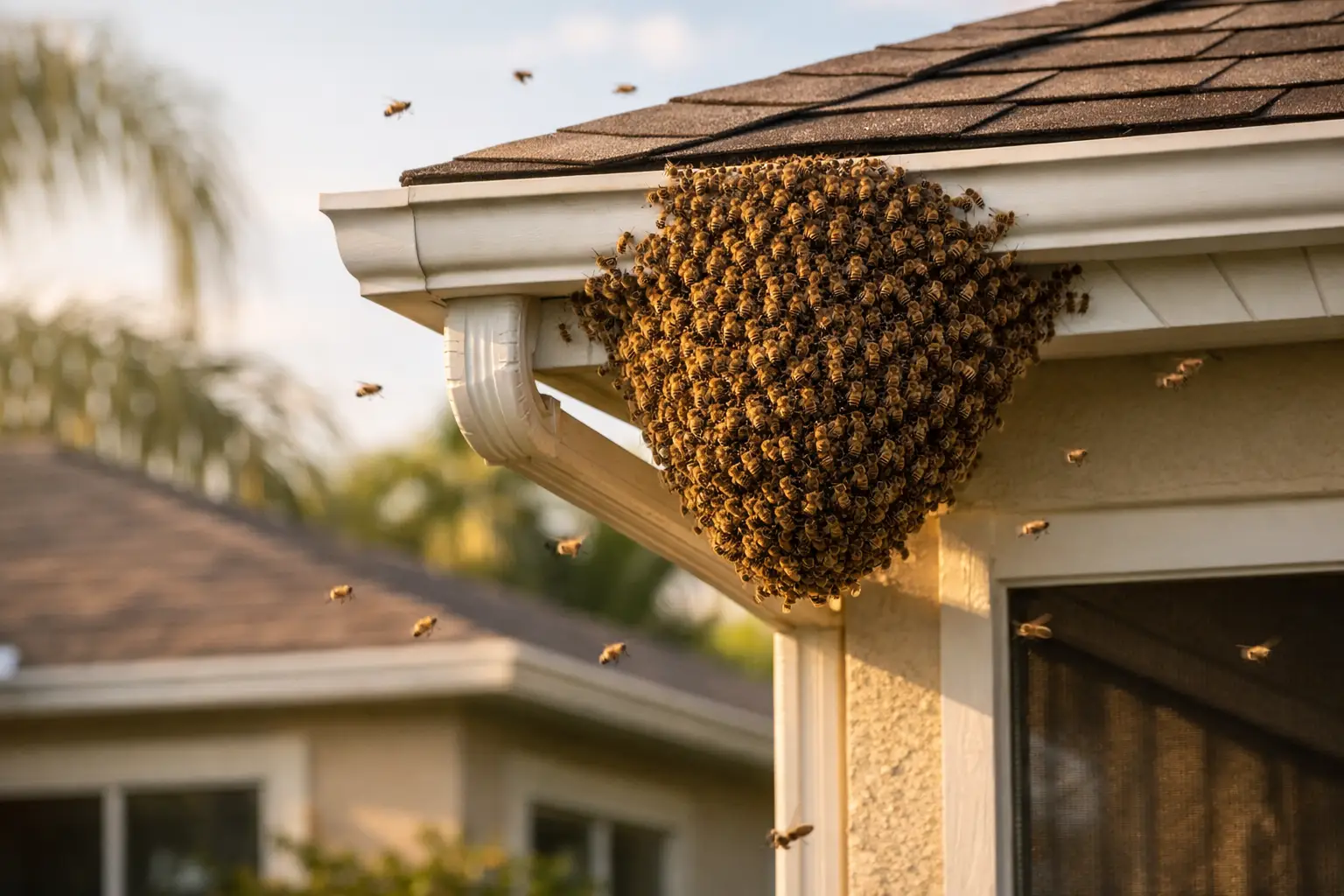

A cluster of bees on a tree branch can look alarming. Bees coming and going from a hole in your wall is a different level of stress entirely. If you are searching for how to remove bees safely, the first thing to know is that the right response depends on whether you are seeing a temporary swarm or an established colony inside a structure.
That distinction matters because bees are not just a nuisance to clear away. They are valuable pollinators, and when they build inside a wall, soffit, roofline, or meter box, the real risk is often what gets left behind if the job is handled the wrong way. Honey, wax, brood, and agitated bees can turn a small problem into property damage fast.
How to remove bees safely starts with identification
People often call every flying stinging insect a bee, but treatment changes depending on what you actually have. Honey bees usually appear fuzzy, golden-brown, and purposeful in flight. Wasps are smoother, narrower, and more aggressive around food. Bumble bees are larger and rounder. If you misidentify the insect, you can waste time or make the situation worse.
The next question is where they are. A swarm is usually a temporary cluster hanging from a branch, fence, mailbox, or shrub. Swarms are often calmer than established colonies because they are between homes and protecting a queen, not stored honey. In many cases, a swarm can be safely collected and relocated by a trained bee removal specialist.
A colony inside a structure is more complicated. If bees are entering and exiting the same crack or gap for more than a day or two, especially in steady traffic, they may already be building comb inside. At that point, removal is not a simple catch-and-carry job. It becomes a structural removal.
What not to do when bees show up
The biggest mistakes usually come from panic. Spraying store-bought chemicals into a wall void may kill some bees, but it rarely solves the whole problem. If comb and honey remain inside, you can end up with leaking honey, staining, odors, ants, roaches, beetles, and even rodents attracted to the cavity.
Water is not a fix either. Hosing a swarm often scatters bees and increases defensiveness. Sealing the entry hole before the colony is removed can force bees deeper into the structure or into living spaces. Trying to burn them out, smoke them heavily, or knock down comb without protective gear is the kind of decision people regret quickly.
There is also the health side. If anyone on the property has a known sting allergy, the threshold for handling it yourself should be very low. A small colony can become dangerous when disturbed, and in Florida and across the South, aggressive bee behavior is taken seriously for good reason.
The safest first steps for homeowners
If you find bees on your property, start by creating distance. Bring children and pets indoors. Keep people away from the flight path, especially if bees are entering a wall, utility box, or roofline. Do not stand in front of the opening to watch them. Bees read that as a threat.
If the bees are inside or attached to your home, take a few photos from a safe distance. Note how long they have been there, where they are entering, and whether activity continues at dawn and dusk. That information helps determine whether it is a swarm or a deeper colony.
Then ask a practical question: is this accessible and temporary, or structural and active? A swarm on a low branch may be removable by a live bee specialist with minimal disruption. Bees inside a block wall, chimney, soffit, shed roof, or stucco cavity usually require opening the area, removing comb, vacuuming bees safely, and cleaning the space before repair.
How professionals remove bees safely
Humane bee removal is part beekeeping and part construction. The goal is not just to get bees out of sight. It is to remove the colony, preserve it when possible, and keep the site from becoming attractive to another swarm later.
For a swarm, the process can be fairly straightforward. The cluster is collected into a transport box or hive body and relocated to a managed apiary or suitable bee yard. Timing matters. Swarms are easiest to remove before they start building comb.
For established colonies in structures, the work is more involved. The removal team identifies the full extent of the nest, opens the material carefully, removes comb section by section, collects the bees with specialized equipment, and secures the queen if possible so the colony stays together. After that, the cavity should be cleaned of wax and honey residues. If it is not, scout bees may return later, or pests may move in.
This is why poison-only treatment is usually a poor answer for honey bees in buildings. It may seem cheaper at first, but it often leaves the costly part behind.
Why cut-out removal is sometimes necessary
Homeowners are often surprised when they hear that part of a wall or soffit may need to be opened. But if bees have built comb inside, there is no clean shortcut. Safe removal means getting to the comb, not just stopping visible activity from the outside.
There is a trade-off here. A proper cut-out may involve minor repair work, but it prevents larger structural and sanitation issues later. A quick kill treatment can feel easier today and cost more tomorrow.
Why timing changes the job
A fresh swarm is a simpler rescue than a colony that has been active for months. Warm weather, repeated swarming, and long seasons in Southwest Florida mean colonies can establish quickly. If you notice regular bee traffic into your home, waiting a few weeks can turn a manageable job into a major one.
How to remove bees safely without harming pollinators
If your goal is both safety and conservation, live removal and relocation is the best fit when conditions allow it. Not every insect can be saved in every situation, and not every site is low risk. Still, honey bees are livestock in practical terms and essential pollinators in ecological terms. Treating them as disposable pests misses the point and often misses the problem.
A qualified live removal service looks at behavior, structure access, human safety, and whether the colony can be rehomed successfully. That approach protects people while keeping healthy colonies in productive environments instead of destroying them where they stand.
For homeowners, that means asking the right questions before hiring anyone. Do they remove comb, or just spray? Do they handle structural colonies? Do they relocate live bees when possible? Do they explain what repair or cleanup is needed afterward? A same-place removal warranty can also matter because old nest sites can attract future swarms if the cavity is not fully addressed.
Special concerns for businesses, HOAs, and public sites
On commercial properties and shared buildings, bee activity is not just a maintenance issue. It is a liability issue. Outdoor dining areas, shopping centers, pool enclosures, clubhouses, dumpster areas, and entry corridors all create more foot traffic and more chances for someone to be stung.
The safest response is usually faster, more documented, and more restrictive than it is at a private home. Access may need to be limited until removal is complete. If bees are near a school, park, or municipal right-of-way, the urgency goes up because bystanders will not know to avoid the area.
This is where an experienced bee removal company earns its keep. The work has to account for bee biology, building materials, public safety, and follow-up prevention, not just immediate removal.
Preventing the next colony
After removal, prevention is what keeps the problem from repeating. Bees look for protected cavities with small entry points, stable temperatures, and shelter from rain. Gaps in soffits, uncapped block walls, roofline voids, plumbing penetrations, and abandoned utility boxes are common targets.
Once the colony is out, the space should be cleaned and sealed properly. That may include replacing damaged material, screening vents, filling gaps, and correcting openings around trim or fascia. The exact fix depends on the structure. Old wax odor can attract new scouts, so cleanup matters as much as closure.
Landscaping can help too, though it is secondary. Swarms rest in trees and shrubs all the time, but established colonies usually need a cavity. The house itself is often the real invitation.
If you are in Southwest Florida and dealing with bee activity around a home or commercial building, a local specialist such as Beeswild can assess whether it is a swarm pickup, a structural cut-out, or a higher-risk situation that needs immediate containment.
The calmest move is usually the smartest one: keep your distance, resist the urge to spray, and treat bee removal as both a safety issue and a building issue. When the colony is handled correctly, you protect your family, your property, and a pollinator species that still deserves a place to live, just not inside your walls.

No responses yet