

That faint buzzing behind drywall usually starts as a mystery and turns into a structural problem fast. If you need to remove bees from wall voids, the goal is not just getting insects out of sight. It is stopping comb growth, honey damage, and future reinfestation while keeping people safe and preserving a live colony when possible.
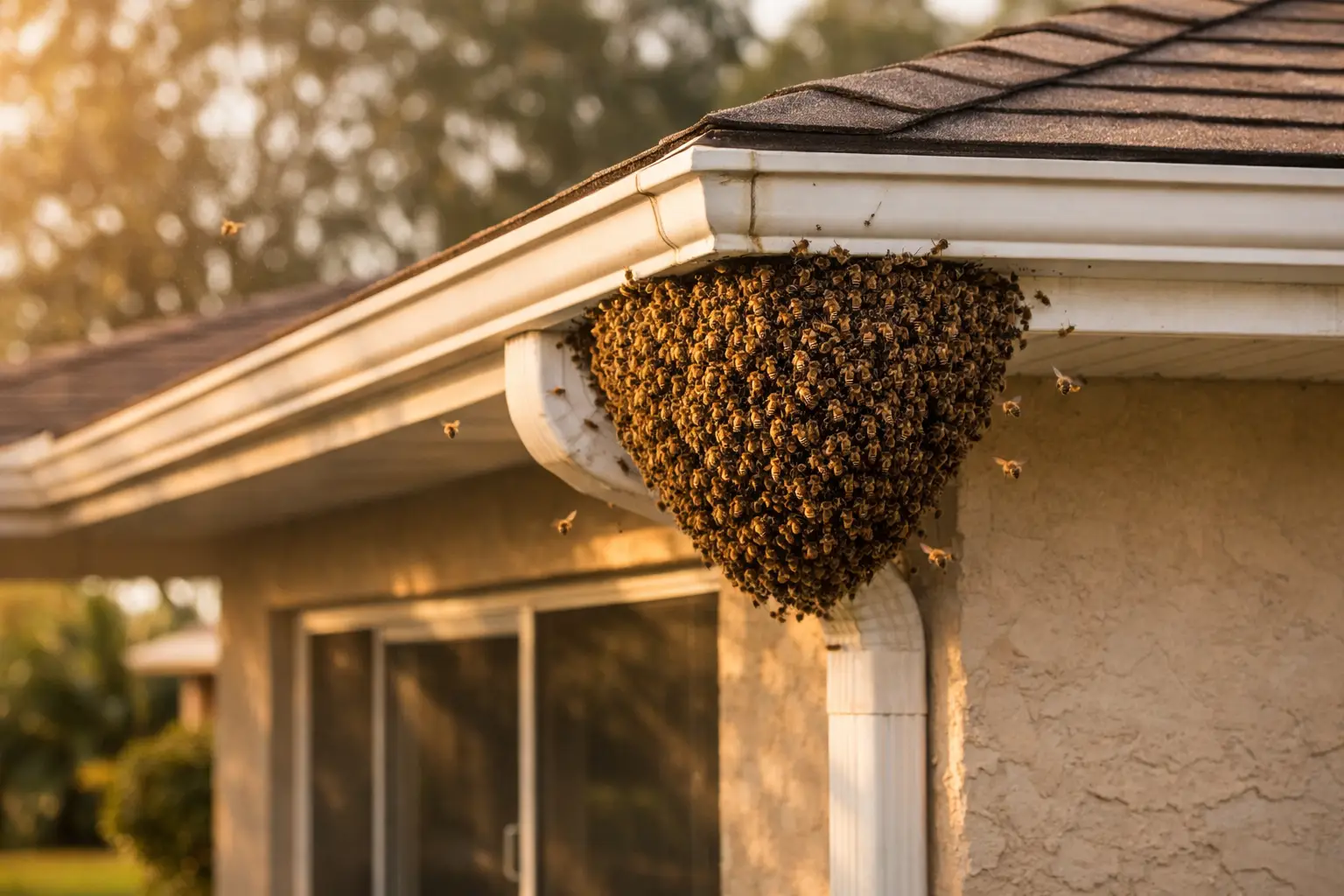
A wall colony is different from a swarm resting on a branch. A swarm is temporary. Bees in a wall have chosen that cavity as a home, built comb, stored nectar and pollen, and may already have brood. Once that happens, the job becomes structural bee removal, not simple pest control.
Why bees choose wall cavities
To a honey bee colony, a wall can look ideal. It is dark, dry, protected from weather, and often close to flowering plants and water. Gaps around soffits, utility penetrations, rooflines, chimneys, and siding can give scouts just enough access to move in.
In Florida and other warm regions, colonies can build quickly because they are active for much of the year. What starts as a small entrance hole can lead to many pounds of comb hidden behind stucco, block, siding, or drywall. Homeowners often do not notice the scale until they hear louder buzzing, see a steady line of bees entering the same spot, or notice honey staining.
Why you should not spray to remove bees from wall spaces
Spraying a wall entrance may look like the fastest fix, but it usually creates a more expensive problem. Poison may kill some bees near the opening, yet it does not remove the comb, brood, honey, or wax inside the cavity. That material remains in the wall.
When dead or weakened colonies are left inside, several things can happen. Honey can melt and seep into drywall or insulation. Wax and brood can attract ants, roaches, beetles, moths, rodents, and other scavengers. Surviving bees may become defensive. New swarms may also be drawn back to the same scent-rich cavity later.
This is why humane structural removal is the standard for a real solution. The colony needs to be taken out, the comb removed, the cavity cleaned, and the entry points sealed. Otherwise the problem is often paused, not solved.
Signs you have bees in a wall
Some wall colonies are obvious, but many are not. You may see bees flying in and out of one small gap for hours every day, especially during warm daylight hours. Inside, you might hear a low hum in a bedroom wall, garage, fireplace chase, or exterior block wall.
Other clues are more subtle. There may be a warm patch on drywall, a faint sweet odor, or dark staining where honey has started to migrate. In commercial settings, staff may notice bee traffic near signage, roof edges, loading docks, or utility boxes. If activity has lasted more than a few days in the same location, it is less likely to be a passing swarm and more likely to be an established colony.
How professionals remove bees from wall structures
The proper method is usually called a cut-out. That means opening the structure carefully to access the colony, removing the bees and comb, and restoring the area so it does not remain attractive to future swarms.
Inspection comes first
A professional starts by identifying the exact entry point and estimating where the comb sits inside the wall. This matters because bees do not always build directly behind the visible entrance. The colony may extend upward, downward, or around framing members.
The inspection also helps determine risk. Colony temperament, wall material, height, electrical hazards, proximity to children or pets, and the amount of comb all affect the removal plan. In some cases, thermal tools, sound detection, or construction knowledge help narrow down the best access point with the least wall damage.
Accessing the colony
To remove bees from wall cavities correctly, the wall or surrounding material usually has to be opened. That can sound alarming to homeowners, but controlled access is often what prevents bigger damage later. A small, strategic opening is better than letting honey and wax rot inside a sealed wall for months.
The goal is to reach the brood nest and comb directly. Once exposed, the bees can be gently vacuumed with bee-safe equipment or brushed into a hive box while comb is cut out section by section.
Removing comb, brood, and honey
This is the part many non-specialists miss. The bees are only one part of the colony. The comb is the structure that holds brood, pollen, and honey. If it stays behind, the cavity still smells like a hive and still contains organic material that can leak or attract pests.
Brood comb may be secured into frames so the colony has a chance to continue in a managed hive. Honey comb is removed separately. The cavity is then scraped and cleaned to remove residual wax and scent as much as possible.
Sealing and restoration
Once the bees and comb are out, the opening must be closed and the original access route sealed. This is one of the most important parts of the job. If the gap remains open, another swarm can move in later.
Good bee removal includes discussing what caused the entry in the first place. Maybe it was an unsealed utility penetration, a soffit gap, cracked block, or loose fascia. Correcting those vulnerabilities is what makes the repair durable.
Can you remove bees from wall areas yourself?
Sometimes people search this topic hoping for a safe DIY method. For an established wall colony, that answer is usually no. This is not because homeowners are incapable. It is because the combination of defensive insects, hidden comb, ladders, electrical lines, heat, and structural materials creates too many variables.
There is also the identification issue. Honey bees, bumble bees, yellowjackets, and wasps are often confused. The removal method depends on the species and whether there is a protected pollinator colony involved. Misidentification leads to bad decisions quickly.
If you are dealing with a temporary swarm hanging outside on a reachable branch, that is a different situation and may be collected without opening a structure. But once bees are living inside a wall, it has moved beyond simple capture.
What affects cost and complexity
Wall bee removals are not one-price jobs because access drives the labor. A colony behind a thin interior wall is different from one in stucco over block, two stories up, or hidden in a chimney chase. The amount of comb, whether repairs are needed, and how long the colony has been there all affect the scope.
Timing matters too. A colony caught early may involve less comb and less cleanup. A colony left in place for months can contain substantial honey stores, making the job slower and increasing the risk of staining or collapse inside the cavity.
This is also why warranties matter. A same-place removal warranty gives homeowners more confidence that the entry area has been addressed, not just the visible bee activity.
Preventing bees from coming back
After removal, prevention is mostly about exclusion. Bees are excellent at finding small voids that feel safe and stable. Any gap large enough for bee traffic should be evaluated, especially around roof intersections, soffits, vents, siding joints, conduit penetrations, and decorative trim.
It also helps to stay alert during swarm season. Scout bees may inspect old wall cavities before a colony fully moves in. If you see bees repeatedly investigating one crack or hole but not yet entering in force, that can be the best time to fix the opening.
For homes and buildings in Southwest Florida, where bee pressure can stay high for much of the year, quick response matters. A colony that is small this week may be much larger next month.
When to call immediately
Do not wait if bees are entering a bedroom wall, attic wall, garage, school area, community mailbox structure, or business entrance. The same goes for aggressive behavior, pet exposure, or any situation involving a known sting allergy.
If the bees are active in a public-facing commercial property or HOA common area, the concern is not only comfort. It is liability. Fast professional assessment helps reduce the chance of a bad encounter while preserving the best option for live removal and relocation.
Beeswild and similar live-removal specialists approach these calls differently from standard pest control because the mission is twofold: protect the structure and rescue viable colonies when conditions allow. That is better for the property, and it is better for agriculture.
If you hear buzzing in a wall, trust that early action is cheaper and cleaner than waiting for the problem to announce itself with leaking honey or a cloud of bees at the wrong moment.

No responses yet