

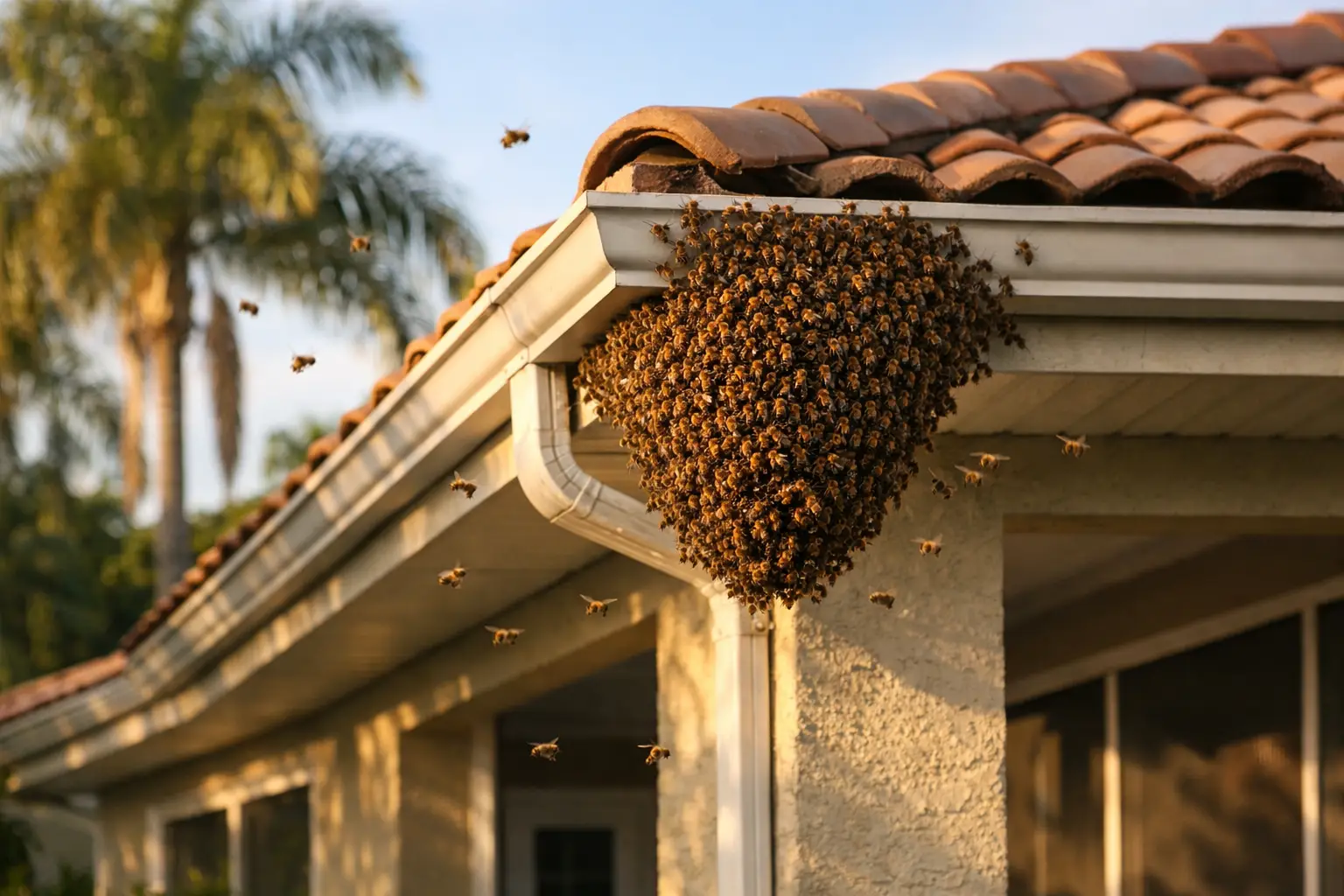

A steady line of bees disappearing behind a soffit, wall, or roof tile is more than a passing concern. It often means a colony has already built comb, stored honey, and made itself at home inside the structure. For honey bee removal Naples property owners can feel safe about, the goal should be twofold: protect the people using the property and move the living colony before a small access point becomes an expensive repair.
Honey bees are valuable pollinators, but a colony in the wrong location can create a real safety and property-management problem. Children, pets, outdoor guests, maintenance crews, and people with sting allergies may all be exposed. At the same time, simply killing bees at an entrance does not remove honey, wax, brood, or the conditions that brought the colony there.
A Swarm and a Structural Colony Are Not the Same Thing
A swarm is a temporary cluster of bees, often gathered on a branch, fence, vehicle, or exterior wall. It may look alarming, but a swarm is usually searching for a permanent nesting site and has not yet established comb. In many cases, it can be collected and relocated with limited disruption.
A structural colony is different. These bees have entered a cavity, such as a wall, chimney, attic, roofline, utility box, or hollow tree, and built comb inside. You may notice consistent traffic at one small opening, hear a low buzzing from a wall, or see staining near a ceiling or soffit. A colony can remain active for months or longer, expanding its comb and honey stores as conditions allow.
The distinction matters because a swarm removal is largely about safely collecting bees. A structural removal requires access, careful extraction of comb and bees, cleanup of the cavity, and sealing the original entry point. Treating a colony like a simple exterior swarm leaves the source of the problem behind.
Why Poison Often Creates a Bigger Property Problem
When bees are nesting in a building, chemical treatment can appear to offer a quick answer. It may reduce visible bee activity, but it does not remove the comb or honey inside the structure. That is where the long-term trouble can begin.
Warm Southwest Florida conditions can cause abandoned honey to soften, leak, and stain drywall or ceilings. The remaining wax and honey scent may attract ants, roaches, beetles, rodents, and new bee swarms. Dead bees and neglected comb can also create odors in enclosed spaces. In other words, the bees may be gone from the entrance while the costly part of the issue remains inside the wall.
Live removal addresses the entire colony rather than only the visible bees. It is a more involved process, and it may require opening a limited section of building material. Still, a controlled repair is generally preferable to allowing honey and comb to deteriorate unseen. The right approach depends on where the colony is located, how extensive the comb is, and whether safe access is possible.
What Professional Honey Bee Removal in Naples Should Include
A responsible removal starts with an inspection. The technician identifies the bees’ entry point, estimates where the comb is located, assesses activity level, and looks for nearby risks such as electrical lines, high roof access, children’s play areas, or pedestrian traffic. This step helps determine whether the issue is a newly arrived swarm, a mature colony, or another stinging insect that requires a different response.
For a colony in a wall or roof, the removal team creates the smallest practical access opening near the comb. The goal is to remove the bees, brood, wax, and honey rather than leaving food sources and scent markers in the cavity. The queen is located when possible, and the colony is transferred into appropriate equipment for relocation.
After extraction, the cavity should be cleaned of accessible residue and the entry point sealed. Sealing matters as much as removal. Honey bees can locate old nesting odors, and a gap that remains open may invite another swarm to move in. A qualified provider should also explain what repair work is included, what may need to be completed by a roofer or contractor, and how the area will be monitored.
Beeswild performs live removal and relocation, rehoming viable colonies in managed farm settings instead of treating them as disposable pests. For property owners, that model connects immediate safety with a practical outcome for pollinators: the colony is moved from an unsuitable building cavity to a place where it can be managed and sustained.
What to Do When You Find Bees on Your Property
The safest first move is usually to create distance. Keep children, pets, customers, and staff away from the area, especially if bees are entering a wall at head height or congregating near a door, pool, patio, or walkway. Do not block the entrance with foam, tape, caulk, or a rag. Trapping an established colony inside can force bees into other parts of the structure and does nothing to address the comb.
Avoid spraying water, insecticide, smoke, or household products at the cluster. Agitating bees can increase defensive behavior, particularly when they are guarding a developed nest. A calm, undisturbed area gives a removal specialist the best conditions for evaluating the colony safely.
If anyone has been stung and develops trouble breathing, swelling of the face or throat, dizziness, or widespread hives, seek emergency medical care right away. Most bee encounters do not become medical emergencies, but allergic reactions can progress quickly.
For commercial properties and HOAs, document the location and restrict access if necessary. Clear information helps a removal team plan access and helps managers demonstrate that they responded appropriately to a potential liability issue. Note when bee activity is strongest, where insects enter and exit, and whether there have been stings or complaints.
The Best Time to Act Is Before Honey Becomes a Building Issue
It is tempting to wait and see whether bees leave on their own. That can make sense for a fresh swarm resting outdoors, because it may depart within a day or two. It is not a good assumption when bees are consistently using an opening in a building. Regular flight traffic usually signals an established colony, and established colonies rarely abandon a productive, protected cavity without a reason.
Early removal can limit the amount of comb that must be extracted and reduce the chance of leakage, pest activity, and deeper structural work. It can also reduce the chance that a colony expands into additional voids. For a business, school, community facility, or HOA common area, early action also protects guests and residents before an encounter becomes an incident.
Professional providers may offer a warranty for repeat activity at the same removal location, but homeowners should understand what that covers. A warranty is most useful when the original access point has been properly sealed and the removal included comb extraction. Beeswild provides a three-month same-place-removal warranty, offering added reassurance when a colony has been removed from a previously active location.
Live Removal Is the Practical Choice, Not Just the Gentle One
Choosing relocation does not mean ignoring risk. A colony near an occupied doorway, playground, restaurant patio, or busy exterior work area needs timely professional attention. Live removal is practical because it addresses the actual source of the issue: the bees, the comb, the honey, and the entry route.
For Naples homeowners and property managers, the useful question is not simply, “How do I get rid of these bees?” It is, “How do I remove this colony without leaving damage and another bee problem behind?” Acting while the colony is still contained gives the property a better outcome and gives the bees a chance to continue their work somewhere they belong.

No responses yet