
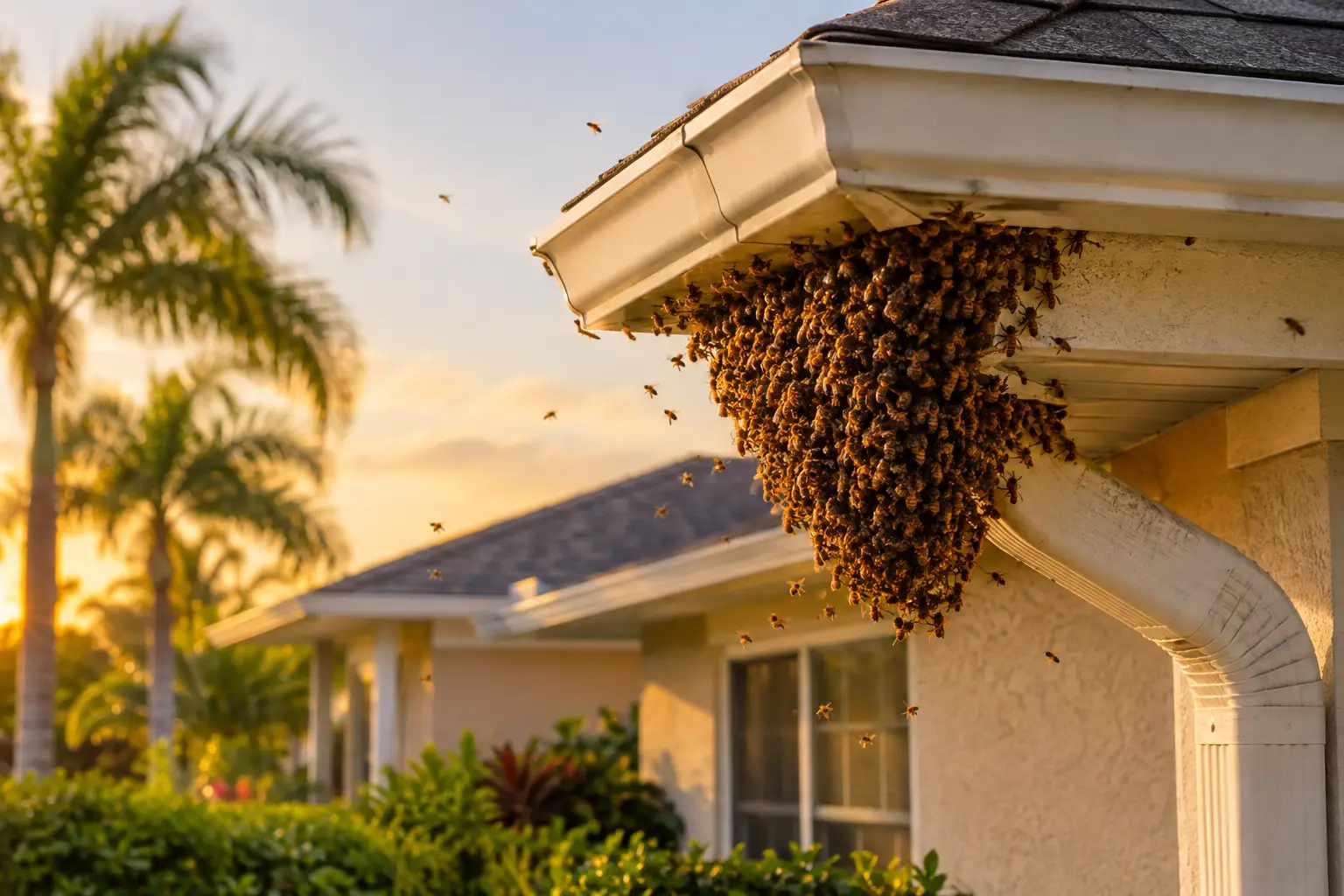

A bee colony in a soffit, wall, roofline, or public entryway can become more than a maintenance problem. Bee sting liability may arise when a property owner, manager, or business knows – or reasonably should know – that bees are creating a hazard and fails to respond appropriately. The right response protects people first, while giving a valuable pollinator colony a chance to survive through live removal and relocation.
For Southwest Florida homeowners, HOA boards, restaurants, and facilities managers, the practical question is not whether every bee sting leads to a claim. It does not. The question is whether the conditions on the property were handled with reasonable care once a risk became apparent.
What Bee Sting Liability Usually Depends On
Liability after a sting is fact-specific. A person who is stung near a flowering garden, for example, may face a very different situation than a customer stung by an established colony above the entrance to a shopping center. The presence of bees alone does not automatically make a property owner legally responsible.
In many situations, responsibility turns on notice, control, and response. Did the owner or manager know about a colony, swarm, or repeated bee activity? Was the area under their control? Was the colony located in a place where visitors, residents, workers, children, or pets were likely to encounter it? And after the issue was reported, did they take reasonable steps to assess and address it?
A sting can also involve factors outside the property owner’s control. Bees may arrive suddenly in a temporary swarm. A visitor may disturb a colony, block its flight path, or ignore a clearly marked restricted area. Weather, landscaping, construction activity, and the location of the hive can all affect bee behavior. These details matter, which is why photographs, reports, and a clear timeline can be valuable after an incident.
This article provides general risk-management information, not legal advice. If a sting has caused a serious injury, a threat of legal action, or an insurance claim, speak with a qualified Florida attorney and notify the appropriate insurer promptly.
When a Bee Problem Becomes a Foreseeable Risk
A visible swarm resting on a tree branch is not always an emergency. Swarms are often temporary clusters of bees searching for a permanent home. Still, a swarm near a doorway, playground, pool area, outdoor dining space, or busy walkway deserves quick attention because people may panic, spray it, throw objects, or attempt removal themselves.
An established colony inside a structure is a different concern. Bees entering and leaving the same crack, vent, eave, or wall opening day after day are often a sign that a colony has moved in. In Southwest Florida, warm conditions can allow colonies to remain active for long periods. A hidden colony may grow, store significant honey, and become defensive if the wall, roof, or nearby area is disturbed.
Risk increases when there is a known allergy concern, repeated stings, aggressive behavior, heavy pedestrian traffic, or work planned near the colony. Pressure washing, roofing, tree trimming, pest treatment, and exterior repairs can all provoke bees if crews are not warned beforehand.
Notice is more than a written complaint
A formal email from a tenant or customer is clear notice, but it is not the only kind. A maintenance worker’s observation, a security report, repeated calls about bees near an entrance, or a manager seeing steady bee traffic can all show that a concern was known. Do not rely on the absence of a formal complaint when the colony is plainly visible or active.
For HOAs and commercial properties, the handoff between residents, vendors, boards, and property managers is especially important. A report that sits unanswered in a general inbox can create avoidable exposure. Establish one reporting path and assign someone to document the response.
Practical Steps That Reduce Bee Sting Liability
The safest approach is prompt assessment followed by a removal plan suited to the colony’s location. Killing visible bees without removing the comb and honey often leaves the underlying structural problem behind. Honey can leak, attract ants and other pests, and draw new bees to the same cavity. It may also leave agitated survivors in or around the structure.
When a colony is discovered, take these steps:
- Keep people and pets away from the area. Use cones, temporary signage, or a safe alternate entrance when appropriate.
- Do not spray, seal an active entry point, smoke the colony, or strike the structure. These actions can force bees into living spaces or trigger defensive behavior.
- Record the date, location, visible bee activity, and any reports or stings. Photographs taken from a safe distance can help document the condition.
- Contact a qualified live bee removal professional who can evaluate the colony, remove bees and comb where needed, and explain what access work may be required.
- After removal, close or repair the entry point and address gaps, damaged soffits, vents, or other openings that made the space attractive to bees.
The removal method matters. Structural colonies generally require more than collecting bees at an opening. A responsible removal plan considers the colony, brood comb, honey stores, access to the cavity, cleanup, and exclusion work. There may be trade-offs: opening a small section of soffit or wall can be inconvenient, but leaving comb behind may create a more expensive issue later.
Beeswild.com LLC provides live bee removal and relocation in Southwest Florida, with colonies moved to safe farm areas rather than treated as disposable pests. Its three-month same-place removal warranty also gives property owners added reassurance after a qualifying removal, though preventing future colonies still depends on closing access points and maintaining the structure.
Responsibilities for Homes, HOAs, and Businesses
A homeowner may need to act quickly when bees occupy a wall near a family patio or a neighbor’s property line. The focus should be controlling access, arranging a professional assessment, and avoiding actions that turn a manageable colony into an emergency.
For an HOA, the responsibility can be less obvious. Determine whether the bees are in a common-area structure, a shared exterior element, or an individual owner’s property. Even while that question is being sorted out, the association can reduce risk by warning residents and restricting access to the immediate area. Delays caused by uncertainty over maintenance responsibility rarely make an active hazard safer.
Commercial properties should treat bee reports as part of their site-safety process. Restaurants with patios, retail centers with high foot traffic, schools, pool facilities, and office parks all have different exposure points. Train staff to report bee activity rather than attempting removal. If a colony is near an entrance, communicate a temporary route to visitors and vendors. Document the vendor call, work authorization, removal findings, and any repair recommendations.
Insurance and contractor records
Review property and liability insurance with an agent before an incident, particularly for associations and businesses that manage public-facing areas. Coverage and reporting requirements vary by policy. Waiting until after an injury to learn who must be notified can complicate a claim.
Ask any removal provider clear questions about their process, insurance, scope of work, and whether comb removal, cleanup, and exclusion are included. Keep the written estimate, invoice, photographs, and communications in the property file. These records help show that the problem was taken seriously and addressed in a timely manner.
What to Do After Someone Is Stung
First, focus on the person’s health. Multiple stings, breathing trouble, swelling of the face or throat, dizziness, widespread hives, or signs of a severe allergic reaction require emergency medical attention. Do not debate responsibility at the scene or make promises about payment before the situation is understood.
Secure the area, document basic facts, preserve any incident report or available camera footage, and notify the owner, manager, or designated safety contact. If bees remain active, arrange immediate professional evaluation. A prompt response after an incident cannot erase what happened, but it can prevent a second sting and demonstrate responsible care.
Bees are essential agricultural animals, but a colony in the wrong part of a building is not something to wait out. Treat early reports seriously, protect the people using the property, and choose removal that solves the structural cause instead of simply scattering the bees.

No responses yet