
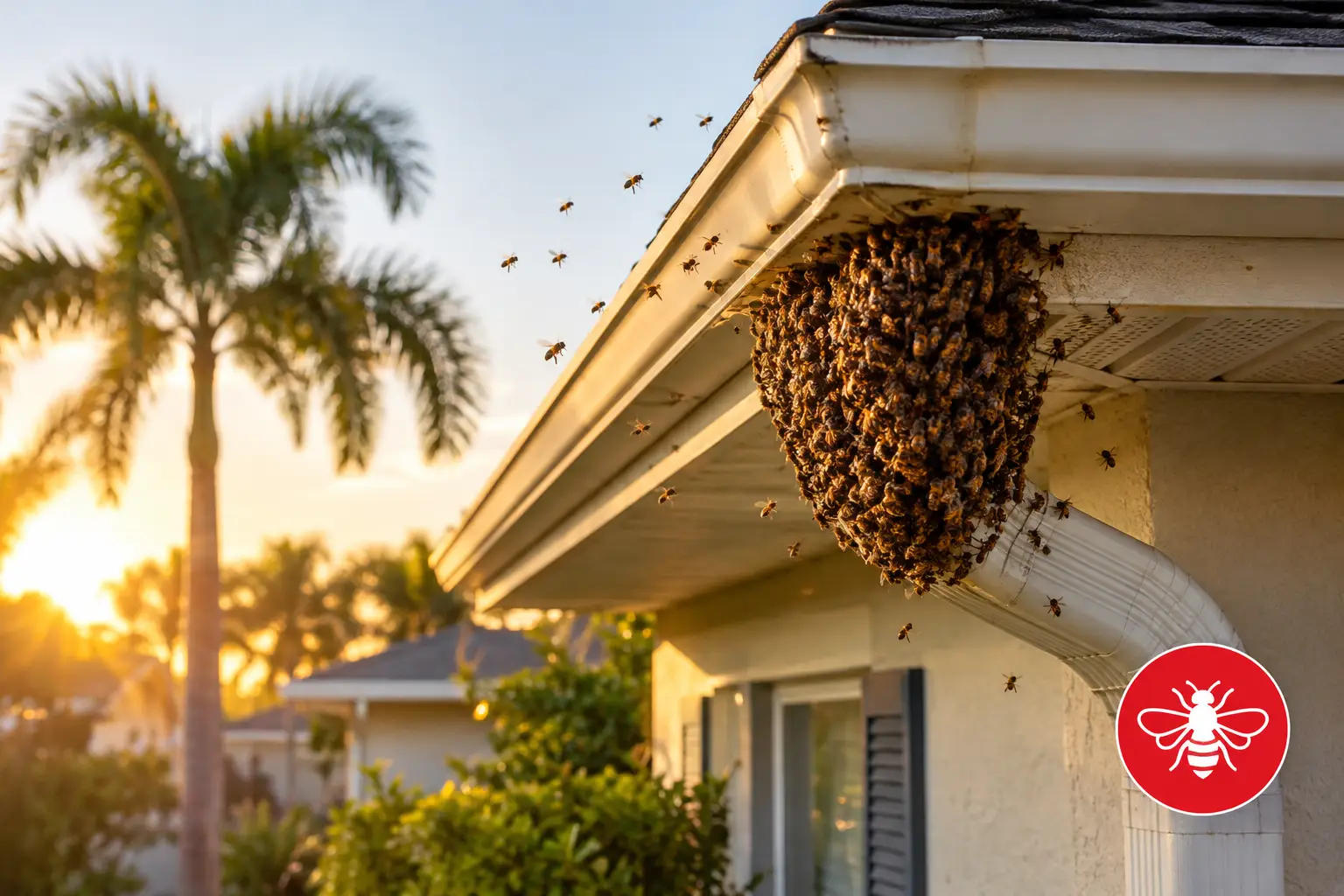

A few bees resting on a palm frond are not the same problem as a colony entering through a soffit, gathering behind drywall, or clustering beside a pool gate. Bee removal safety begins with recognizing that difference. A visible swarm may be temporary, while regular bee traffic to one crack or vent often means a colony has established itself inside the structure.
The safest response protects the people near the bees, limits damage to the building, and gives a viable colony a chance to continue living. Those goals are connected. A rushed attempt to spray, seal, or knock down a nest can turn a manageable situation into an aggressive-bee event, then leave honey and comb behind to damage the property.
Bee Removal Safety Starts With Distance and Observation
When bees are active, give them room. Keep children, pets, visitors, and outdoor workers away from the immediate area. If possible, use another entrance until the situation has been assessed. Do not stand beneath a cluster, block the bees’ flight path, or repeatedly check an opening from close range. Bees defending a colony may react to vibration, strong odors, rapid movement, and disturbance near their entrance.
A homeowner does not need to identify the species to make a safe decision. In Southwest Florida, colonies can vary widely in defensiveness, and behavior can change quickly when a nest is disturbed. A large number of bees, loud buzzing within a wall, or bees repeatedly flying into a building opening should be treated as a professional removal issue.
There is one exception to the wait-and-watch approach: a swarm or colony creating an immediate danger near people who cannot avoid it. If bees are actively attacking, move indoors or into a vehicle, cover your face as you move away, and seek emergency assistance if someone has a severe reaction. Do not jump into water. Bees may remain nearby, and getting out can expose a person to more stings.
What Not to Do Around an Active Colony
Common do-it-yourself solutions create the highest risks. Spraying an entrance may kill some bees while causing the rest of the colony to defend itself or move deeper into the structure. Sealing a hole before the colony and comb are removed can trap bees indoors, force them into living spaces, or leave honey, wax, brood, and moisture inside the wall.
Smoke, household chemicals, expanding foam, pressure washing, and knocking open a soffit are also poor substitutes for a removal plan. Protective clothing helps trained handlers work around bees, but it does not make structural removal safe for an untrained person. The work can involve ladders, electrical lines, hot attics, fragile roofing materials, and thousands of defensive insects.
Why Live Removal Is Safer Than a Quick Kill
Live removal is not simply about avoiding pesticides. It is a process designed to remove the colony, recover the comb, and address the opening that allowed bees to enter. When completed properly, it reduces the chance of recurring activity and avoids leaving food sources inside the structure.
Honey and brood left in a wall can attract ants, wax moths, beetles, rodents, and other pests. In Florida’s heat and humidity, honey may soften or leak, staining ceilings, insulation, drywall, or exterior finishes. Even if a pesticide treatment initially appears successful, the remaining comb can become the next property problem.
A professional live removal typically begins by locating the colony’s actual position, not just its entrance. Bees may travel through wall cavities, rooflines, chimneys, or utility gaps before reaching the comb. Access is planned carefully to remove the bees and comb with the least necessary opening to the building. The colony can then be relocated to a managed apiary rather than destroyed.
There are trade-offs. A colony deep inside a masonry wall or under a tile roof may require more time and more careful access than a newly arrived swarm on a branch. The least expensive option at the moment is not always the lowest-cost outcome after repairs, cleanup, and repeat activity are considered. A clear removal plan should explain where access is needed, what will be removed, and who is responsible for any final repairs.
Comb Cleanup Is a Safety Step, Not an Extra
The most overlooked part of bee removal safety is comb removal. A colony is more than the adult bees seen at the entrance. Its wax comb can contain honey, pollen, brood, and scent cues that draw new bees to the same void.
After the colony is removed, the accessible comb should be taken out and the area cleaned as appropriate for the material and location. The original entry point should then be repaired or excluded only after activity has stopped. This sequence matters. Closing an opening too early can redirect bees into a home or leave surviving bees trapped behind a wall.
For property managers and HOA boards, documentation is useful. Record the colony location, visible entry points, access work performed, comb cleanup, and any recommended building repairs. This creates a practical record for maintenance planning and helps reduce confusion if the property changes hands or bee activity is reported later.
Preparing Your Property for a Safe Removal Visit
A little preparation makes professional work safer and faster. Before a technician arrives, keep the affected zone clear and let household members know which areas to avoid. Move vehicles, patio furniture, and fragile items if they are directly below a roofline or wall where access may be needed. Secure pets indoors.
Share useful observations: when you first noticed activity, where bees enter and exit, whether they are inside a wall or attic, and whether anyone has been stung. Photos taken from a safe distance can help describe the location, but do not climb ladders or approach a colony to get a better image.
If the bees are near a business entrance, playground, pool area, or common walkway, temporary traffic control may be necessary. Redirecting people away from the area is often safer than trying to work around normal foot traffic. Commercial properties should also tell staff not to spray or seal the area before the removal team arrives.
In Cape Coral and throughout Southwest Florida, exterior features such as soffits, roof returns, block walls, sheds, irrigation boxes, and pool enclosures can offer bees protected nesting spaces. Routine inspections help catch gaps before a scout colony finds them. Repair loose screens, damaged vents, cracks around utility penetrations, and deteriorated trim as part of normal property maintenance.
Choosing a Removal Provider With Safety in Mind
Ask direct questions before authorizing work. Will the provider remove the live colony when conditions allow? Will they remove accessible comb and honey? How will they access the colony, and what steps will be taken to prevent re-entry? A professional should be able to explain the plan plainly rather than promise an instant fix without seeing the site.
It also helps to ask about follow-up. Bees can occasionally investigate the same area after removal, especially if the structure still has gaps or residual scent. Beeswild provides a three-month same-place-removal warranty, which gives homeowners a defined window of reassurance while the repaired area settles.
No removal method can guarantee that another unrelated swarm will never investigate a property. Bees naturally scout suitable cavities. What good removal and exclusion can do is eliminate the existing colony, remove what attracted pests to the void, and close the route that made the space accessible.
A colony near a home is a real safety concern, particularly for families, neighbors, customers, and people with sting allergies. It is also living livestock with a role far beyond one wall or roofline. Give the bees space, resist the impulse to seal or spray, and choose a removal approach that leaves both the property and the colony in a safer place.

No responses yet